July 5, 2025

Today in the orchard

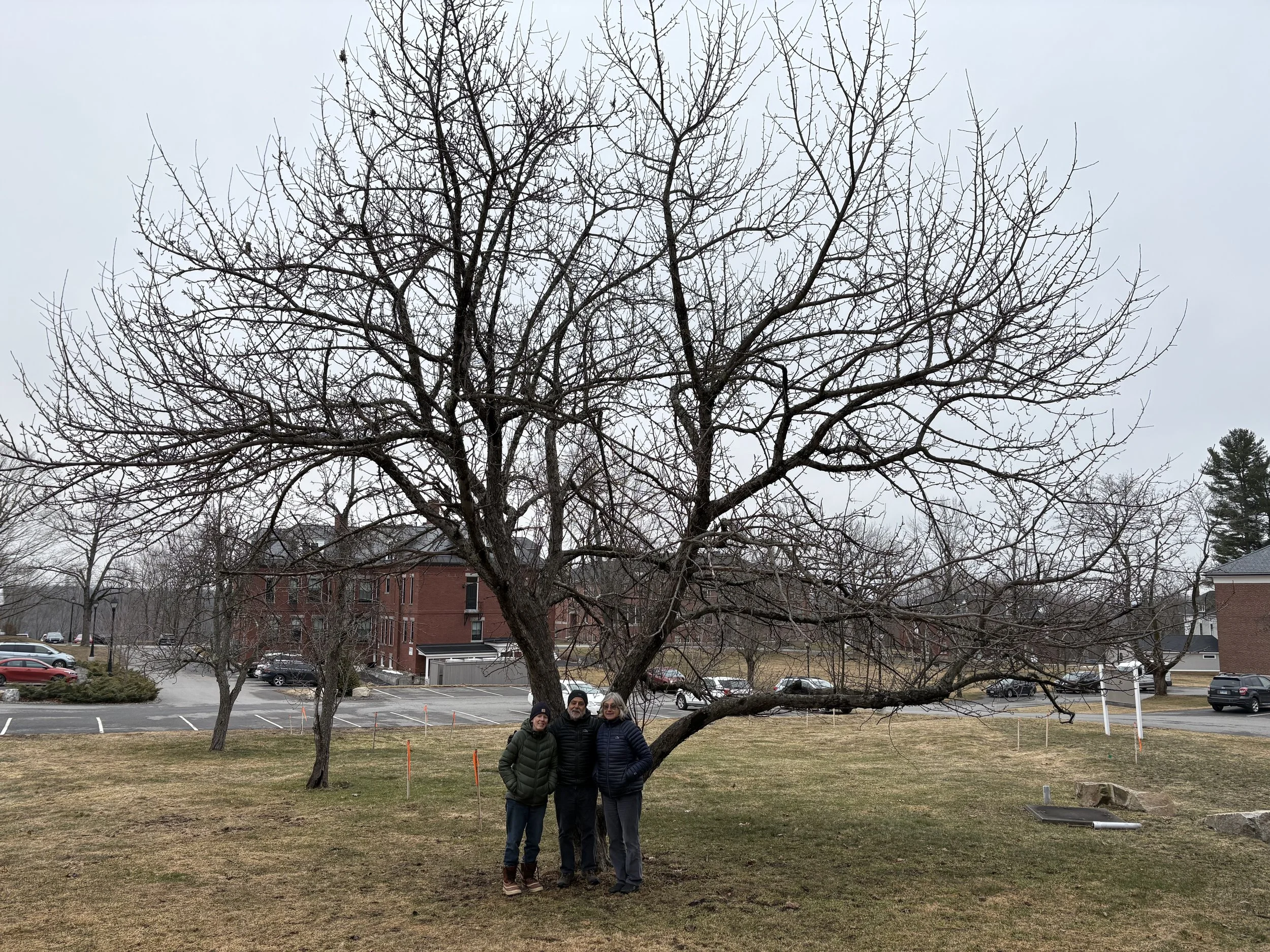
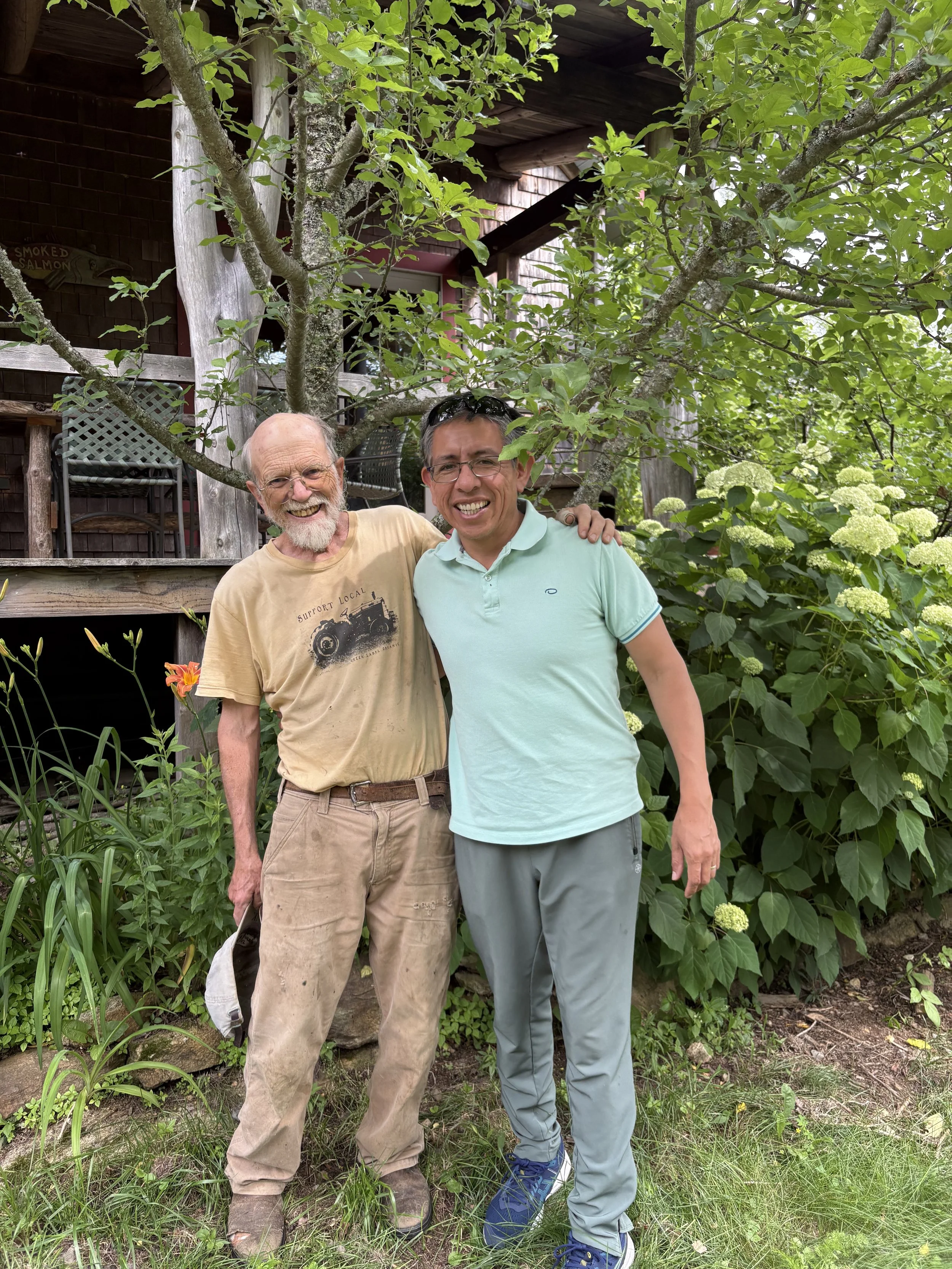
John and Oscar checking out the plants at Super Chilly Farm

Oscar Hurtado-Gonzales and his family visited the farm while on a family vacation. Oscar is a plant pathologist at APHIS (Animal and Plant Health Inspection Service) at the USDA. He and I have worked together to import nearly two dozen historic cider apples from the UK over the past 15 years. It has been with Oscar’s help that we’ve finally got the true Foxwhelp here in the US.

Plant importation has been frustrating in the past. APHIS was known to hold onto material for years, sometimes even decades, before releasing it. As a result, many folks resorted to the “suitcase” or “pocket” method of sneaking material into the country. (Not a good idea.) Since he joined APHIS, Oscar has been stream-lining the process using the latest genetic technology, and release-times have been greatly reduced. He’s also great fun to work with.

If you’re considering importing apple cultivars from around the world, he is the one to contact. Going through APHIS is always preferable to the suitcase method. The more we use their expertise, the better chance we have of minimizing agricultural catastrophes. And, if the government notices that APHIS is being used, maybe it will continue to be funded.

July 4, 2025

Today in the orchard

(This report by Skylar.) On this Fourth of July we continued to weed the young apple trees and to paint their trunks with neem oil. Clearing the grass and other herbaceous plants from around the base of the trees makes it much easier to apply the neem which we let drip down onto the soil around the base.

We saw our very first Monarch of the season today. I’ve been hoping and wondering when I would start seeing them. (Another Monarch fluttered by my window this very minute, as if they’re saying, ‘yes, we’re here!’ That brings my Monarch count up to three. )

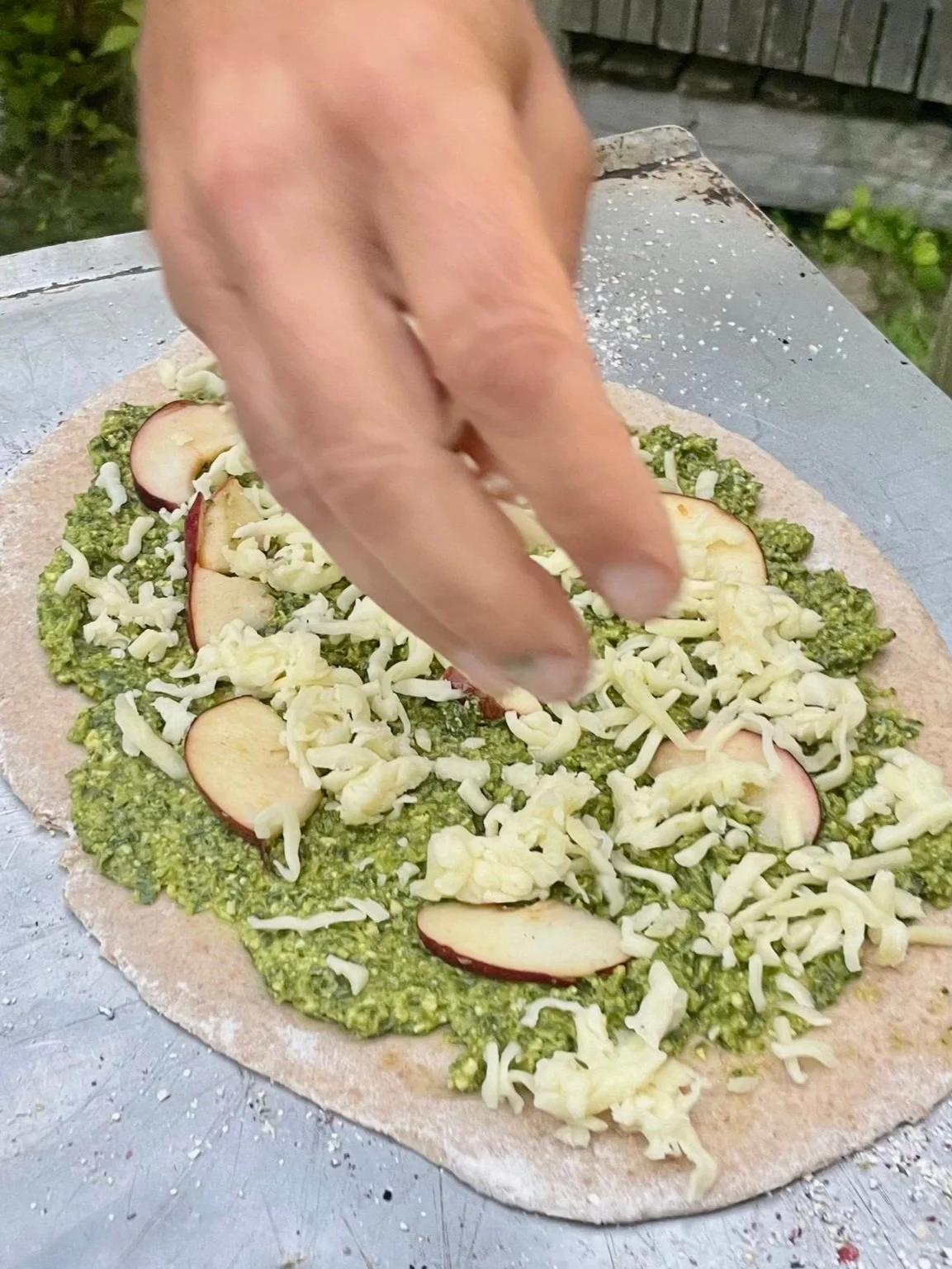
A pizza in the making, topped with pesto, mozzarella, and Black Oxford apple slices, July 4, 2025. 

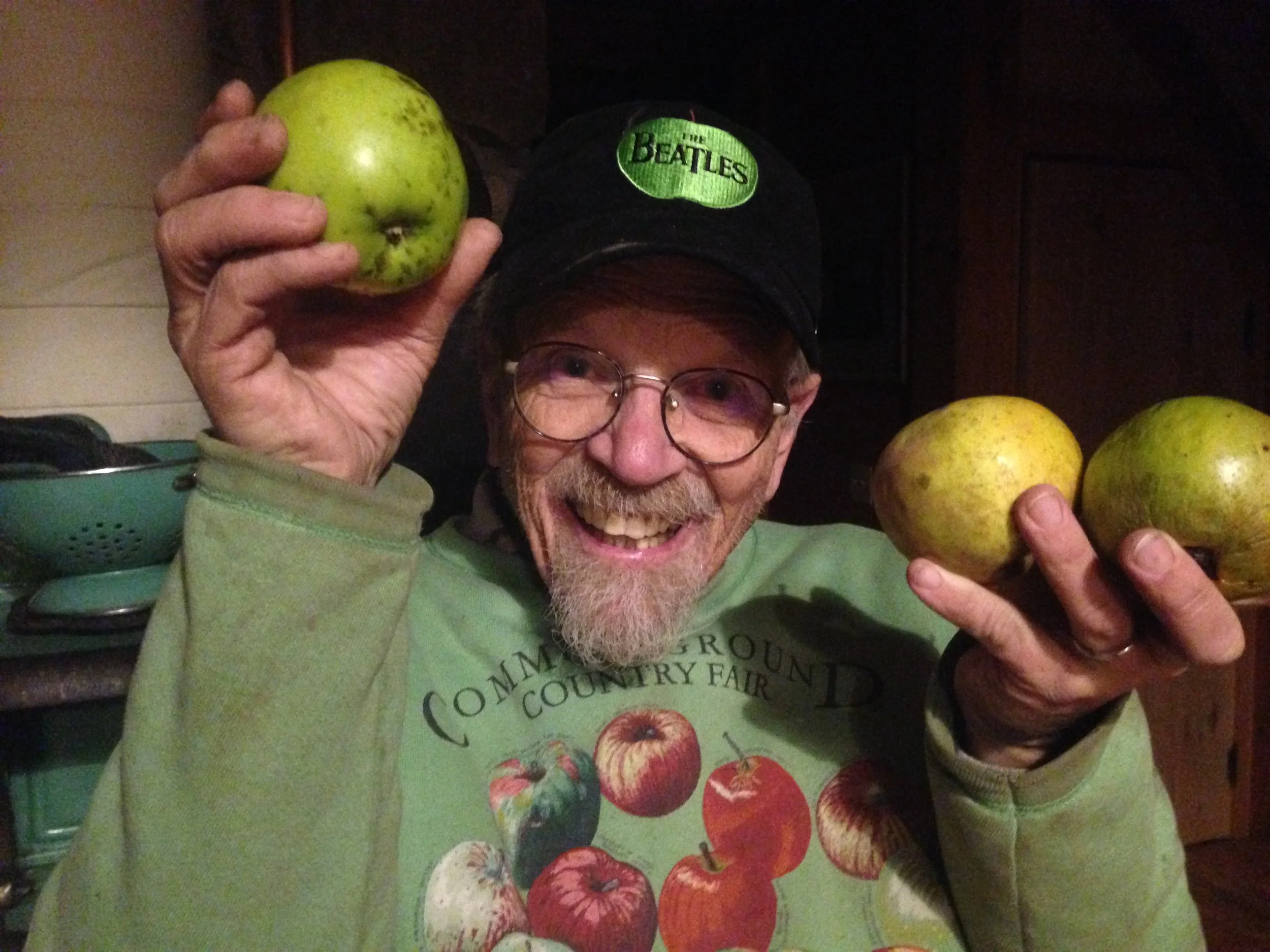
Later on the 4th Cammy and John hosted a Fourth of July gathering. We ate and chatted and were merry. And what was the center of our celebration if not the Black Oxford apple? This variety is known as the Fourth of July apple because of its long storage life. The Black Oxfords we celebrated with today have been in the Super Chilly Farm root cellar since last October, over eight months. Although they are slightly spongy and wrinkly, they still make a splendid pizza topping and apple pie, which was how we ended up using them. In the pie they cooked down quite soft while still holding their shape, but the skins were relatively tough and they did not produce much juice on their own at this time of year. Next year we’ll peel the apples first and add a squeeze of lemon juice to bring about a juicier filling. 

July 3, 2025

Today in the orchard

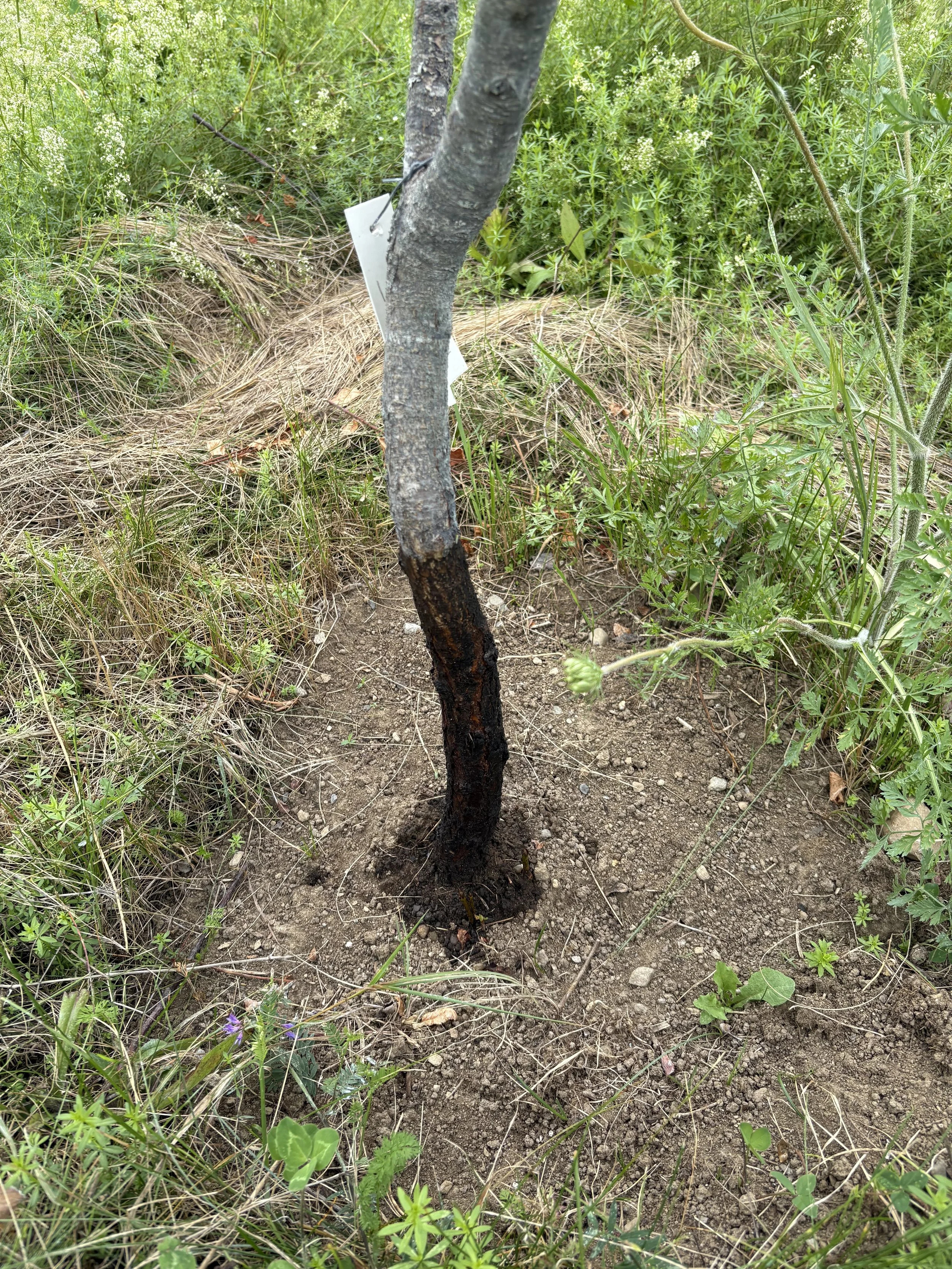
Neem oil on young apple tree

We have begun to apply Neem oil to all the young apple trees (less than ten years old) in the orchards. In late June/early July we paint the oil at full strength to the trunks up to about knee-high. We do this to combat the round-headed apple tree borer (Saperda candida), possibly the worst pest in the young orchards of Maine. The borer lays an egg that hatches into a larvae that tunnels through the trunk causing the tree to weaken and then break off. Eventually the mature beetle emerges from the tunneled trunk and heads off to kill more trees.

Although we don’t know how neem works, we suspect that the oil smothers the eggs or the smell deters the beetle from laying the eggs in the first place. We apply neem in late June because it coincides with egg-laying period. We’ve painted the trunks earlier in June which is less effective. This year we found only one borer so far in 400+ trees. In an untreated orchard in central Maine, you might find hundreds. Neem works.         

Neem trees (Azadirachta indica) can be found throughout South Asia. The pungent oil is extracted from the seed kernels and has been used as an organic pesticide for generations. It is also used medicinally.  

July 2, 2025

Today in the orchard

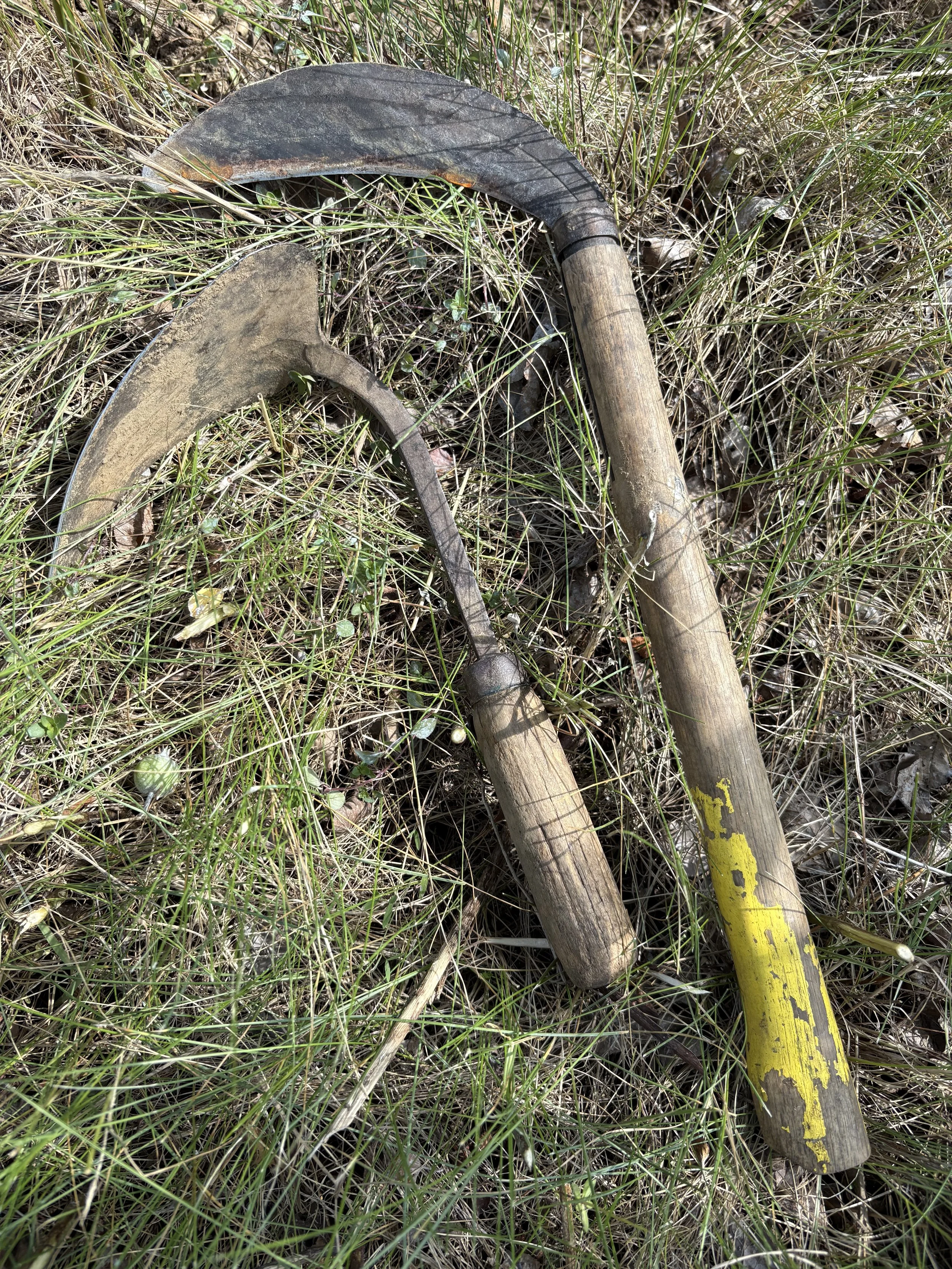
The digger and the sickle

We continued scything and weeding the orchards. It’s an annual summer ritual that provides us with an opportunity to interact up close and personal with every tree in the orchard.

First we mow a circle around each tree using a straight-snathed, European-type scythe. We then get down on our knees to weed and cultivate around the base of the trees using two elegant, simple tools: a short-bladed sickle and a Korean hand digger. The short-blade on the sickle is stiff enough to cut through any tough weeds, and the elongated, triangular digger is perfect for cultivating as well as for digging out small clumps of weeds. While we’re at it, we snip off any root-sprouts and occasionally do some minor pruning. We examine each trunk for borer infestation and check the tree for fire blight. A single apple tree takes us about 5 minutes. Then on to the next (and the next and the next!)  

July 1, 2025

Today in the orchard

Broad Winged Hawk perched in an apple tree, taken by Laura Sieger, on July 1, 2025

(Today’s report by Skylar.) Another productive day in the orchard weeding around the apple trees. There are many hundred trees here, and every one gets a chunk of our energy and care. Sometimes I get into a flow in which I can work faster and more focused than is my standard for a period of time. Today I didn’t “flow” quite enough to completely zone out my surroundings. I was able to pause and admire a few of the birds around me.

One of the birds was a Broad Winged Hawk. I don’t recall many times in my life where I have been closer to a hawk, and she stuck around for a while. Boy was she loud, screeching away. It was pretty clear she is not popular in the orchard. Wherever she went, the Robins and Blue Jays would make a ruckus and quickly get themselves far away. This hawk was behaving oddly. She stood somewhat crooked and didn’t look to be flying properly. Perhaps she is injured. I’ll keep an eye out in the coming days to see if she stays around.

Another wonderful bird of the day: the Common Yellowthroat, both male and female. If it weren’t for their chirping back and forth, I would not have known what species the female Yellowthroat was. She is a fairly muted, yellowish-gray. The male, however, has a bright yellow throat (surprise surprise) as well as a thick, black band that goes right over his eyes.

In the afternoon Laura and I worked for a while on a digital apple project called DIRK. We will have more information about this project in the coming months.

June 30, 2025

Today in the orchard

Tree Lilac June 30, 2025

Today we sprayed twice, once in the early morning and once in the evening. We’re spraying to protect the apples from codling moth (Cydia pomonella). Codling moth is one of the major apple pests in Maine. It enters the calyx and reeks havoc inside the fruit. You can tell you’ve got damage simply by looking at the calyx; if you see frass, you know you’ve got trouble inside. We sprayed Dipel and Surround. We also sprayed Regalia (biofungicide), Cueva (copper fungicide) and CalPlus (calcium nutritional supplement).

This was the first time we’d sprayed in a couple of weeks, and it provided an opportunity to look at every tree. It’s now fairly easy to see the fruit, especially the red cultivars that are showing some color. The crop is (alas) a light one. The week of cold wet weather during bloom was likely the culprit. The bees were huddled together in the hives when they should have been out pollinating the blossoms. Still (so far). It appears that the Duchess, Black Oxfords, Frostbites and Scout will all have good crops. And there will be others.

Another spectacular plant that’s now in bloom is the Tree Lilac (Syringa reticulata). It blooms nearly a month after the common lilacs. The bloom and fragrance make it worth having on the farm. We also sighted another Scarlet Tanager on the driveway. What an amazing electric red! 

June 29, 2025

Today in the orchard

Valerian at Super Chilly June 29, 2025

The sun returned, the farm dried out, and we got to spend time outside. Big news: Cammy picked a lot of peas, and we ate our first peas yesterday and more today. Peas before the Fourth! Despite the lack of rain (except on Saturdays) the growth in the orchards has been impressive. Today I got out the sickle and scythe and reclaimed some of the paths in the “BRC” orchard that had all but disappeared. They’re still there.  

Another of my favorite plants is now blooming, Valerian (Valeriana officinalis). I still remember digging one clump in a ditch by the roadside in Lincolnville in about 1979 and transplanting it here on the farm. My girlfriend back then said to me, “You have to have this plant.” I’d never heard of it. I must have a had a shovel with me (like any respectable plant explorer). It liked it here and has never left. I found, however, that it doesn’t move far and it’s a bit picky about where it establishes itself. But it also transplants fairly easily, and it spreads by seed. It’s a great plant.     

June 28, 2025

Today in the orchard

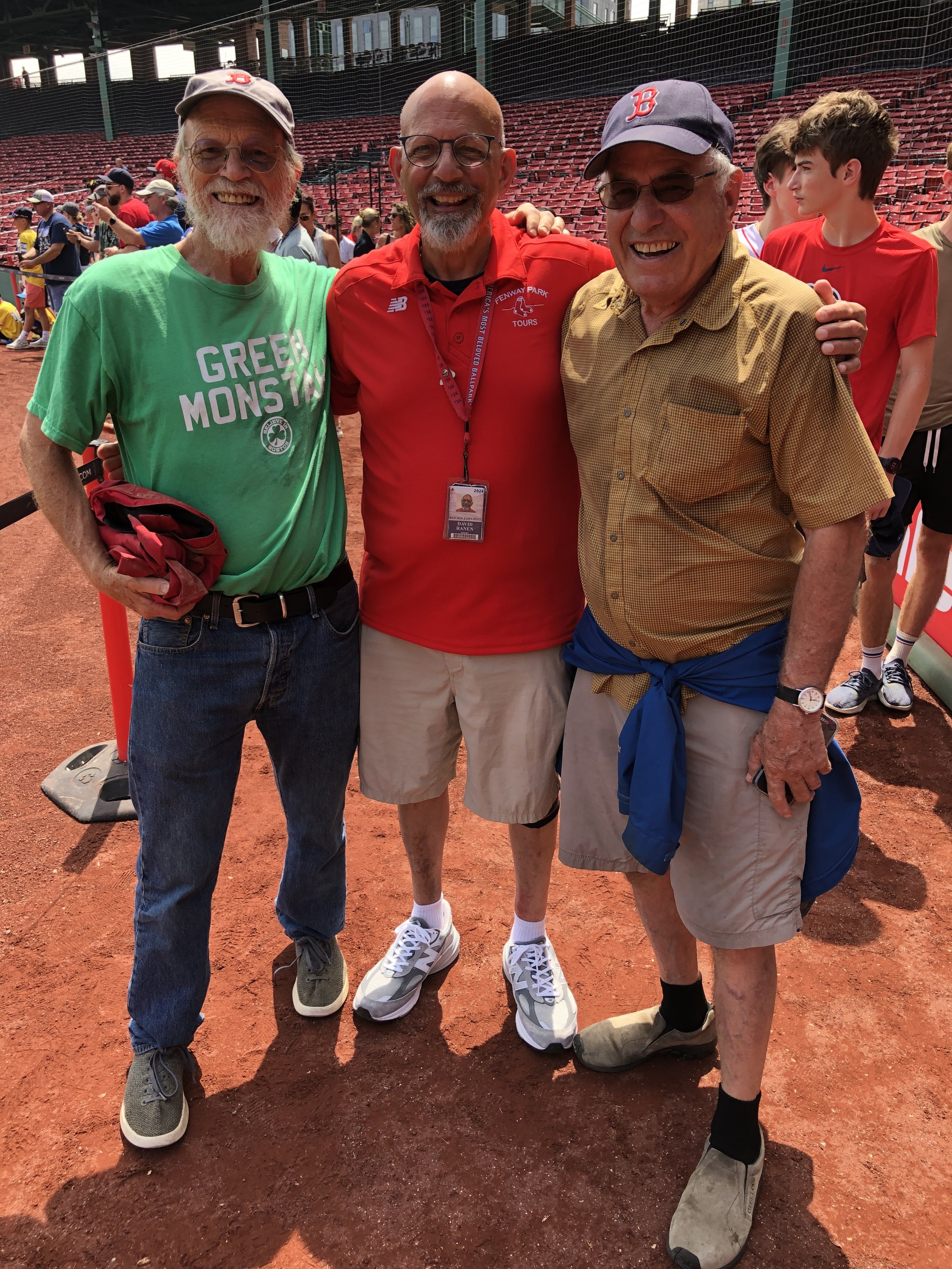
Bunk and Peter (and Fenway tour guide) at Fenway Park, June 30, 2024

Today we had 1.4” of much-needed rain. At times it rained hard, and at other times it was just a mist or drizzle. By the end of the day, we had enough to be of value. It’s rained during eight of the past ten Saturdays. That’s impressive. Although not exactly what the Maine tourist industry or the farm-to-table outdoor food venues are thrilled about, the rain today does amount to many thousands of gallons of free irrigation on the farm. It was a good day to work on the various machines that need repair (ugh), go visit a friend’s nursery for more plants (never enough) and go to town for more parts and tools (always need more.)

Last Thursday night Cammy and I attended the Cary Awards at The New England Botanic Garden at Tower Hill in Boylston, MA. The recipient was our friend, Peter del Tredici. Peter is one of the most knowledgeable plant people in the world. He’s also a Red Sox fan. A year ago he gave us a piece of paint peeled off the Green Monster, beautifully mounted in (what else?) a plant specimen frame. We treasure it!  

June 27, 2025

Today in the orchard

(Today’s report by Skylar again). I spent my time continuing to weed around the apple trees at Finley Lane. It is a big project that we chip away at slowly. Our goal is to cut back the grasses and bedstraw (Galium album) while leaving the perennial “companion” plants. 

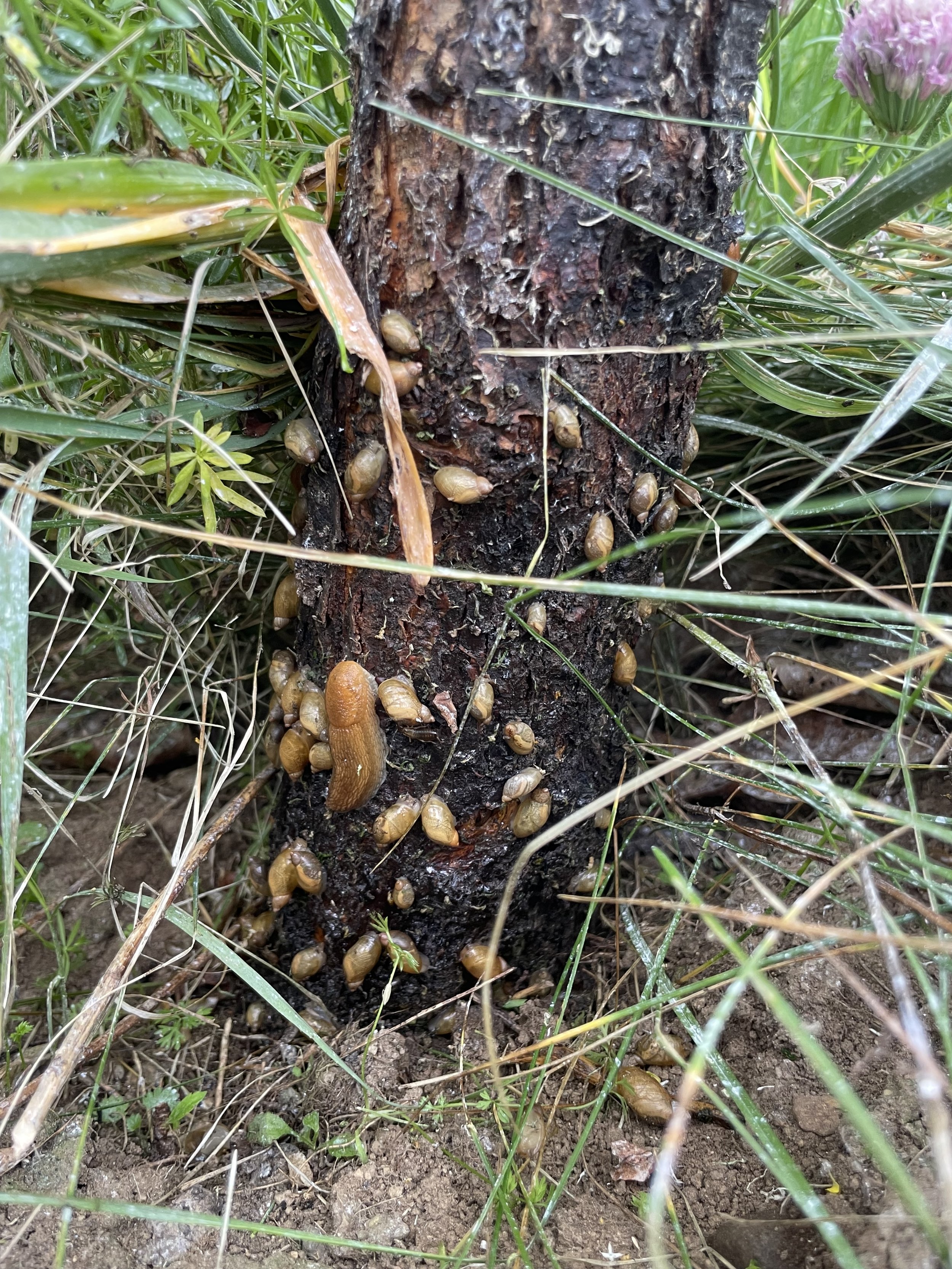
Amber Snails (Novasuccinea ovalis) and a Tawny Garden Slug (Limacus flavus) on a Finley Lane apple tree, June 25, 2025. 

The dense “weeds” around the young apple trees hold moisture, leaving the bark continually damp, and providing the perfect environment for slugs and snails. I was curious about the impact these guys are having; the slugs and snails are all over the place, but they are not causing any visible damage. The slugs are what I believe to be Tawny Garden Slugs (Limacus flavus), and the snails are Amber Snails (Novasuccinea ovalis). They typically feed on tender plant material, like leaves and fruit, rather than woody bark. They can be fairly destructive to young trees and once killed a row of newly grafted trees that had been planted out near the edge of the nursery and then forgotten in the weeds. At the Finley Lane Orchard new trees are planted each year, but the majority are older and can tough out any slug or snail damage. As soon as we free up space around the trunks of the apples, the slugs and snails began to retreat to new locations. It is helpful to have some of their natural predators around. Insects such as Ground Beetles (family Carabidae), Rove Beetles (family Staphylinidae), and Fireflies (family Lampyridae) (all of which I’ve noticed hanging out in apple orchards) love to munch on slugs and snails. If ever you see these insects in your garden or orchard, you can thank them for the good work they do and let them be on their merry way.

June 26, 2025

Today in the orchard

(Today’s report by Skylar). I spent some hours putting in more transplants around young apple trees in the BRC. I watered them in, along with the others that we planted a few days ago. I brought five gallon buckets to the pond in the center of the orchard, chatted with the duck as I filled up them with water, added seaweed extract to each, and then gave each transplant a good watering. Later I returned to the Finley Lane Orchard to continue weeding around the apple trees.

Monarda at Finley Lane, June 26, 2025

Here on the farm we have been chatting about plant identification. When we first learn to identify a plant, we pick up on certain features; the leaf shape, bark texture, flower color, and so on. We observe these plants using other senses too; their smell, the way certain parts feel, and even sometimes the way they sound. John and I laughed about how easy it is to know when nettles (Urtica dioica) are in your presence because as soon as you touch them you are greeted with their unmistakable sting. As I weed around the apples, I have built a new familiarity with the native bee balm (Monarda fistulosa) that surrounds many of the trees. In previous years I recognized it onlyly when it was in bloom. I’ve recently learned that its smell is another notable feature, especially when it’s not flowering. I know immediately when I have accidentally cut a young bee balm stem because I am wafted with their minty, Thai basil scent. At a certain point we no longer have to think and remember the name of the plant we are seeing, we just know. Our brains have the incredible ability to put together all these little details and commit them to memory. These plants become like friends that we recognize in an instant at the grocery store, on a hike, or at a concert. Our brains light up and say, “Hey I know you!” 

June 25, 2025

Today in the orchard

Common Yarrow, June 25, 2025

Somewhat cooler today, but still warm enough for an evening swim. Another day of scything and weeding trees in the Finley Lane orchard. The first Yarrow flowers have appeared. Common Yarrow (Achillea millefolium) has spread throughout the farm though we never think of it as invasive. The flowers look vaguely like Queen Anne’s Lace (Daucus carota—Wild Carrot) which has also naturalized here but hasn’t started blooming this summer. It will soon. We’ll harvest many Yarrow flowers in the coming days, dry them and use them as a tea this winter. Good for our respiratory ailments.    

June 24, 2025

Today in the orchard

Temperatures hit the high 90’s today and may have brushed 100F in some central Maine spots. Laura and Skylar continued scything and weeding the Finley Lane orchard in the morning. In the afternoon Skylar and I retreated to the root cellar and cleaned out the last of the apples and vegetables. We inventoried all the apples as we went along. Most of them went directly to the compost pile, but we made some surprising discoveries as we sorted through the apple crates. Here’s a list of what was in decent shape, eight months after picking.

  • Ashmead’s Kernel: a popular apple that deserves all the praise

  • Ben Davis: still looks good - not sure if it has any flavor yet

  • Black Oxford: still in great shape

  • Harrison: the mid-Atlantic cider apple kept really well. Press it in June?

  • King of Tompkins County: not known as a keeper ,but we found one good one

  • Kit Trio: wrinkled but not rotten

  • McIntosh: almost as smooth as ever

  • Mettais: we love this French Bittersweet

  • Peck Pleasant: golden orb that’s still shining

  • Roxbury Russet: wrinkled

  • Sweet Sixteen: quite perfect

  • Windham Russet: slightly shriveled

June 23, 2025

Today in the orchard

A new Hugel planting bed, June 23, 2025

I prepared and planted two new beds of companion plants out in our one-acre BRC orchard. The orchard is modeled on a jungle of mixed species interspersed between the apple trees that are planted in concentric ovals around a small pond. Each year I create another place to tuck in a few more plants. I have to create these spots because this orchard is situated on ledge. FIrst I cut up brush and lay that down. Then I cover the brush with piles of fresh-cut vegetative debris—primarily comfrey but also nettles and ferns. I top that with several inches of soil that I scavenge from my coveted pile of rotting stumps. This is a mini-version of Hugelkultur. Today I dug “hills” as you would if you were planting squash, filled each hill with compost and planted the companions. These planting sites are typically only a hundred square feet or less and located a few yards from one of the younger apple trees. Eventually the apple tree roots will find this new source of nutrients. Meanwhile the companions themselves will attract pollinators, improve the soil and help to create a balanced ecosystem in the orchard.   

June 21, 2025

Today in the orchard

Today was Farm and Homestead Day at MOFGA in Unity. It’s an annual event featuring an assortment of hands-on workshops attended by a couple hundred agricultural enthusiasts of all ages. The workshops are ongoing throughout the day and include scything, sharpening tools, spinning wool, making compost and other useful farm skills. It’s low-key, casual and quite fun. For the past few years I’ve led an apple ladder workshop. This year Skylar joined me and built herself a ladder. Skylar did most of work but I was there to be a guide. Throughout the day, other folks stopped by to watch us work, assist us, or just hang out and chat. It was the perfect way to spend the first day of summer.

Skylar’s ladder is about ten feet long. The rails (side pieces) are cedar (Thuja occientalis), the rungs are ash (Fraxinus americana) that she fashioned on our shaving horse with a draw knife, and the “tongue” piece at the top is apple wood. (Unsure which cultivar!) We use “Northern” White Cedar which is the more common cedar known for making shingles, fence posts, porch decks etc. It is light weight and very rot resistant. We like it for all those qualities, especially the light weight. There is a second “Atlantic” White Cedar (Chamaecyparis thyoides) in Maine. Atlantic White Cedar is much more rare.   

June 20, 2025

Today in the orchard

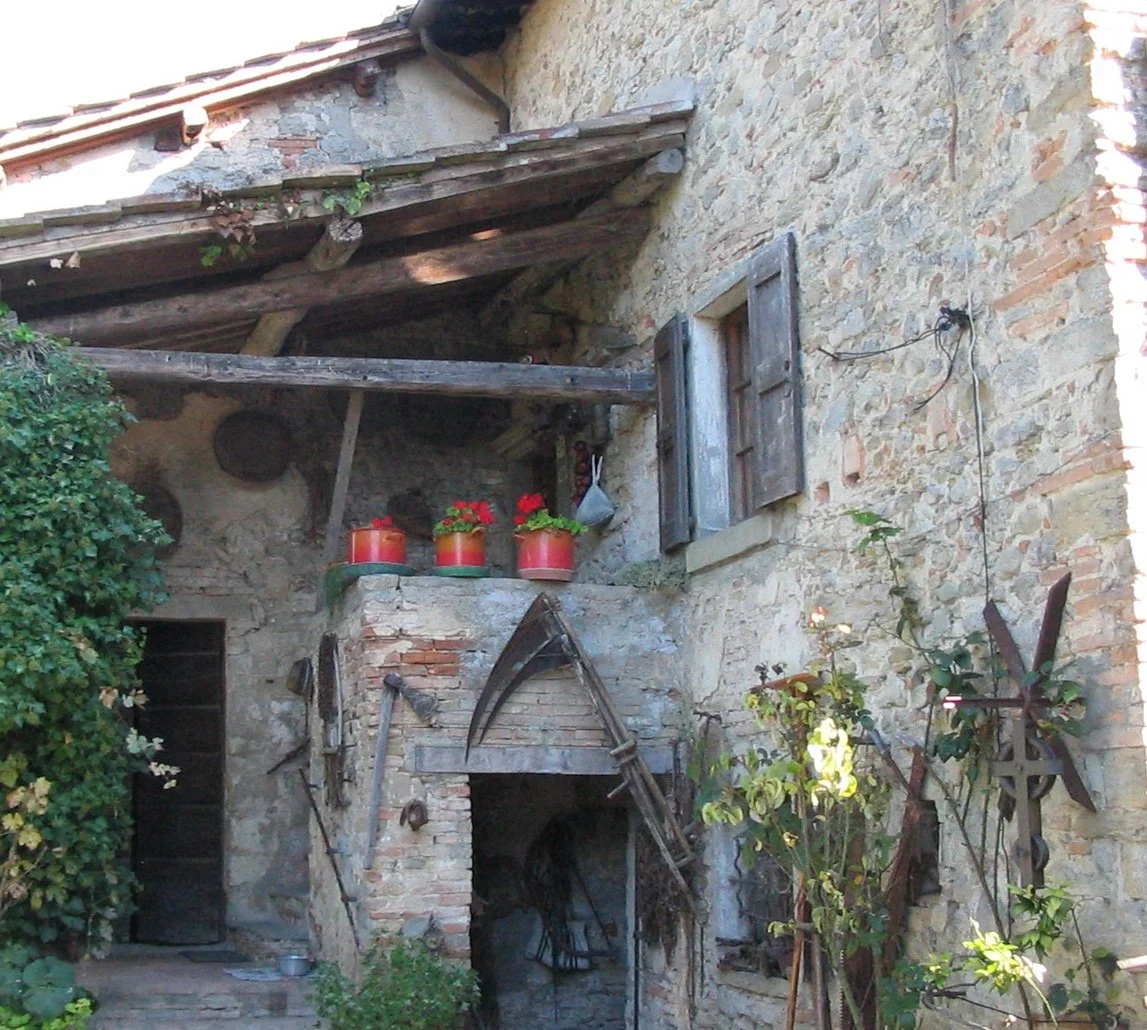
Scythes waiting for orchard action above the door, Italy 2006

The weeding continues around the trees in the Finley Lane Orchard. There are about four hundred. The process is a simple one: scythe or sickle the bedstraw and “unwanted” tall grasses away from the base of the tree; trim off any rootsprouts from below the graftline; cultivate the ground out about 12” from the trunk. Only three or four tools are required: a sickle or a scythe, a hand-cultivator (a “digger”) and a pair of hand pruners (we like “Felcos”). These are simple tools. They’ve been around for a long time in one form or another. With the exception of the hand-pruners, a farmer from two thousand years ago would know them well.   

Weeding Finley Lane is like one of those fifty-mile marathons that are popular these days. It’s not a sprint. In fact, much orchard work is like a really long marathon. Time becomes irrelevant. And the race, if you can even call it that, becomes one step at a time. One tree at a time. One breath at a time. On a good day, you might get thirty trees done. Next time you don your HOKA’s and head off for the trail, think of us weeding away at Finley Lane. And like that most famous marathon of all times—The Tortoise and the Hare—guess who wins?

June 19, 2025

Today in the orchard

Catching a swarm, June 19, 2025

Today we began to weed the Finley Lane Orchard. Sounds like a big job (it is), but it moves along quickly. We’ll be doing this for the next couple of weeks and will have details and photos in the next few days.

The big news, however, is that we had another swarm. We had had one on May 27 that we were too late to capture before the bees disappeared into the woods. This time we were ready!  We were weeding trees not far from the hives when it became evident that the bees were up to something really intense. They were getting louder and louder by the second. Within three or four minutes the sky above us was dark with a gazillion bees in a frenzy. It was wild. Before long they bunched up on the branch of one of the Wickson trees a few feet away. Fortunately the branch was only four feet above the ground.

Seth, the local beekeeper, had given us a special bee-catching cardboard box. Skylar held the box immediately below the swarm. Marc gave the branch a quick short shake, and the swarm fell into the box. It worked great, but in less than a minute, there were more bees bunched up on the branch. So we did the process again and got the rest. There were bees all over us, but, incredibly, none of us got a single sting. After about ten minutes, we plugged up the entry hole on the box when it appeared that no bees were leaving. Later in the afternoon, Seth arrived and examined the contents of the box. We had gotten the queen as well. We have a new hive!

June 18, 2025

Today in the orchard

Black Oxfords, fresh from the root cellar, June 18, 2025

I’d been curious about how the Black Oxfords were doing in the root cellar, so today I went through the last bushel and picked out enough to make a batch of sauce. The fruit looked great, and the sauce was excellent. One of Black Oxford’s various synonyms was “4th of July Apple.” As we use up the last of the apples, we’ll be sure to hold back enough Black Oxfords to see if it’s worthy of the moniker. (Only sixteen days to go.) Phooey on those who bad-mouthed “BOX” over the years. It is a great apple.

Today we mulched the potatoes. They are all up now. We plant them later than many of our friends do but still get good results. We don’t “hill them” as is often recommended; instead we mulch them heavily with old hay. The mulch keeps the weeds down, keeps the ground moist and prevents the potatoes from turning that weird bizarre green color.            

June 17, 2025

Today in the orchard

The Merlin app that many people are using these days is revolutionizing bird watching. We used to call it “bird watching.” Now, I suppose we should call it “bird-hearing.” Yesterday we saw/ heard what we thought might be a Northern Oriole along the woods beyond row seven in the Finley Lane orchard. But after a look at Merlin, we had to rule out Oriole because it had a white breast. Today we heard the same call, threw our tools into the air and rushed for the phone. Eastern Towhee. It’s another reason to have your phone in your hands every second you’re out in the orchard (just kidding). I went back and looked at a few Eastern Towhee photos and, by gosh, I think Merlin was correct. We’re living in a bird sanctuary! 

Black Locust, Kew Gardens, 1998

There are so many plants blooming on the farm now, it’s tough deciding which ones to feature. But today I’ll mention Black Locust (Robinia pseudoacacia). Black Locust is a native North American tree with a checkered reputation. It does spread by root suckers and can rapidly create stands of trees in locations you might not want them. On the positive side the wood grows very fast and makes fence posts that won’t rot for a hundred years (or so). Boat-builders love it for framing hulls. We have a small cluster of trees that have formed from a single seedling I planted about 25 years ago. The trees are already 30-40 feet tall. The flowers are also edible. Although I love our trees, my favorite is one I photographed in Kew Gardens in England about thirty years ago. It was planted in 1762!          

June 15, 2025

Today in the orchard

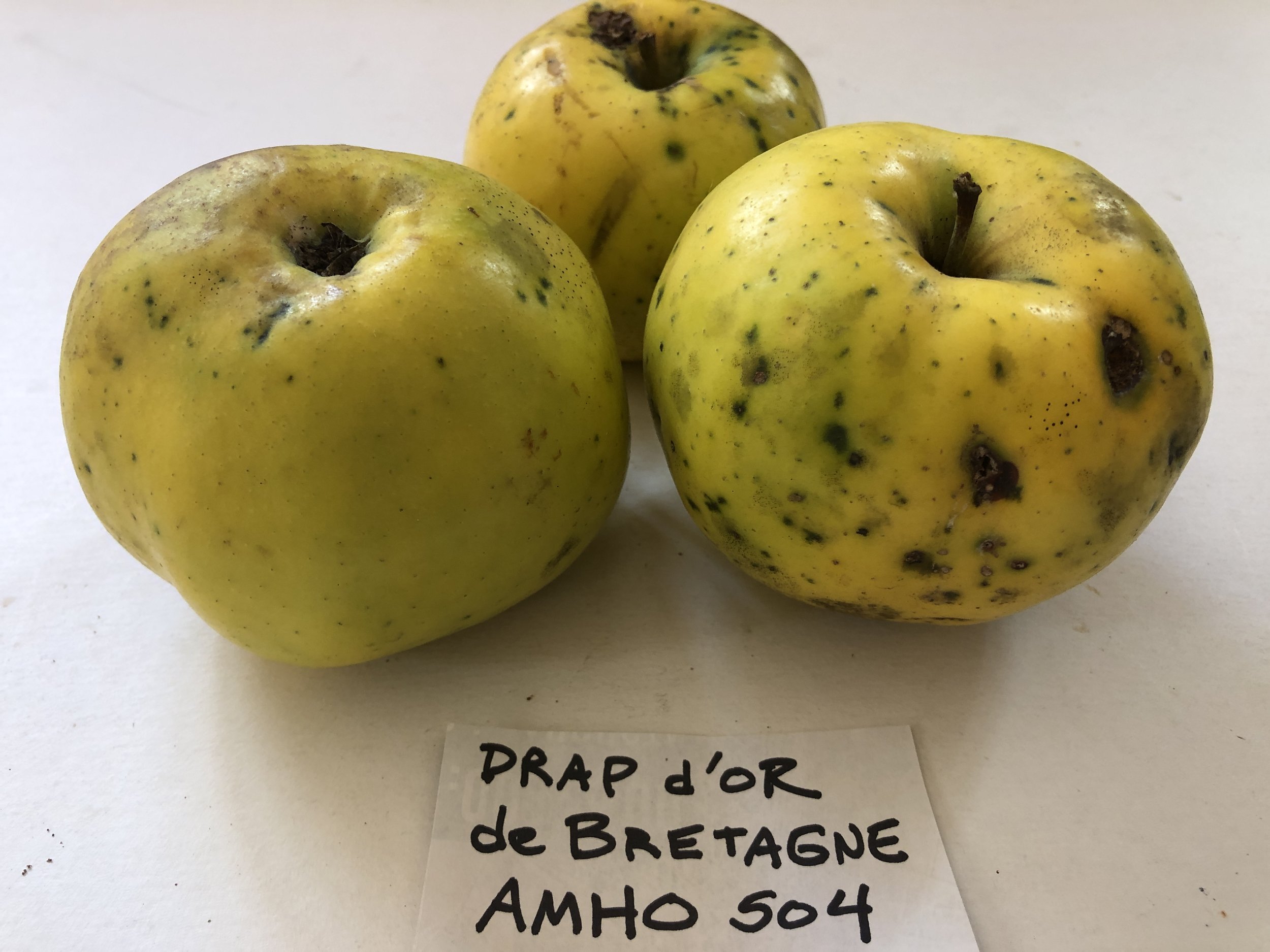
Today I’m veering off into apple cultivar spelling. Recently there has been a good deal of interest in the discovery of a rare, historic, French apple on Verona Island, ME. Verona Island is at the mouth of the Penobscot River, one of Maine’s largest and most important waterways. The area was first inhabited by Europeans (French) about four hundred years ago. The apple discovery is of particular importance because it is the only tree of this cultivar ever found in North America and because it is in the ancestry of many of North America’s most well-known cultivars. The apple is called Drap d’Or (Cloth of Gold). Inconveniently there are (at least) two apples that were historically called Drap d’Or. Consequently the apple discovered in Maine has a modifier added to the end: “de Bretagne.” The name has been spelled Drap d’Or de Bretagne. But, it has also been spelled “de Bretagna” with an “a” at the end.  The other well-known Drap d’Or is referred to as “Drap d’Or de Guemene. There is also a new question about “d’Or.” It appears that the correct spelling may be all lower case: “d’or”. (Please weigh it if you have opinions.)

On June 10 I received an email from Patrick Cardon, a Maine orchardist who is French and lives much of the year in France. He read about the discovery in the media. Here is what Patrick wrote to me: 

“I noted that your hand-written label was correctly spelled in the use of “Bretagne.”  The press however has it as “Bretagna!”  Please help them get it straight because “apples to oranges”, I bet, they’ll create a bad precedent.”  

This piqued my curiosity. On June 15 I wrote to Bob Doan, my long-time friend and a former Colby College French professor. Here’s what Bob wrote back to me:

“I think this is pretty straightforward. Drap d’or is French (“cloth of gold”). Bretagne is French for Brittany in northwestern France. There seems to be no question that this is a French apple. Bretagna is Italian for Brittany. Unless there is some justification for an Italian connection to the apple’s history I can’t imagine how Bretagna could be valid. There is nothing in French grammar that would prompt the use of an “a” at the end. My guess is that someone pronouncing Bretagne in French would (should) make it sound like lt rhymes with Tanya, like all other French words that end in “-gne”. 

I ran this as a query in ChatGPT and got the exact same interpretation. I can post the screenshot as validation, but I really don’t think there is any debate here.”

After hearing from Bob, I thought it might be useful to see other examples in French that might be similar. So I asked him to send other analogous examples. Here’s a list that he sent:

  • Galette de Bretagne – a savory buckwheat crepe from Brittany

  • Beurre de Bretagne – butter from Brittany, known for its high quality and often salted

  • Cidre de Bretagne – cider made in Brittany, often artisanal

  • Caramel au beurre salé de Bretagne – salted butter caramel from Brittany

  • Fruits de mer de Bretagne – seafood from Brittany

  • Phare de Bretagne – lighthouse of Brittany

  • Forêt de Bretagne – forest in Brittany

  • Presqu’île de Crozon, perle de Bretagne – Crozon peninsula, pearl of Brittany

  • Costume traditionnel de Bretagne – traditional costume of Brittany

  • Musique folklorique de Bretagne – folk music from Brittany

  • Tapisserie de Bretagne – tapestry from Brittany

  • Sel de mer de Bretagne – sea salt from Brittany

  • Chouchen de Bretagne – a type of Breton mead

  • Produit de Bretagne – product of Brittany (a common label/logo for regional items)

  • Vêtement de Bretagne – clothing from Brittany (often refers to maritime styles)

I also wrote to my sister Emily Bunker who is knowledgeable about French and grammar in general. She replied: 

“ I know enough about French to have an opinion, and I wholeheartedly agree with every point Bob made! Including his guess on how the argument developed in the first place (because of how “-gne” is pronounced). Is there a possibility of an Italian connection? If not — it must be E! “

Emily then contacted Austen Creger, a friend who is fluent in French and received this reply:

“I agree with you all 100%, no way is there an A at the end of Bretagne. I wonder if someone is being overly (and mistakenly) clever because apple is feminine in French. Regardless, changing a location, Bretagne, to agree with a noun is not done. I think the Italian “gna” ending having somehow slipped in there makes some sense.  But not correct! I vote “e””

I (JB) am not a French expert by any means, but I do want to spell our apple cultivars correctly. It matters. It appears as though there is a consensus that the correct spelling should be with an E, not an A. I’m sending this email to Nick Howard in the Netherlands and Cameron Peace at WSU in Pullman. Perhaps the two of them and some of their colleagues will find this useful. Thank you everyone for your input!

June 14, 2025

Today in the orchard

Weeding crew

The big effort today was to weed the young nursery trees. Stay on the weeds or the little trees will disappear forever. It was wet early, and the mosquitoes were hungry; but by noon the sun was beaming down on planet Earth, and we congregated at the nursery. The mosquitoes retired to the tall grass and water-barrels. Four of us (Alyssa Gavlik, Kevin ?, Skylar and I) held a weeding-bee for the afternoon and were able to weed about 500 small trees. That gave us hours to catch up on a bit of nearly everything. By the end of the day the Nursery was magnificently weedless.

Weeding is an essential activity on the farm and in the orchard. To do it well we must dive deeply into the weeding and love what we do. It is not easy, and it takes time. But, it can be fun and joyful. It reminds me of what Thich Nhat Hahn often said about doing dishes. The two activities are not that different.

“I enjoy taking my time with each dish, being fully aware of the dish, the water, and each movement of my hands. I know that if I hurry in order to be able to finish so I can sit down sooner and eat dessert or enjoy a cup of tea, the time of washing dishes will be unpleasant and not worth living. That would be a pity, for each minute, each second of life is a miracle. The dishes themselves and the fact that I am here washing them are miracles!” Thich Nhat Hahn