September 13, 2025

Today in the orchard

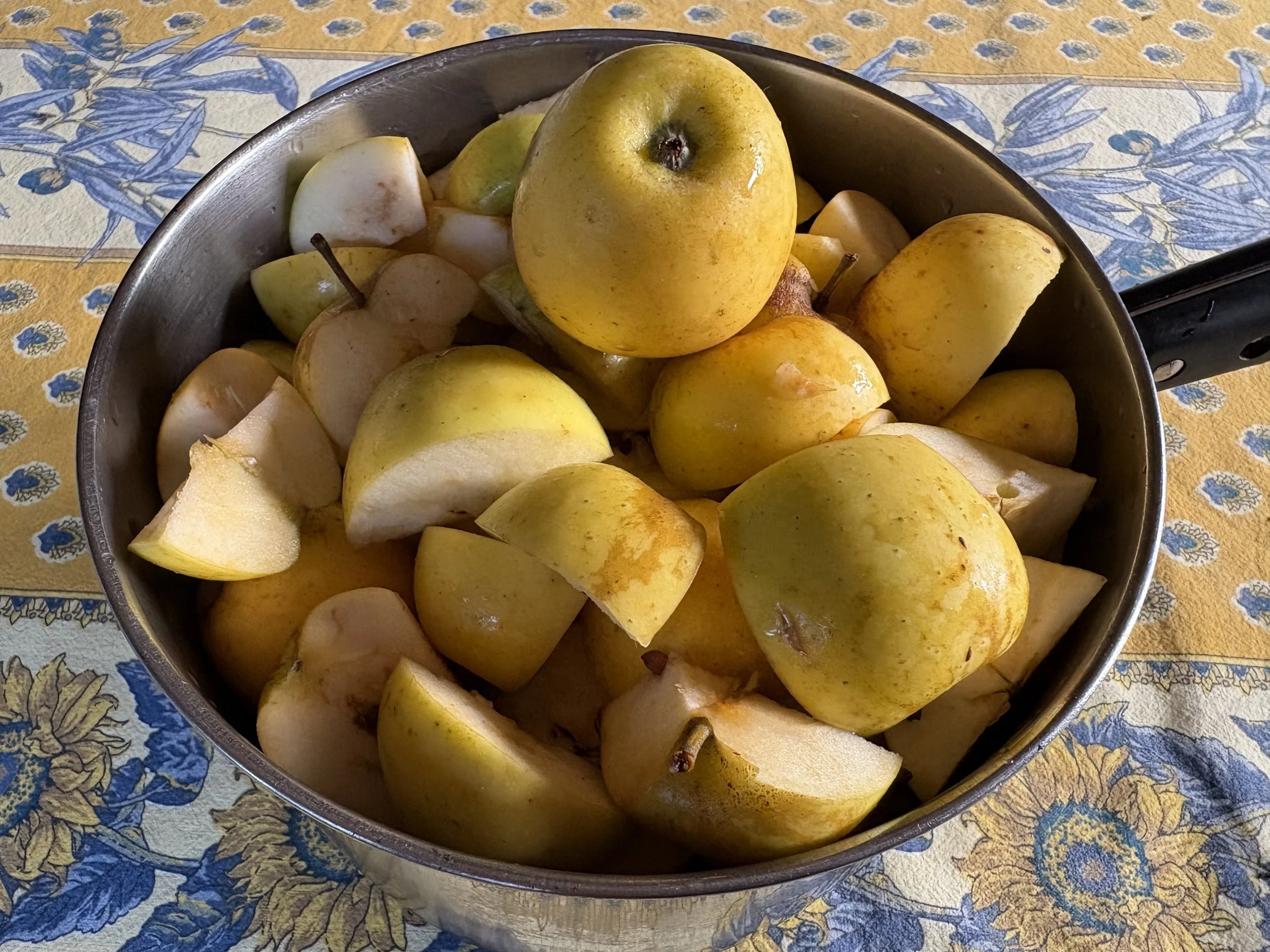
Today I woke up on the shores of Great Pond in Belgrade, ME. It’s the place I call the center of the Universe. (Move over, Sun.) It’s also the location of the Annual Belgrade Pie Taste-off, an event where we serve three specially curated, single-variety apple pies to a large group of friends who sample the entries and then vote on their favorites. It’s a wild and fun evening. You eat a thin slice of one pie and you think it’s an apple pie. You eat two and you notice, “Hey, these are different.” You eat three and a favorite inevitably emerges. All apples have different flavors and textures. Some won’t cook in an hour, the time it takes to bake the perfect crust. Others turn into soup (think Macs). Some have intense flavors while others lose their flavors. Some are great pie apples while others should never see an oven. Every variety is—of course—unique. 
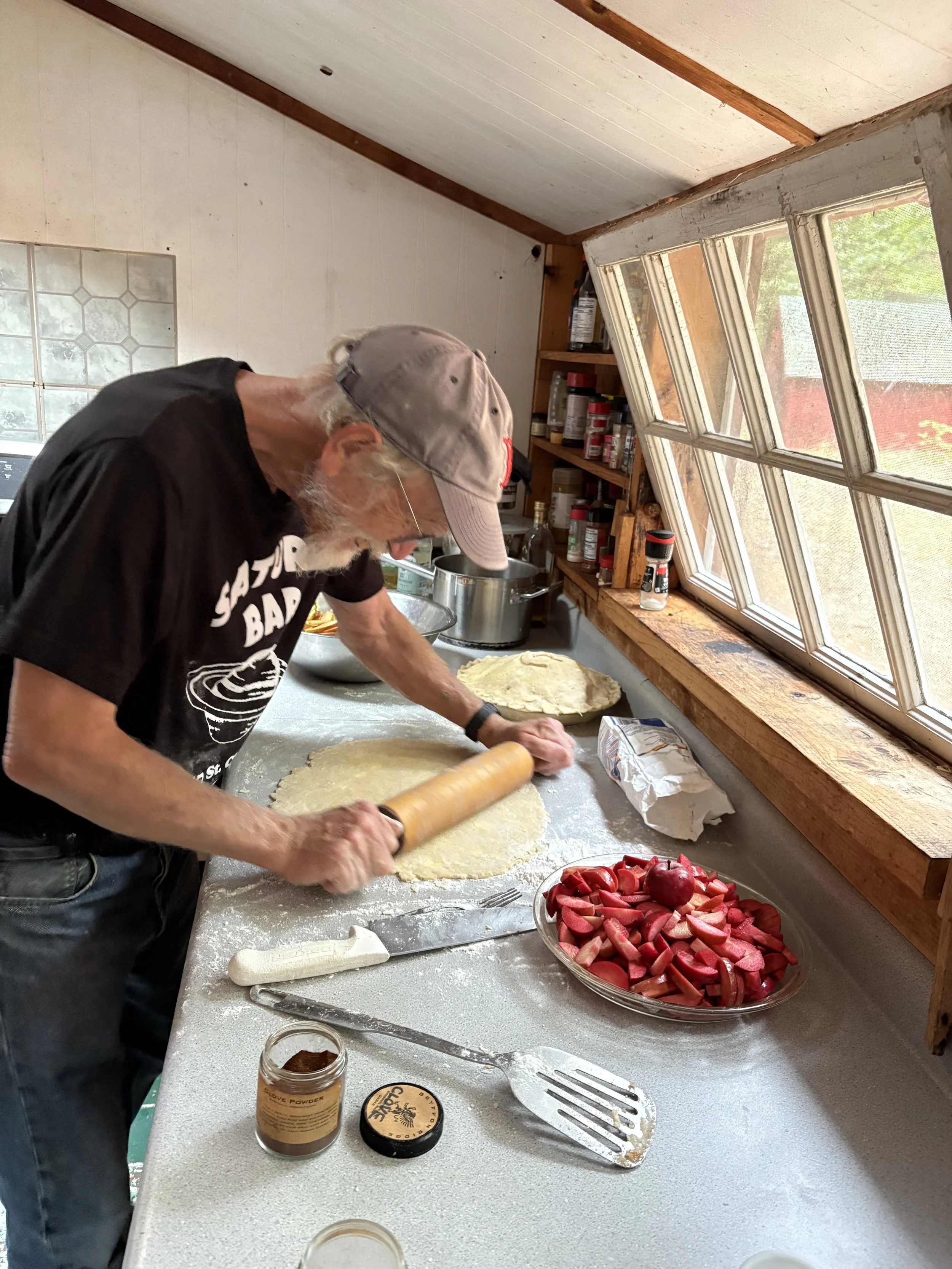
Roll out the dough, Sept 13, 2025

I start early in the day making the three crusts right after breakfast. I leave them to chill for a few hours and then assemble the pies later in the afternoon. This year's three apples were Red China, Charlamoff and Somerset of Maine. Charlamoff and Somerset are both beautiful fruit on the table. The brightly-colored red-fleshed “Red China” was the most tart of the three apples before baking. It retained that tartness, but its flavors loved the oven. When the votes were tabulated, it was the resounding winner. Perhaps it was the intense red-color, or maybe it was the tart flavor. Whatever it was, the Belgrade taste-off crowd loved it. 

Red China is also becoming popular with sauce-makers. Look for it in your supermarket apple display sometime soon?

September 11, 2025

Today’s highlight was taking a trip over to the Maine Heritage Orchard at MOFGA in Unity to meet with an old friend and supporter who had not yet been able to see what we’ve accomplished in the past 12 years. The Maine Heritage Orchard is the location of our preservation orchard, now numbering close to 350 apple and pear trees all grown historically in Maine. These are cultivars (aka varieties) that we’ve rediscovered over the past forty years and deemed worth saving for present and future generations. 

New Sharon, Maine, September 2025

“MHO” as we call it has been the ultimate in collective cooperation and group effort. It’s a great example of the fun adage, “Teamwork makes the dream work.” It’s taken hundreds of people around Maine and beyond to make it happen. We have our two-person team of orchard managers—the ones who keep the trees and hundreds of companion plants alive. (Without them, none of this would happen.) We have the other MOFGA staff who wear many hats but who support the orchard whenever they can. We have the volunteer historians, explorers and data-base freaks who follow leads for new MHO candidates, attempt to identify rare discoveries, document the huge amount of information we gather and connect with other collectors, academics and scientists across the USA and over seas who are all collaborating in this amazing effort to sort out the history of apple around the world and make this treasure available to future generations. Lastly (but not at all least) we have dozens upon dozens of individuals who have led us to old trees and supported the project with their time and donations. It’s fantastic.  

Want to be involved? Keep a look-out for old apple trees everywhere you go. You’ll never know when the next lead just might appear.

September 7, 2025

Today in the orchard

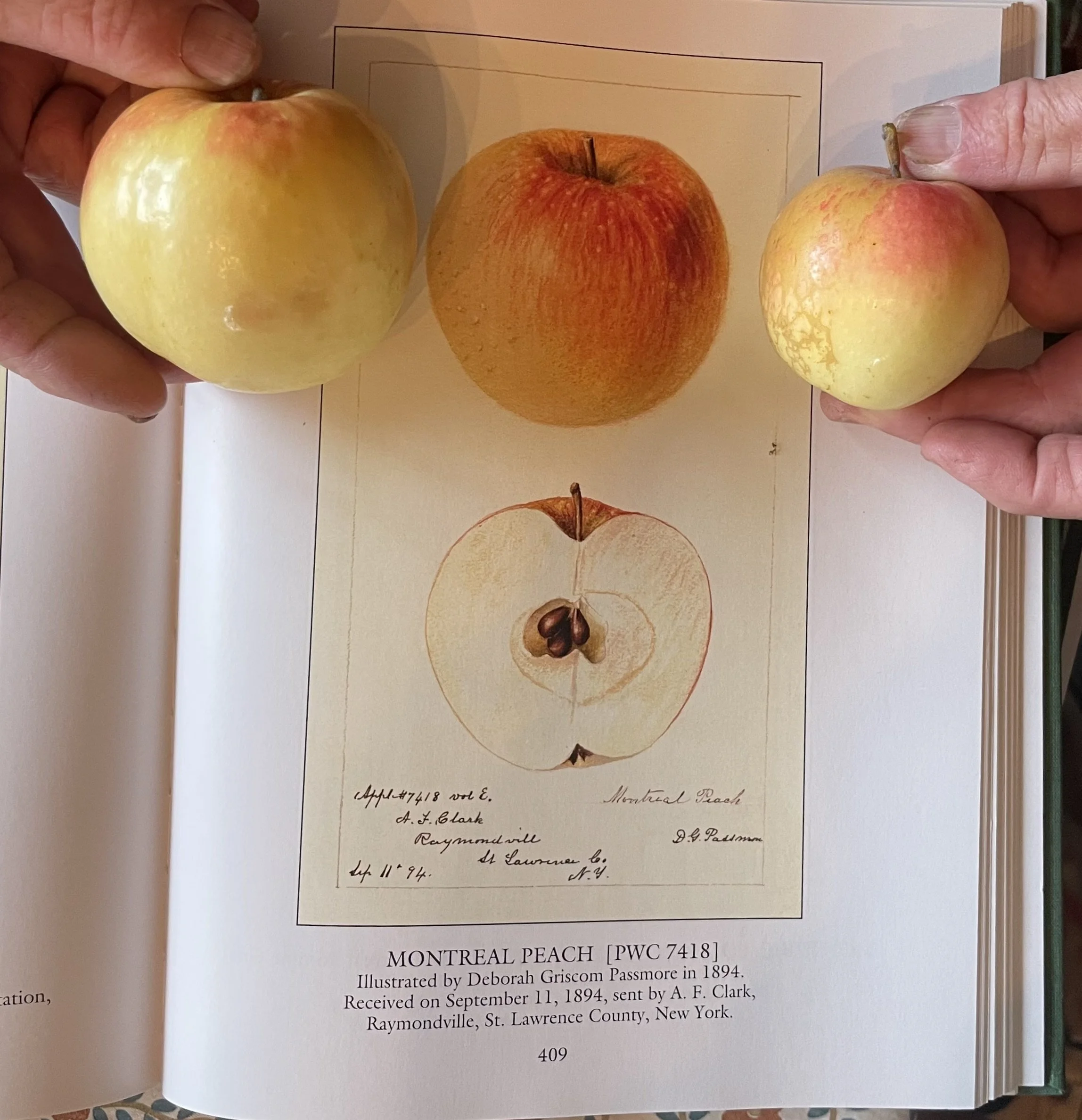
Our Peach of Montreal and the 1894 USDA watercolor, Sept 7, 2025

Last night we were blessed with about an inch and a half of rain.  At times it was coming down quite powerfully, especially early in the evening. Today the much-needed rain continued off and on. We spent most of the day indoors attempting to solve apple-identification mysteries. Skylar took on the apple we’ve been calling Peach of Montreal (aka Montreal Peach). It was given to me as scionwood about fifteen years ago by Josh Karp of Cate Hill Orchard in Greensboro, VT having been identified for Josh by old-timers in the area. A recent DNA profile threw that ID into question, suggesting it was Iowa Beauty, not Peach of Montreal. After several hours of slicing up and examining fruit and reading Bussey’s History of North American Apples, we are certain that we do have the correct POM after all. 

There are any number of things that could have led to what is an apparent mix-up somewhere along the way. I will now resubmit leaves that might have been mixed up in the DNA testing. I will also look at the apple that became the original DNA submission for the reference panel to which our leaves were eventually compared. That tree is in Iowa, and hopefully I can get apples from it this fall.

The solving of apple ID mysteries is incredibly time-consuming and, some might say, tedious, but for the right geek it is fun and rewarding when you sort out something like we were able to do today.  Meanwhile, the rain came to an end, and the world began to dry out. Tomorrow we’ll be back outside in the orchards.

September 5, 2025

Today in the orchard

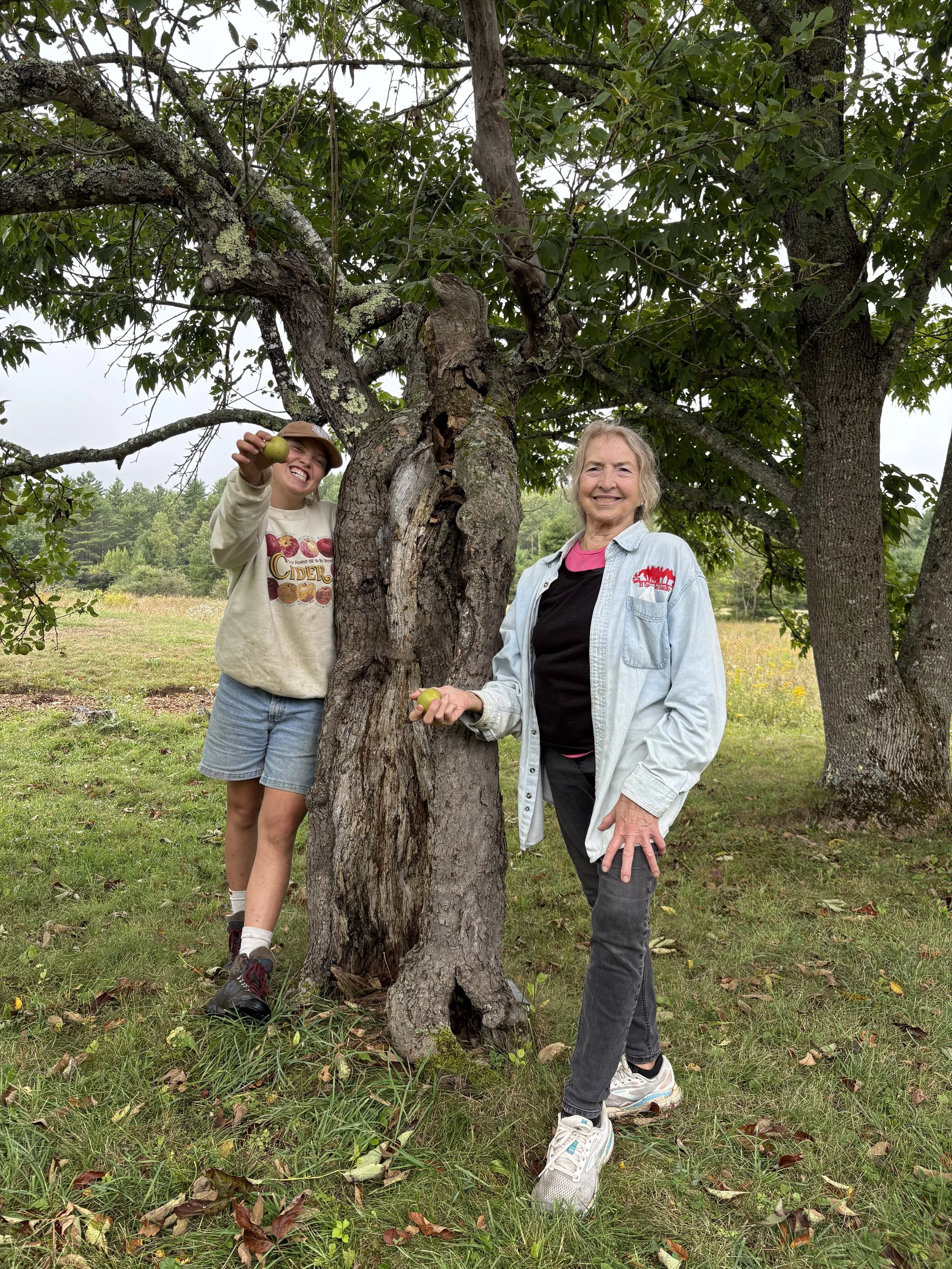
Carol Gillette and the Tozette Russet, Sept 5, 2025

In the morning we hosted a small apple sauce tasting party with our visiting friends. We tried five different single-variety sauces. No clear winner although Red China did produce an electric-rose-pink sauce that could be described as a visual grand slam. We then packed apples to sell at “Apples Jubilee!” tomorrow in Cushing at the Langlais Art Preserve in Cushing where I will give a talk. Later we visited two ancient, nearby trees—the Parmenter Russet and the Tozette Russet—where we collected fruit for Cushing. Both trees have been DNA profiled. Parmenter is GR1, the famous Golden Russet of Western New York. Tozette remains unidentified. For now we call it GR2 and have been working on an ID. For now it remains a top-priority mystery.

We have found other ancient GR2 trees in several midcoast Maine locations. GR2 is also in the parentage of the possible Bourassa and the possible Union Pippin, both ancient trees themselves. We have not found GR2 outside the state, suggesting it may be a locally selected seedling. After reviewing Z.A. Gilbert’s 1896 article, “The Russets of Maine”, I think there is a possibility that GR2 is a “Faux-English Russet” that was being grown in Waldo County (the general location of all the GR2’s). Gilbert writes, “An apple has been grown under the name of English Russet to a considerable extent in western Penobscot county and was also frequently found a few years ago in Waldo county… It is emphatically distinct from the English Russet of the books…”  Gilbert includes a brief phenotypic description of the apple which generally fits GR2. We will do a deeper dive into the apple later this fall when the fruit is ripe and report our findings.

September 4, 2025

Today in the orchard

Somerset of Maine, Sept 4, 2025

We were back in the orchards picking today - Somerset of Maine, Red St. Lawrence and Hung Hai Tung. Somerset of Maine is a large, rusty red, pie apple that originated in Somerset County. The fruit is beautiful.. SOM is sometimes confused with the apple, Thompson, also from Somerset County. (You can read more about that saga in Chapter 9 of Apples and the Art of Detection). 

Red St. Lawrence is a red sport of the famous, historic, Canadian all-purpose cultivar that was discovered in Newburgh, ME. The contrast of the bright red stripes and the dull red ground color is more than amazing. Both the sport and the original St. Lawrence are cooking apples of outstanding quality. 

Lastly, Hung Hai Tung is a selection of Malus asiatica discovered in the 1920’s by fruit explorer P.H. Dorsett in Jilin province, China at the Buddhist temple of Fa Hua Ssu. Although introduced as an exceptionally beautiful, white-flowering ornamental, the small, tart, red, juicy, slightly bitter fruit may also have potential for cider.

Later in the afternoon friends came to visit, and we put them to work preparing to cover-crop this year’s garlic bed. Weeding is always a excellent way to put friends to work ,and have lots of time to chat and catch up in the process. And the bed looks great. 

September 2, 2025

Today in the orchard

The fruit is ripening at an increasingly rapid pace. It’s an ongoing challenge to keep up. One thing I’ve learned (sometimes the hard way) is you have to be out there checking on the trees daily.  Sometimes, you have to check hourly. Today we picked the last of the Gracious plums as well as all the Kahinta plums. You don’t actually “pick” the plums. Rather you gently touch the fruit ,and it drops into your hand. It’s unbelievable. 

Gracious is an interesting plum. It an absolutely delicious fruit with a great texture, although what we call Gracious may be incorrect. I received the scionwood for “Gracious” about forty-five years ago from Robert Kurle at NAFEX. Bob sent me a pile of plum scionwood in the early 1980’s, and I grafted it all.  At that time I was just learning about plums. Some of the cultivars he sent were the European types which all eventually got black knot (Apiosporina morbosa). In the end I cut them down and quit growing them. The hybrid types that he sent grew well, and I continue to grow them. They do not get black knot, are hardy and the quality is excellent. 

One drawback with the hybrids is that they are clingstone, with one exception: Gracious. Supposedly Gracious is a hybrid type that is freestone. I’ve grown what I presumed to be Gracious for nearly a half century. The quality is excellent, but the fruit is definitely not freestone. This could mean that Bob or I (or someone else) mixed up the scionwood along the way. It could also mean that Gracious never was freestone. As far as I know there is no plum DNA profiling being done. If any reader out there knows of anyone growing true freestone Gracious plums, please point them in my direction. Meanwhile, we continue to grow (and love) our “Gracious”. It’s a very good plum, clingstone and all.   

September 1, 2025

Today in the orchard

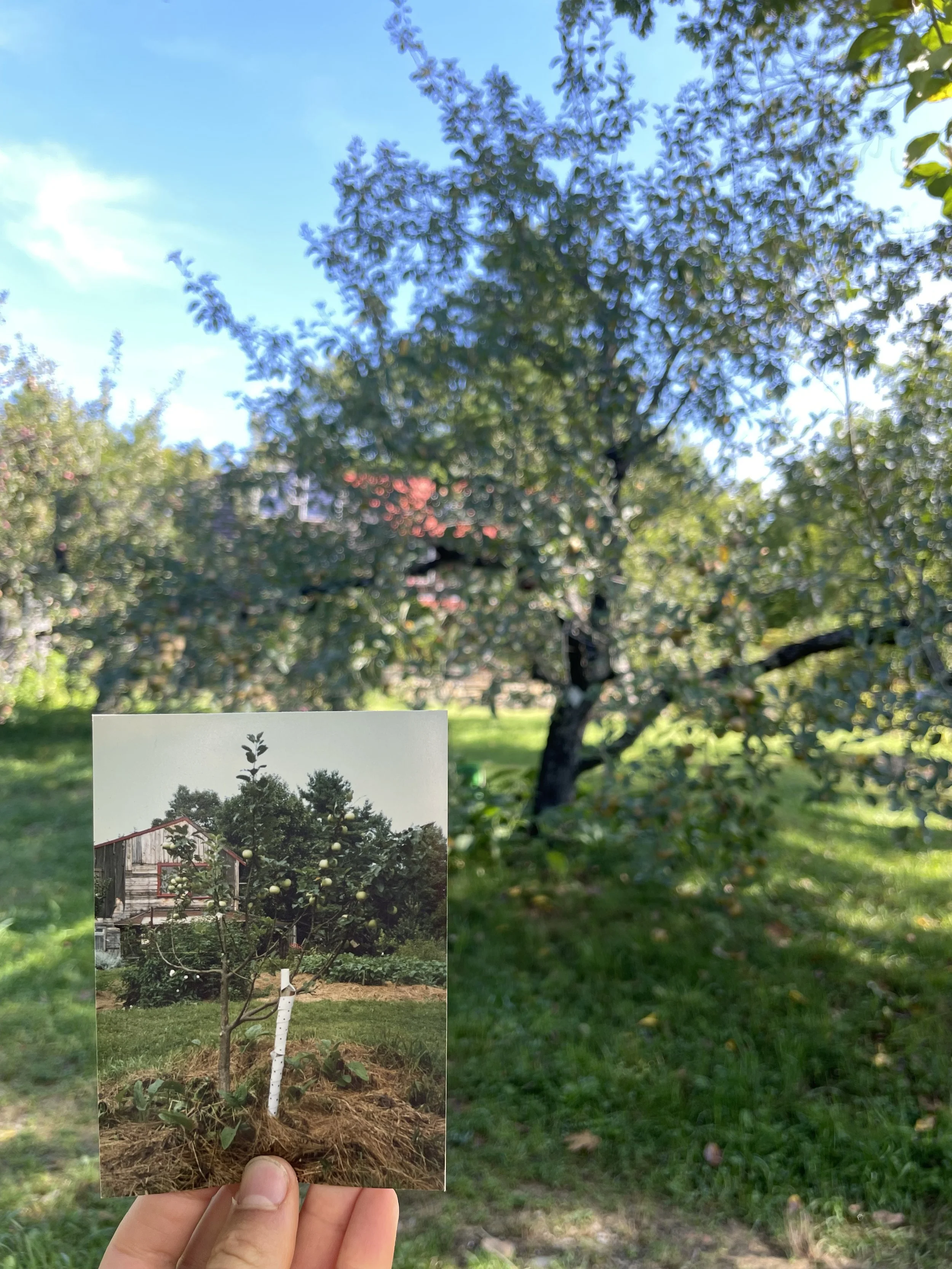
The Garden Royal tree, then and now, photo taken September 8, 2025, original photo from 1985

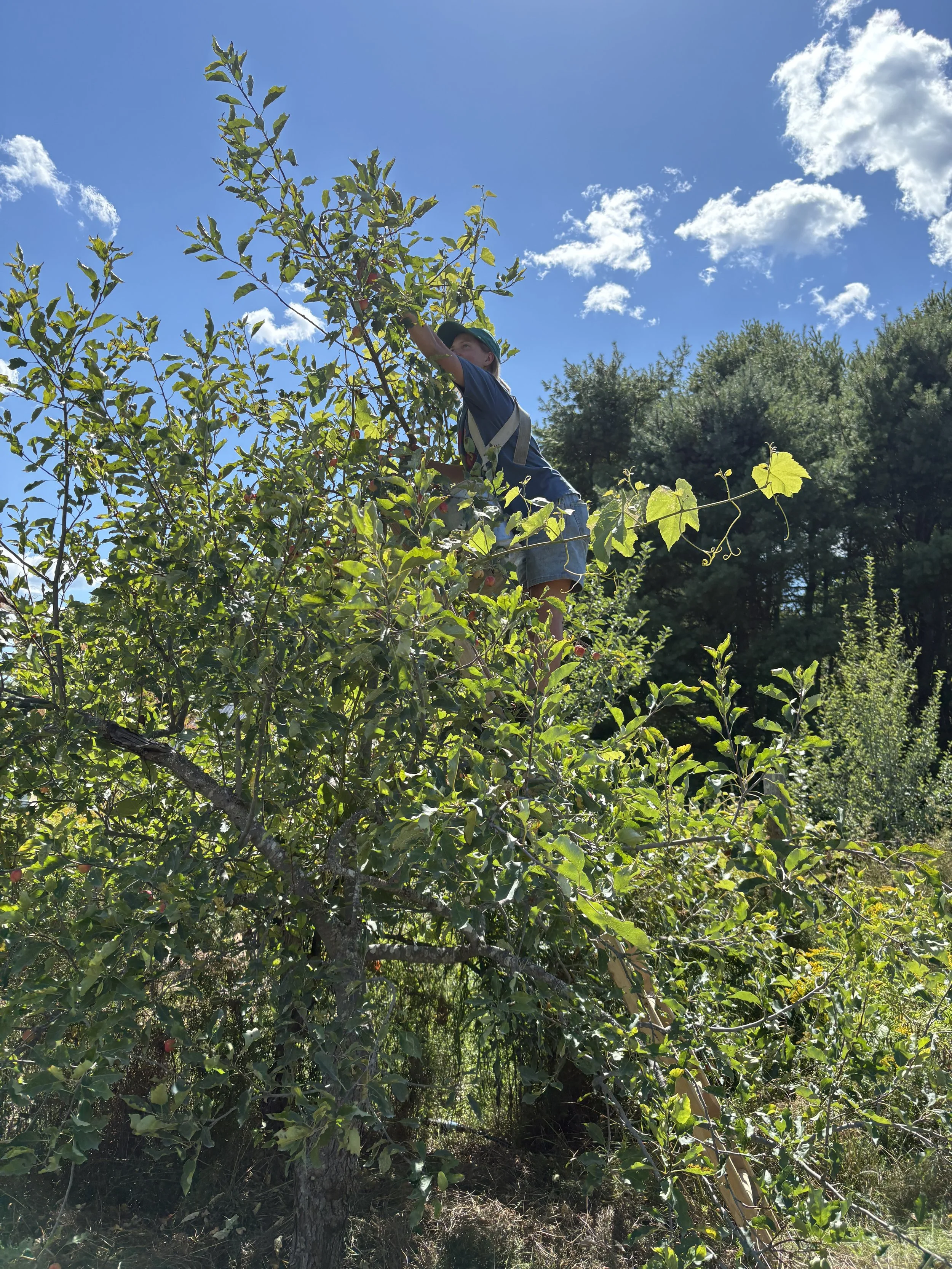
(Report by Skylar.) August has ended and just like that, September has begun. I spent a chunk of the morning harvesting the Garden Royals. While the whole top of this tree is Garden Royal, it’s also grafted with Red St. Lawrence, Tolman Sweet, and Pomme Gris. Despite all sharing a root system, it’s clear that Garden Royal has a different agenda than the rest in terms of how to grow. The Garden Royal part of the tree is tall and upright, while the other varieties spread low and wide, leaving the tree looking slightly confused. Once upon a time this tree was all Yellow Transparent, slowly to be crowded out by the current four cultivars. It was one of the first trees Bunk planted on the farm some fifty years ago. How wonderful it is that I get to climb in its branches today. 

Also on the docket was harvesting the Foxhill and September Ruby apples, as well as the Gracious plums. The Garden Royals were in beautiful shape: we hardly had any to cull. The Sidrunkollane Taliouns weren’t in quite as nice of shape, but we were still left with bushels of ‘seconds’ and ‘utility’ fruit.

In the evening I made two more sauces, one with Red China apples and the other with Sidrunkollane Talioun. Making single variety sauces has been a fun practice for me, and a great way to get a sense of a particular cultivar. The Red China sauce came out a vibrant pink and is sharp with perhaps something of a savory note in there. The Sidrunkollane sauce is a warm, pale yellow, acidic but more balanced with sweetness than the Red China, and to me has a soapy or perfumy fragrance to it. Either would be great additions to a mix, or something interesting to cook on their own in a pie, crisp, sauce, and so on

August 30, 2025

Today in the orchard

(Report by Skylar.) When ‘late summer’ actually begins I do not know, but I think maybe it’s here. The Monarda are now past; the Goldenrod are fading too. From afar the Finley Lane Orchard is once again mostly draped in green. Chlorophyll dominates. The fruit is flowing, the cooler is getting fuller. To me, the apples are already abundant, but I’m told it’s only the beginning.

Today I spent some time cataloging and setting aside good-looking apples for display at the Common Ground Country Fair. At the same time, I collected duplicates for the Super Chilly Farm collection. Tucked away in the root cellar are apple boxes labeled from A to Z that will eventually be full of apples of every SCF cultivar that fruits this year. They are used to compare other apples to as an identification aid, for photographing, and for other documentation purposes. They in essence act as models for their entire cultivar: a lot of weight rests on their shoulders. 

I also harvested Peach of Montreal—an apple, not a peach— and Wealthy. I picked a few Captain Zero before realizing that it was a different cultivar grafted to the same tree as Wealthy. In my defense, they do look particularly similar. I paused, then continued on, now exceptionally careful that the only apples I was picking were, in fact, from the Wealthy branches of the tree.

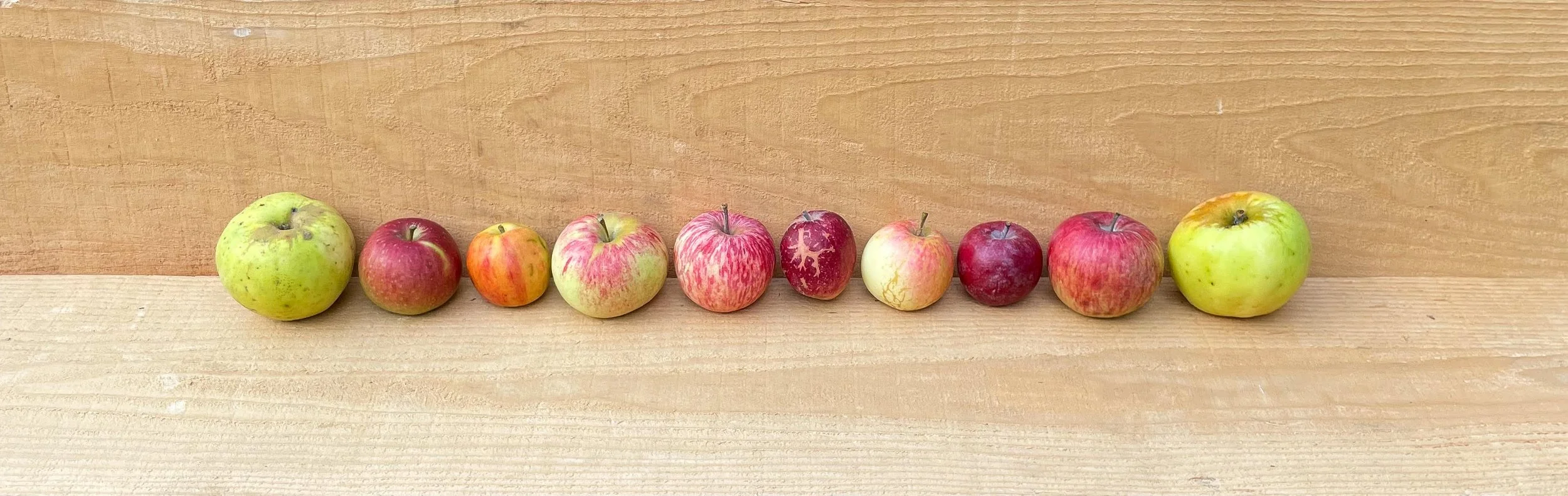
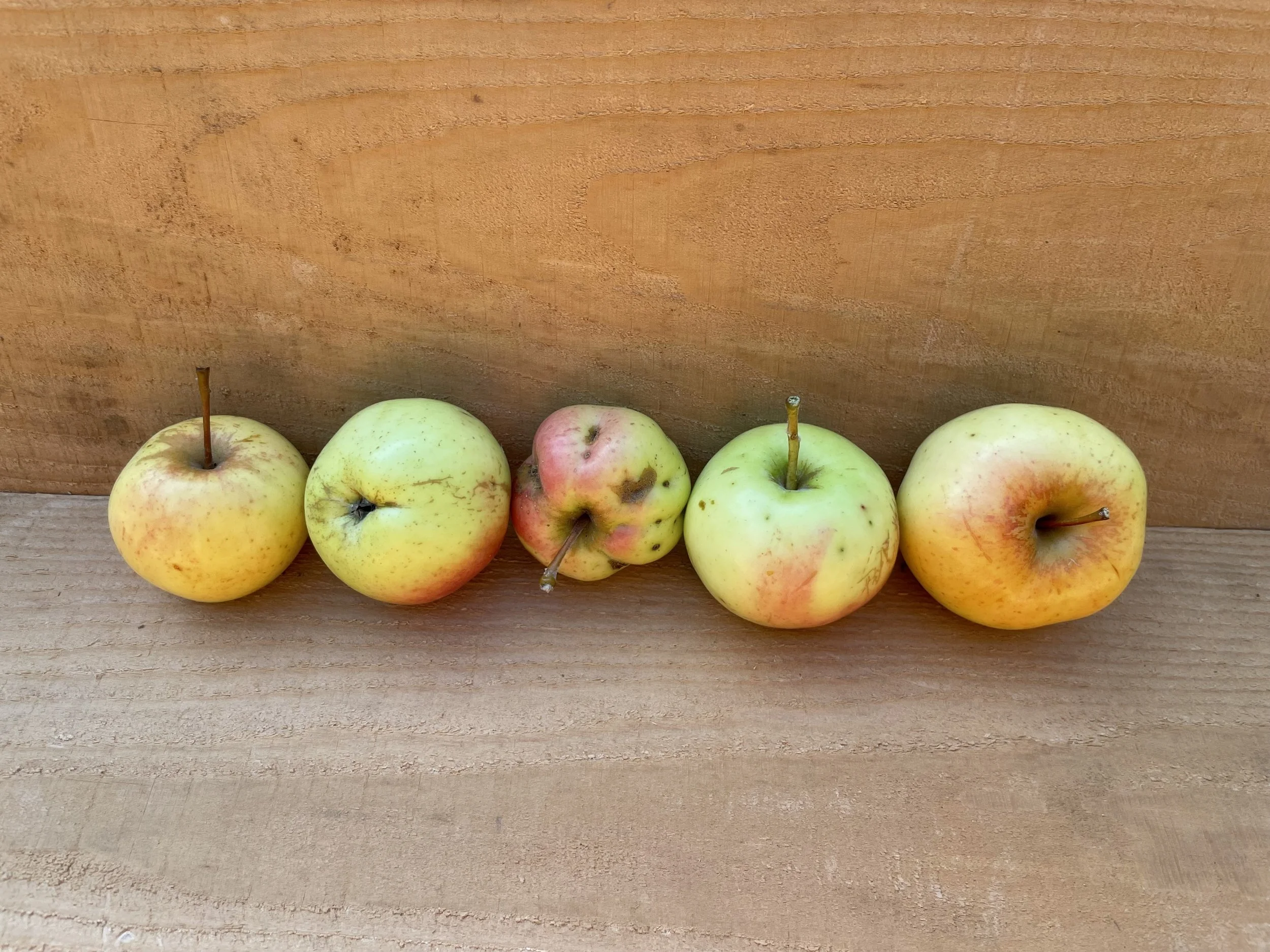
The apple varieties harvested in this last week of August, from left to right: Cole’s Quince, Garden Royal, Yellow Jay, Foxhill, September Ruby, Peach of Montreal, Red China, Wealthy, and Sidrunkollane 

August 29, 2025

Today in the orchard

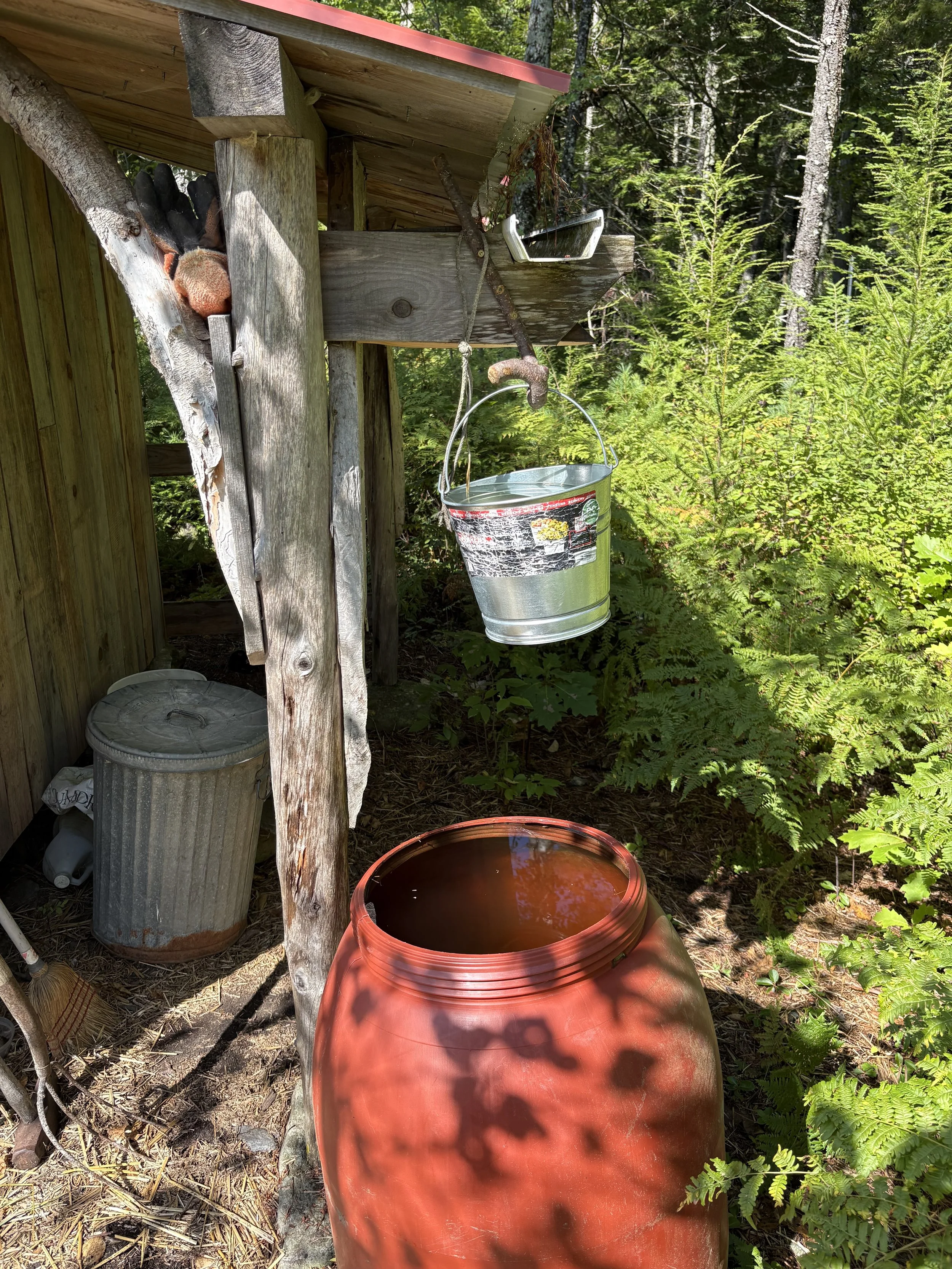
The rain barrels are full again, August 30, 2025

Tonight we finally got rain. The last decent rain was four weeks ago on July 30.  (By that time it was already getting quite dry. We hope tonight’s storm wasn’t too little too late. It was definitely not too little.)  The weatherman said rain all afternoon and we did get some—maybe a quarter of an inch. But at about 10 PM the storm arrived. It was accompanied by impressive thunder and lightning. The rain came straight down, and it came down hard. In the end we got slightly more than 2”—about a month’s-worth in a couple of hours.  Not exactly the way we want it (we prefer a half inch a week, thank you) but, hey, we’ll take it! 

Tomorrow I’ll survey the farm. I bet the rain barrels are all overflowing. Hopefully the downpour didn’t knock too much fruit off the trees. Fortunately most of the early apples, plums and peaches are picked. Amazingly enough, the trees have fared remarkably well despite the lack of moisture. Although many things are ripening early and some fruit is dropping prematurely, overall the fruit quality is very good.  

August 27, 2025

Today in the orchard

Today Lauren Cormier and CJ Walke of the Maine Heritage Orchard came over to meet with Skylar, Todd Little-Siebold and me. We discussed plans for the upcoming Common Ground Fair. We will have a large display of apples from throughout the state as well as tastings and talks. It should be a great three days. 

We also discussed some of the apple identification mysteries that we hope to sort out this fall. There will be opportunities to focus on some big ones. This fall we have a good apple crop in Maine which means access to lots of fruit. A few of the cases we’d like to crack include what we’ve been calling “Cherryfield,” “Sorrento,” and “Zachary.” We’d also like to find Walbridge, a prized apple that has been eluding apple explorers from multiple states across the US. And there will be others.

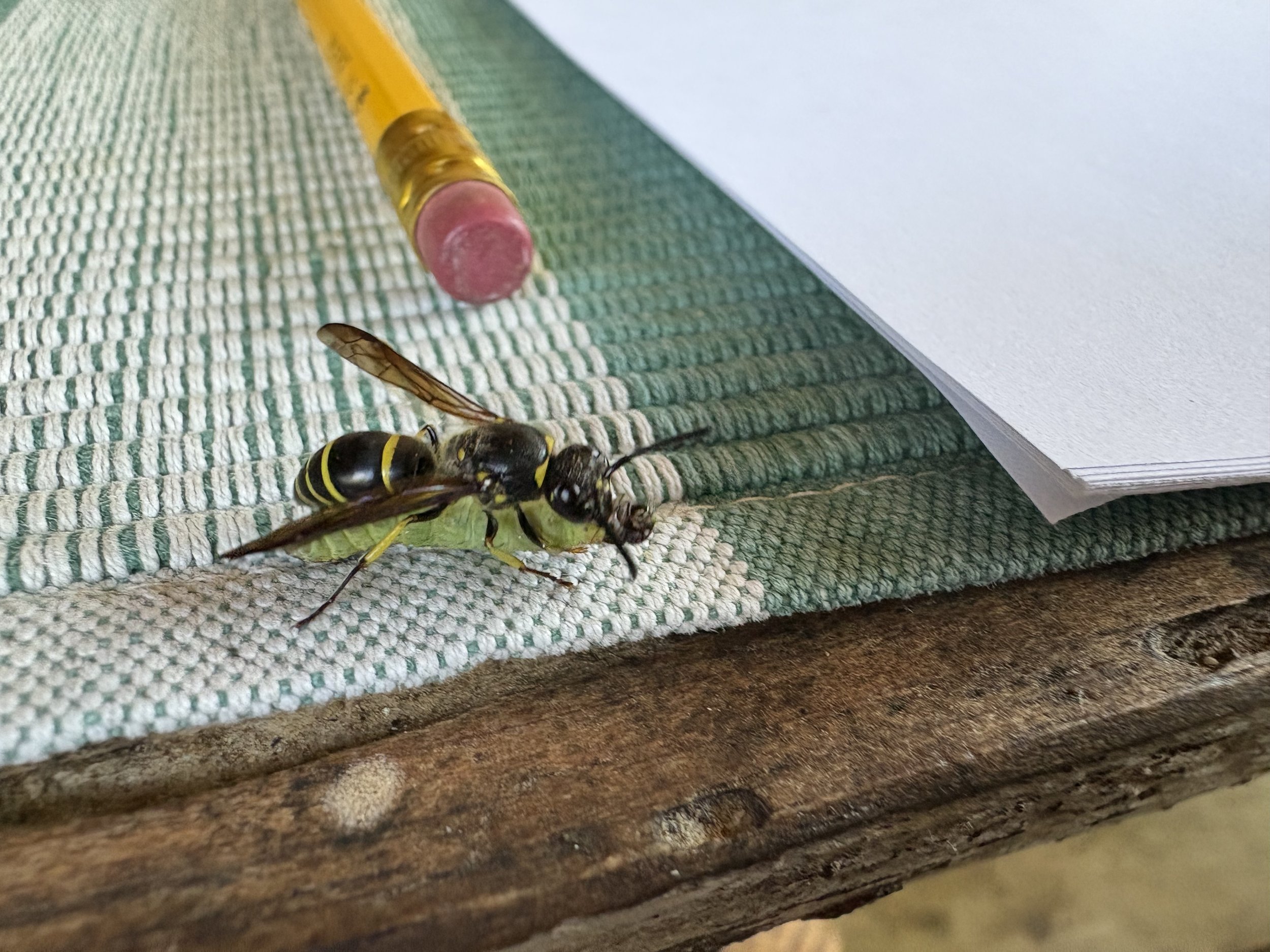
In the middle of the meeting a wasp flew in and landed by my pencil. In her grip was a small green worm. It was amazing.

A wasp, a worm and a Ticonderoga #2

Later in the day, I took apples and plums to John’s Ice Cream. Keep a lookout for their new plum ice cream. It should be delicious. Skylar and I worked on identifying an old tree from the North Palermo Road, incorrectly thought to be American Summer Pearmain. As it was getting dark, we picked the Estonian apple Sidrunkollane Talioun. The tree was loaded with large beautiful yellow fruit that were starting to drop.   

APPLE JUBILEE - SATURDAY, SEPTEMBER 6, 10 AM - 6 PM

Come join us at the Apple Jubilee on September 6, 2025, 10 AM-6 PM

Free and Open to All

Langlais Art Preserve 
576 River Road
Cushing, Maine 04563

Featuring: "apple magic", apple art, cider pressing, cider tasting and a talk by John at about 1:30: "Historic Apples of Midcoast Maine"

John will begin his program in the apple orchard, discussing the trees, fruits, and other aspects of the orchard and local ecology. Following the discussion, John will lead participants to the barn to deliver his lecture

August 26, 2025

Today in the orchard

Today Skylar built her first compost pile from scratch. This is a major achievement, a rite of passage and no easy feat. Her pile looks good so far, and I’m a real stickler when it comes to compost piles. (For more information on compost piles see the Orchard Reports on 6-16-24, 8-9-24 and 6-16-25.) We did more nursery weeding and watering as the drought trudges on. Meanwhile, the apples miraculously continue to ripen ,and we’re picking new varieties daily. Today it was Red China. 

The original Red China tree that was cut down to make a driveway.

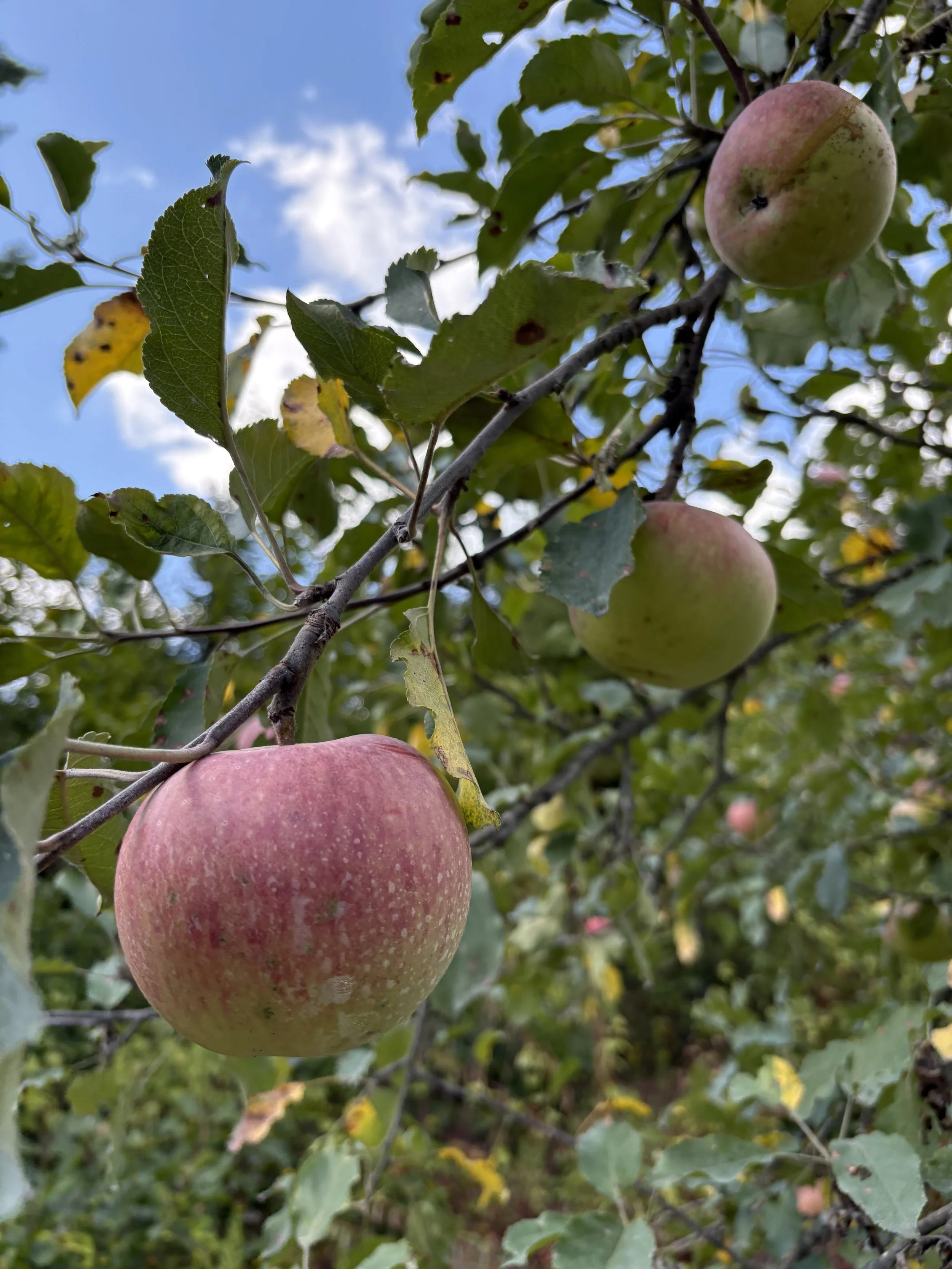
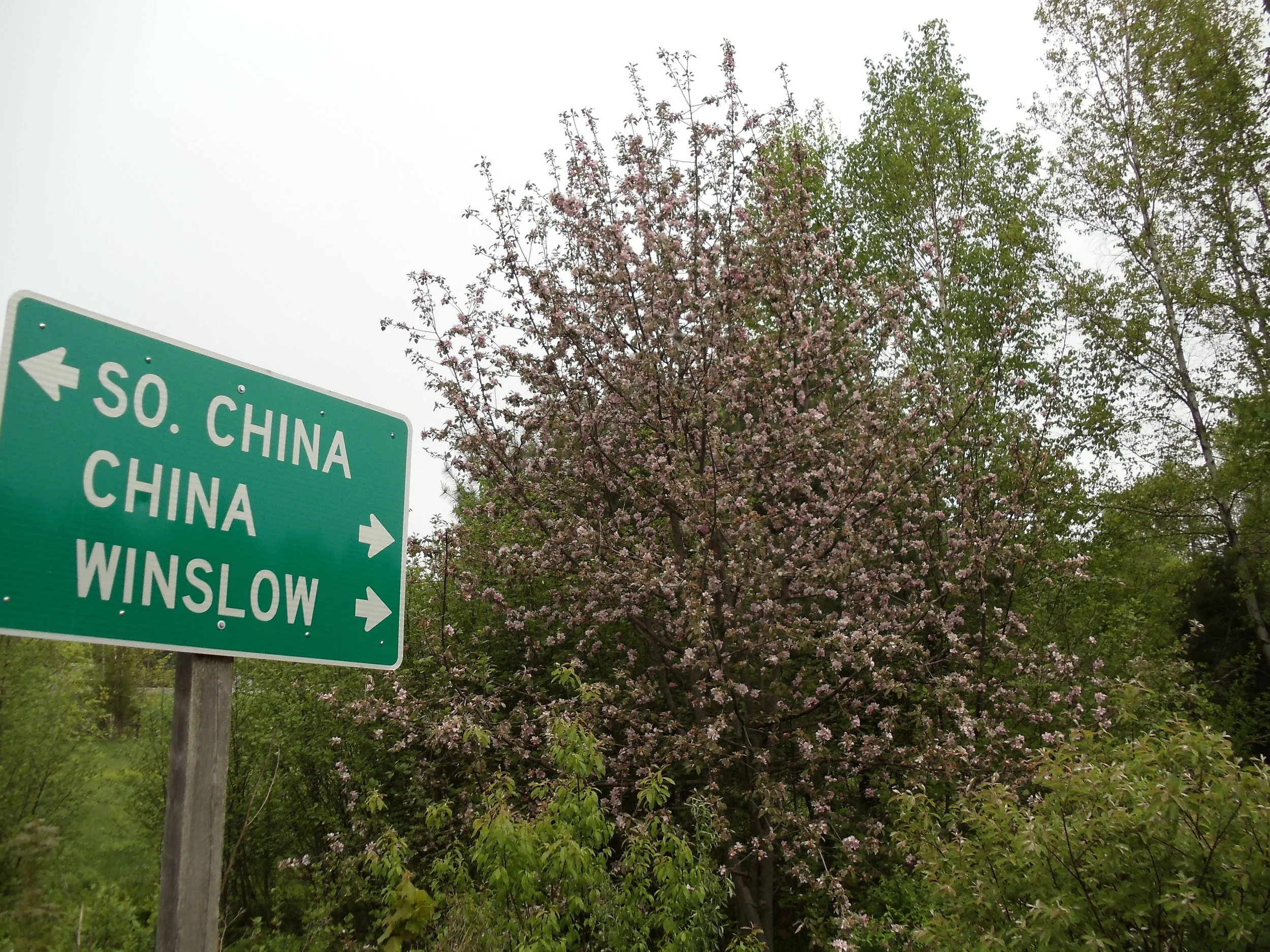
I have always thought Red China was a seedling tree. I discovered it one spring growing by the side of Alder Park Road about ten miles from here in China, ME. I first noticed it’s spectacular dark pink flowers. As I suspected the flesh is red too (get it?). The skin is a beautiful orangey-red-pink. It’s not a dessert (fresh eating) apple although some people may like it that way. It does cook-up well into an outrageous, raspberry-colored sauce. We had Red China DNA profiled, and the results came back as the same as another named red-fleshed cultivar. (I’m skeptical.) I don’t think that they’re the same, but the original “Red China” is now gone so we’ll likely never know if it was a seedling or a grafted tree. Fortunately we have two trees grafted here on the farm. If you’re into red-fleshed apples, scour your roadsides during bloom, looking for red/pink-flowering apples. You will have found a red-fleshed seedling.    

August 25, 2025

Today in the orchard

Today we had rain much of the day. We could hear the trees gasping with a sign of relief. Admittedly it was a pitiful amount (about 2/10”), but when you’re in a drought as we are, two tenths is welcome. Just seeing droplets of water beading up on the leaves of apples was enough to make me feel like all might be well again on Earth.

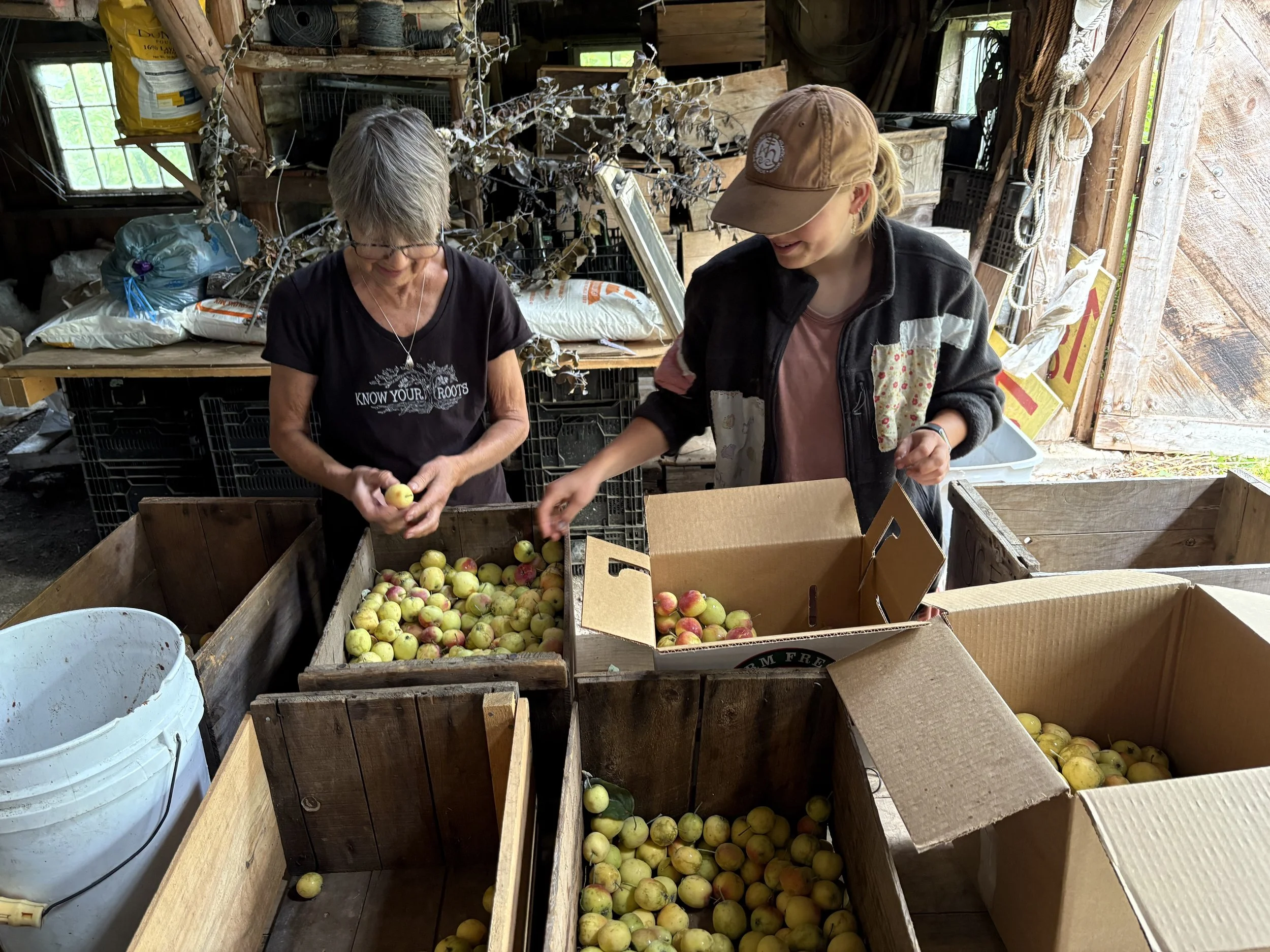
Until this year we sold much of our fruit through our CSA. We let that go after 16 years. We will still sell some apples to Khris and Lizzie Hogg, the couple who have taken over the CSA, but we’ll also sell our apples to local farm stands, restaurants and bakeries. Today we packed Purple Heart plums, Black Ice plums and Trailman apples so we spent a chunk of the day in the barn grading them. When we’re cooking, saucing or pressing for us at home, we’re likely to use nearly all the fruit. We were more selective with the fruit that we provided to our CSA members, but they learned to be very tolerant of less than pristine fruit. When it goes to a farm stand or restaurant, however, it’s got to look nice. The grading process can be a bit brutal. Yes, we’d use this apple no problem, but would it sell? (Sadly, probably not.) So it goes into the discard bucket. Fortunately, we eat a lot of apples ourselves, and in a couple of weeks we’ll crank up the press and start making cider.  

August 23, 2025

Today in the orchard

(Report by Skylar.) Alyssa Gavlik was on the farm today. Our first task was to harvest all the apples on the Trailman in the BRC. We gathered up our equipment: apple crates and picking buckets, a five gallon bucket for the discards, and each of us our own apple ladder. We were ready. Our ladders are fantastic, but we soon needed more height, so Alyssa retrieved a taller ladder and a pole picker. Maybe next year we’ll build longer ladders. After the Trailman was the Black Ice and Purple Heart plums. We traded apple crates for shallow, plastic crates and our ladders for a tripod ladder.

In the afternoon it was time to stack firewood. We started in on the huge pile of wood that had been dumped in a heap by a neighbor in trade for our work in his orchard. It seemed as if only a moment had passed when I looked at our stack and it was four feet tall. It’s quite beautiful, but next time we’re going to step it up and meticulously create a design in the mosaic of cut wood.

August 22, 2025

Today in the orchard

This is one of the summer days I always await with bated breath. It’s the day the Trailman apples are ready to pick. (A quick dive into grammar: is it baited or bated? And what does it mean either way? Evidently it’s bated, and it means nervous or anxious which totally makes sense since a perfect Trailman is not an apple to miss…even by a day.) Trailman Harvest Day is usually August 20 by my reckoning, but of course that depends on an assortment of factors. Our friends who live an hour south of us in Portland were already picking their Trailmans on August 15. So this year we’re a week plus behind Portland. 

After much deliberation we decided that today was the day. It was Skylar’s first time donning a picking-bucket so she warmed up with the Koidu Reinettes and the Centennial Crabs. Then, joined by Cammy, we picked the Trailman. The apples are small—a flaw in the world of commercial apples—but the flesh is crystalline crisp and the flavor is AAA. Trailman is a really good apple. It took a few hours to pick, but it’s well worth the effort. We turned on the cooler yesterday so the Trailmans were happily stored at 34F within a hour of being picked. Let the season begin!

August 21, 2025

Today in the orchard

Five Koidu Reinettes harvested from the same tree on the same day, picture taken August 23, 2025

(Report by Skylar.) Apple picking season is just starting, but peach season is in full swing. Both the Reliance and Lars Andersons are dropping,and the yellow jackets are just loving it. So we collected all the ripe fruit we could find. Along with those Cammy had already harvested, we had a lot of peaches on our hands. It’s moments like these that make my mind start to spin with all the possibilities. We could make wines, kombuchas, krauts, hot sauces, jams, and on and on. But sometimes the best thing is to keep it simple. 

So we boiled a pot of water and filled a large bowl with cold water. We placed the peaches into the boiling water for one minute only, then placed them in the cold water. Their skins slipped right off. We cut them in half, pitted them, and laid them out in a single layer on sheet pans to go into the freezer. Once they freeze solid, the peaches can be stored and used all winter long.

August 20, 2025

Today in the orchard

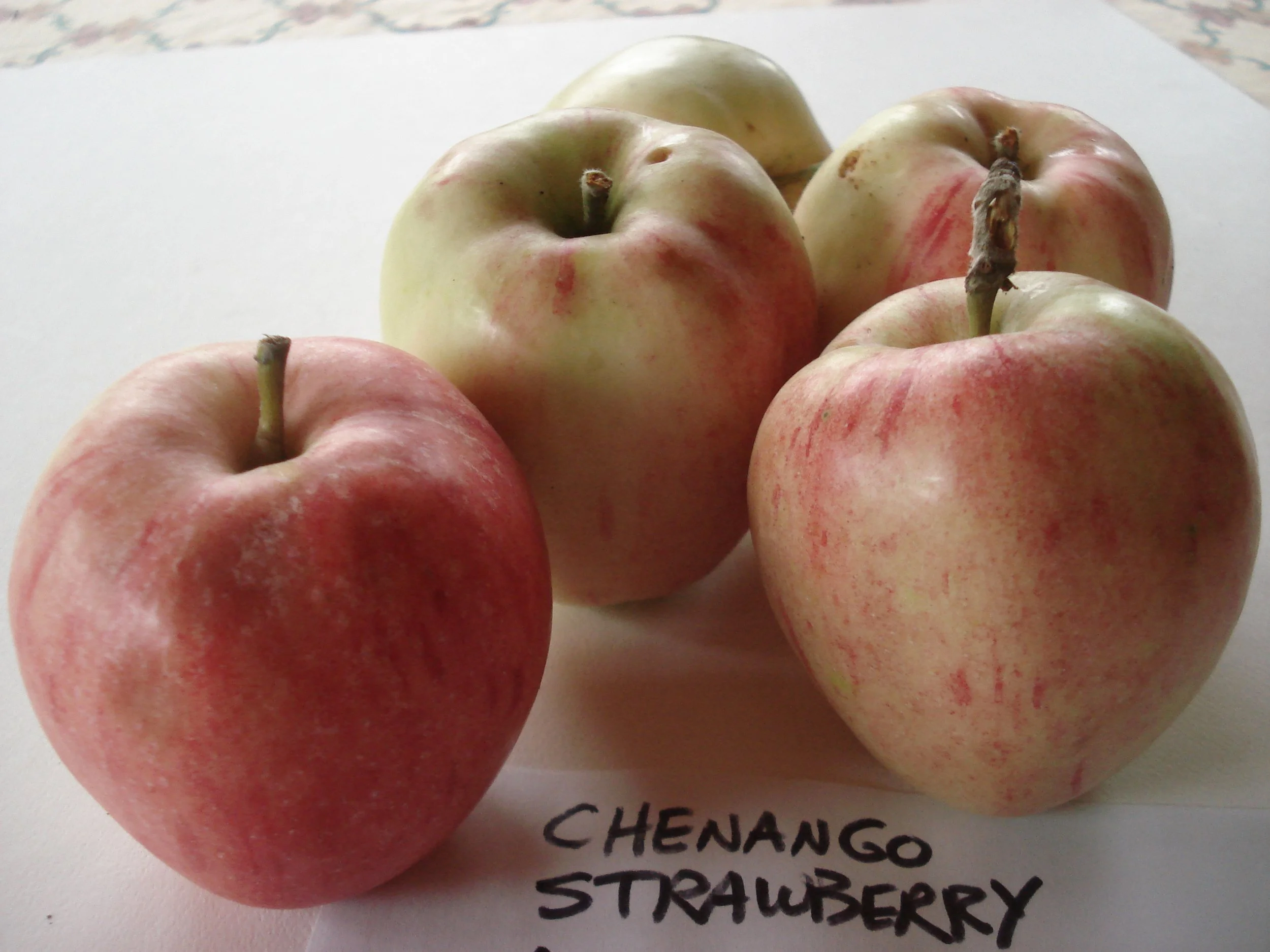
Although I could spend a few life times growing, eating and studying the apples here on the farm, there are many others of note that aren’t that far away. So today Skylar and I visited a few old summer-ripening apple trees in the area. One is in north Palermo and might be an old cultivar called American Summer Pearmain.  The second, which is near the center of town, we know to be Chenango Strawberry. 

From a pomological perspective it was the perfect day to visit both trees, and none too soon. Nearly all the apples were on the ground. We collected enough decent specimens of the possible American Summer Pearmain to do a new phenotypic analysis. That tree was supposedly DNA profiled a few years ago. The results confirmed my phenotype. But a closer look at the results caused me to suspect that the specimens might have been mixed up. The leaves sent in might have been from the USDA accession of ASM instead. I’ll sort that out. 

The second site featured a quintessential Chenango Strawberry, that conic, rosy-blushed and striped apple that is so distinctive it’s hard to mis-ID. However, there’s a second apple on half the tree. The DNA profile on that yellow, tart, summer apple came back as unknown. It occurred to me as we looked at the fruit today that it might be the rootstock of the Chenango. I’ll phenotype that one too in the next few days. The yard also had several younger trees including a Duchess and a Wolf River as well as an exceedingly old russet which should be DNA profiled and phenotyped. Don’t know how I’s missed that tree in past visits. 

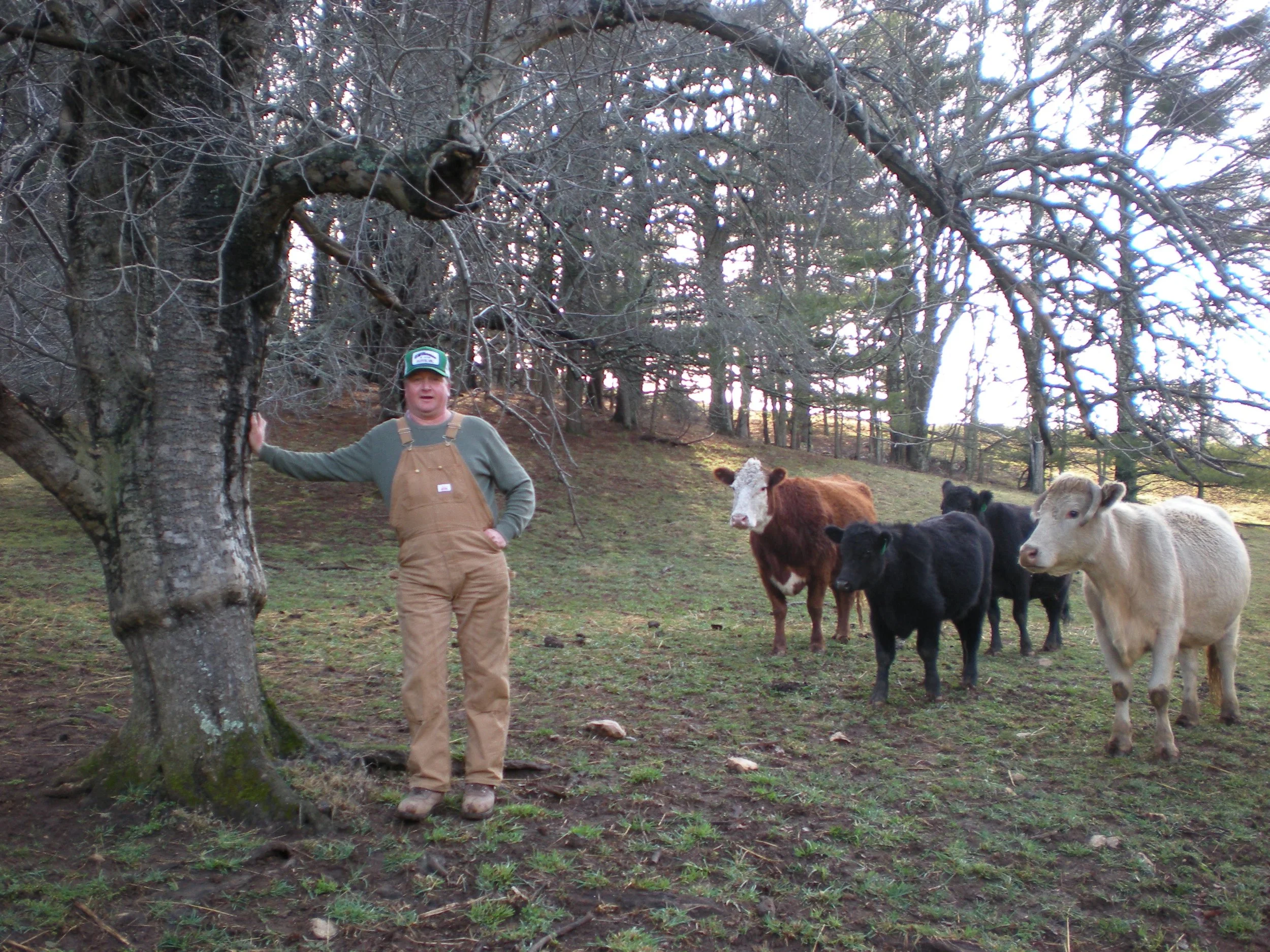
Both old farms have been purchased in recent years by young families, and I felt a bit like the Pied Piper as I checked out the trees. In each spot I was followed by a small entourage of curious kids who seem to hang on my every word. Spending time with them made me feel that—despite the endless challenges of the twenty-first century—the best of life will continue. They all seemed to understand the wonders of the outdoors, the universe and—most importantly—the apple trees.  

August 19, 2025

Today in the orchard

(Report by Skylar.) I spent much of the morning down at the Finley Lane Nursery walking around to check for apples that are ripe or close to it and picking up the drops that I found. I also took the time to gawk at the beauty around me. So much is alive right now, and it’s all growing fast. The watermelons are too large for me to grab with one hand—though out of fear of snapping their stems I don’t pick them up — and the pumpkins are substantially larger than that. The next crop of plums have turned a pearlescent pink. We’re surrounded by a diversity of color, shape, texture, and size. 

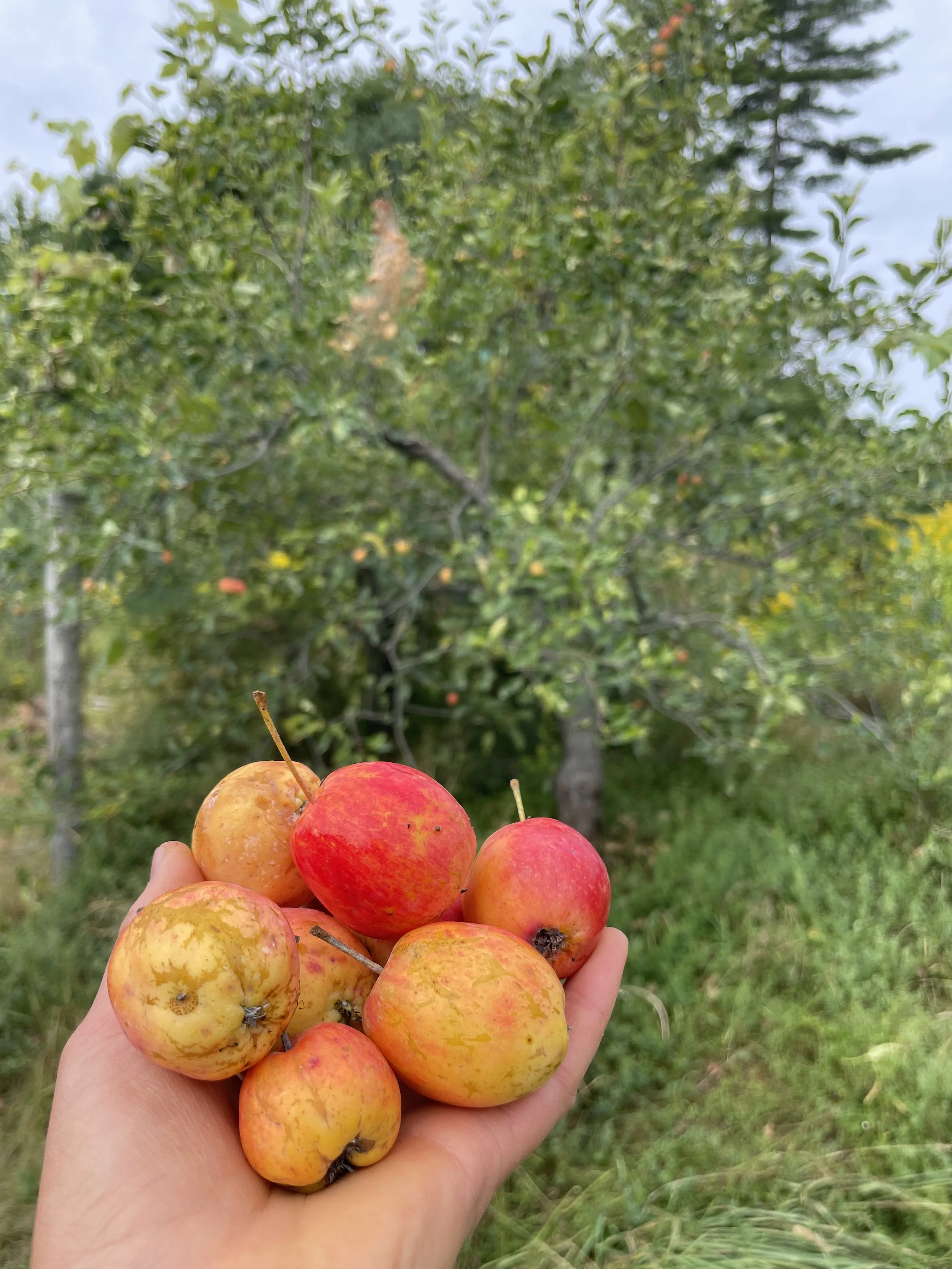
A handful of Centennial Crab drops in the Finley Lane Nursery, August 19, 2025.

Taste is another giant category of diversity that exists in the apple kingdom, and one I am just at the cusp of getting to know. The little details that make every variety unique from every other - how they change as they ripen, as they’re stored, fermented, cooked, and so on. How they can be measured using well equipped taste buds and scientific efforts. But why should we bother breaking down the chemistry of apple taste and aroma? Why should we bother training our tastebuds to notice the nuances from bite to bite and sip to sip? I asked John this question. He answered in an analogy: the average person doesn’t know much about the structure and components that make music excellent, and they don’t need to in order to enjoy it. However, just about anyone can tell when that composer does not fully understand the makeup of the music. Surely, the cider maker, chef, or breeder benefits from a deeper understanding of apple taste and aroma. Training my brain and my palate to discern what I taste in an apple prompts me to slow down, to notice, and to appreciate. I could go around chomping every apple in sight and for the most part I would enjoy it, but I really start to fall in love with the apples when I get to taste them as the unique fruit that they are. 

August 18, 2025

Today in the orchard

It was 41F at 6:00 AM this morning. It actually rained a little bit last night, though less than a quarter of an inch. We’ll take it. I made applesauce again with more Dudley drops. Which brings up the subject of drops. What’s that all about?

Don’t eat the drops in this field. (Photo by Eliza Greenman)

Apples drop for a number of reasons. Most apples drop because they are ripe. This makes great sense. The tree grows fruit, the purpose of which is to be a container for the seed inside. The seed is produced to continue the species. The seed and fruit ripen simultaneously.  The fruit then drops in hopes for a deer, cow or squirrel to come along and eat the fruit and fertilize the seed. 

Quite a few apples are dropping now.  Mostly, the apples are dropping because they are ripe. Some are dropping fruit because they have a lot of apples on the tree and they don’t need them all; there’s plenty of seed in the fruit still on the tree. Others are dropping because we’re having a drought here in central Maine. Shedding a percentage of the crop saves resources for the remaining fruit.  Brown seeds indicate the fruit is ripe; if the seeds are white, they’re not ripe yet.

Are the drops safe to eat? We eat drops right off the ground and also use them in cooking because we have no livestock in our orchards. I like to use them for sauce because it’s a great way to use the apples we can’t sell. We’ve never gotten sick using drops. The USDA became very freaked out about drops some years ago because of ecoli contamination. Here’s a rule of thumb about drops: if your apple lands in a pile of poop, feed it to a cow.

August 17, 2025

Today in the orchard

Summer Sweet ready for the fire, August 17, 2025

This morning was cool enough to light up the cookstove for the second day in a row and cook up a pot of Summer Sweet (aka King’s Sweet and Orange Sweet.) This is the small roundish-conic, opaque-orangey-yellow apple that originated in Sidney, ME and was sometimes confused with the very old Plymouth, MA apple, Hightop Sweet. They are different apples. All historic cultivars with the word “Sweet” in the name are apples with low acidity.  Because of this, they take forever to cook.  

Summer Sweet found its popularity as an August dessert fruit. Without the tartness we are so used to tasting in apples, its flavor is distinctive. They are best-flavored and textured when they are still slightly green (unripe). The Summer Sweet sauce is moderately thick, and that distinctive flavor really comes through. The acidic Dudley sauce took about four minutes to cook down yesterday. The Summer Sweet sauce took about an hour and a half. That’s the low acidity.

I continued cutting firewood and cleaning up compost piles. Late in the day we picked all the Tecumseh plums still on the large tree up at Finley Lane. They are so good!