
Now that the apple maggot (Rhagoletis pomonella) traps are in place, many questions come to mind. Will we catch any apple maggot flies? What do we do if they are in the orchard? Should we spray pesticides? Organic? Biodynamic? Can the pesticides harm the bees or the beneficial insects? Should we quit growing apples? Help!
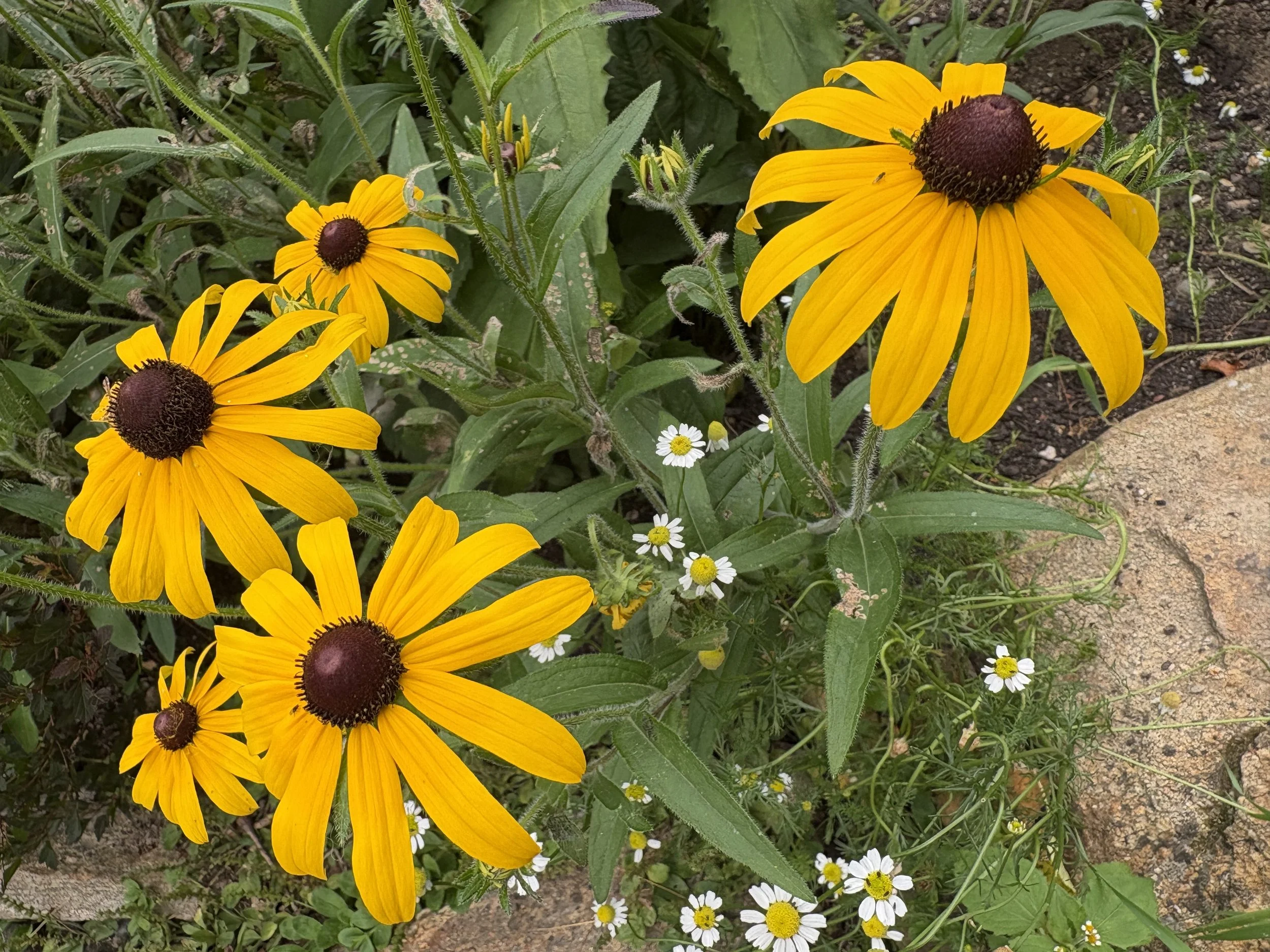
Today’s photo: Black-eyed Susans in the Orchard, July 19, 2026
In most commercial orchards, the fruit has to look a certain way or it won’t sell. Some say it has to look perfect. Because of the demands—or perceived demands—of the marketplace, fruit growers generally feel compelled to spray pesticides on the fruit trees. Most of these products—including the organically certifiable ones—are toxic to bees and other beneficials. So commercial growers often discourage or even eliminate all flowering plants from their orchards for fear of killing bees. With no flowering plants, pollinators leave, and the chance of killing them is reduced. But what a drag to have to have a flower-less orchard.
In our orchard we have encouraged flowering plants. We have hundreds or maybe even thousands of them. And we have bees everywhere. So what do we do? We search for alternatives. We experiment. Might there are other products—plant teas perhaps—that hold a key to growing usable fruit without risking harm to the orchard ecology. Nettles? Comfrey? Cannabis?