
This afternoon I met with The Working Group, the rag-tag assortment of apple historians who have taken on the responsibility (opportunity?) of saving North America’s pomological heritage. It’s us or no one. Shouldn’t it be up to the government, at least, shouldn’t they be helping to fund this amazing effort? Guess again. We meet twice a month on “zoom” and attempt to develop strategies for saving the last remaining trees of hundreds of America’s rarest apples, “pro bono.” Incredibly enough, we’re doing it. Somehow we’re scraping together a little here and a little there, and the historic varieties are getting saved. Hallelujah!
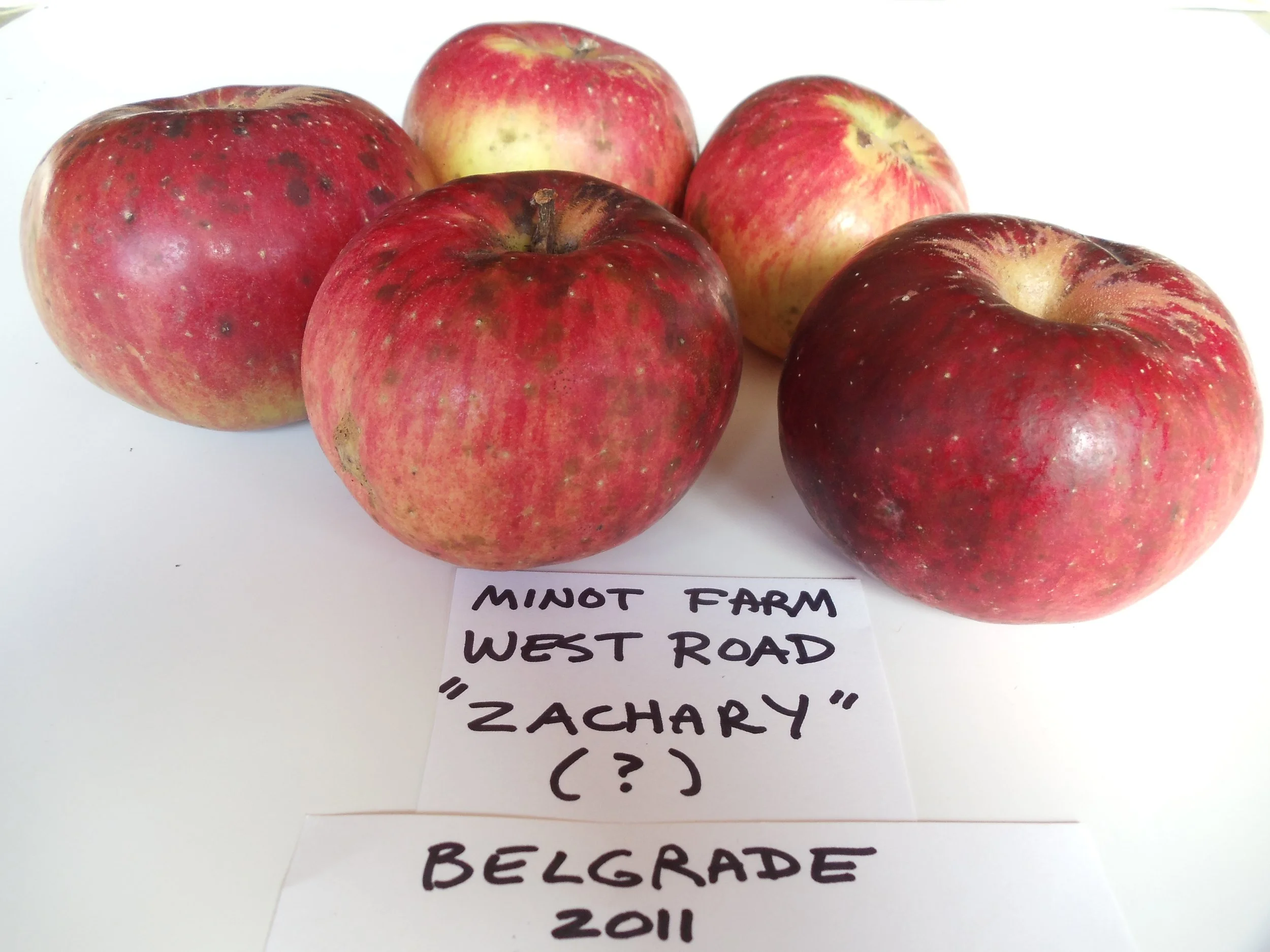
The news at today’s meeting included new DNA genetic profile results for over a hundred recent submissions. There were some really interesting results that included trees here in Maine. Leaves submitted from half a dozen trees located on an old farm all came back matching one of my favorite unidentified cultivars, an apple that I’ve found in multiple locations in the Belgrade Lakes area. I’ve been calling the apple “Childs” or “Zachary” (two local apple names), though it is likely not either. It may be a somewhat more common cultivar called Pennock. This will give me new inspiration to get out my notes and books to see if I have any new thoughts as to what this interesting apple could be. It’s dark red, prominently dotted, delicious and keeps in the root cellar all winter. It was definitely popular in central Maine 150 years ago.