
Today in the orchard
But what about the PIE apples? There are sixteen thousand (give or take) cultivars listed in Dan Bussey’s Illustrated History of Apples in the United States and Canada, not to mention the tens of millions of apple seedlings out there in the US landscape - almost as many as there are stars in the sky or insects on the planet. Practically an infinite array of flavors and textures—not to mention colors and sizes and shapes. So how come it’s so hard to find a good pie apple!
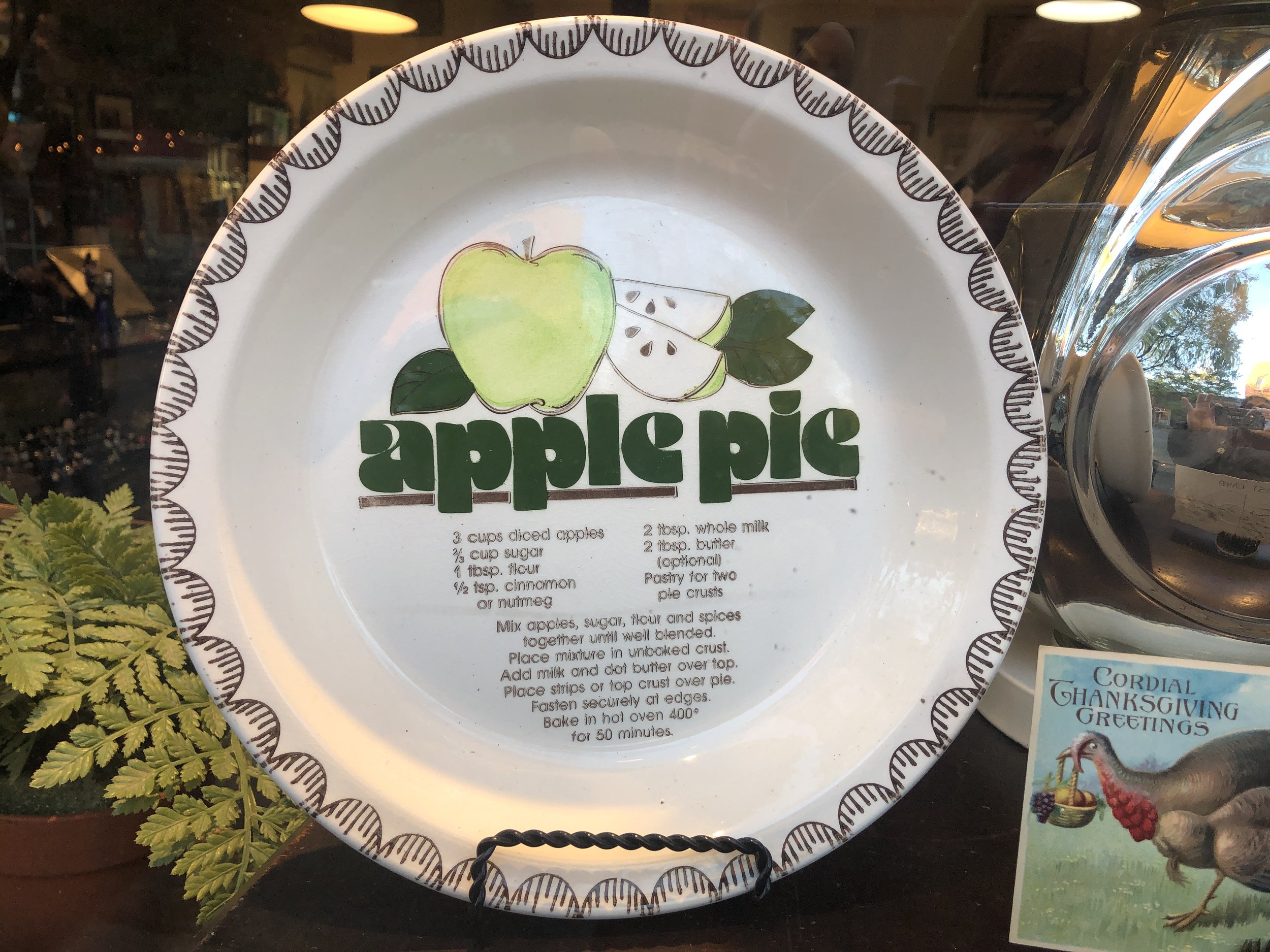
First and foremost, the apple is beholden to The Crust. The Crust—even the simple crust—has got to be edible. All crusts cook in a set amount of time—mine takes 15 minutes at 375F and another 45 minutes at 350F. That’s easy. The challenge becomes the apples: they need to cook to the perfect flavor and texture in the same amount of time. A few minutes out of sync one way or the other and the pie will be a failure. No matter how good the crust, no matter how good the spices, no matter how much sugar and butter, if the apples are poorly cooked, the pie will be a flop.
So you have to find apples that will cook to the perfect texture in 60 minutes, and not many do. Some will be sauce, some will be leathery, some will be like rubber. Others will be tasteless and vapid, whatever that is. But fortunately a few will be perfectly tender after 60 minutes yet hold their shape. That’s requirement number one. Requirement number two is…flavor. "They got to have flavor." And, they have to be in season. That’s all tricky.
Before I tell you what I’ll be using on Thursday, here are four suggested cultivars you might be able to find with a bit of resourcefulness in some commercial orchards, farmstands and even grocery stores.
Gravenstein (aka Gravensteiner): This is one of the most historically important apples in the world. It is so old that its origins are totally unknown. Guesses have been made but are all probably incorrect. It is a true pie apple and has often been prclaimed to be the best of them all. It’s a bit late in the fall to find them, but they might still be around. Unlike most cultivars, they have been grown on both coasts for generations. If you can find it, your pie will be a homerun.
Northern Spy: This classic New York apple first appeared in the mid-nineteenth century and became wildly popular throughout the eastern US. It ripens late but should be OK now. It makes an outstanding pie and, if you can find it, I don’t think you’ll be unhappy.
Rhode Island Greening: This is the original Greening, dating from the early days of what eventually became Rhode Island. It is unrelated to all other “Greening” apples. RIG is a premier cooking apple and should be perfectly ripe today. Highly recommended.
Bramley: Though I’ve never used Bramley, it is beloved in its native UK. It’s worth a try.