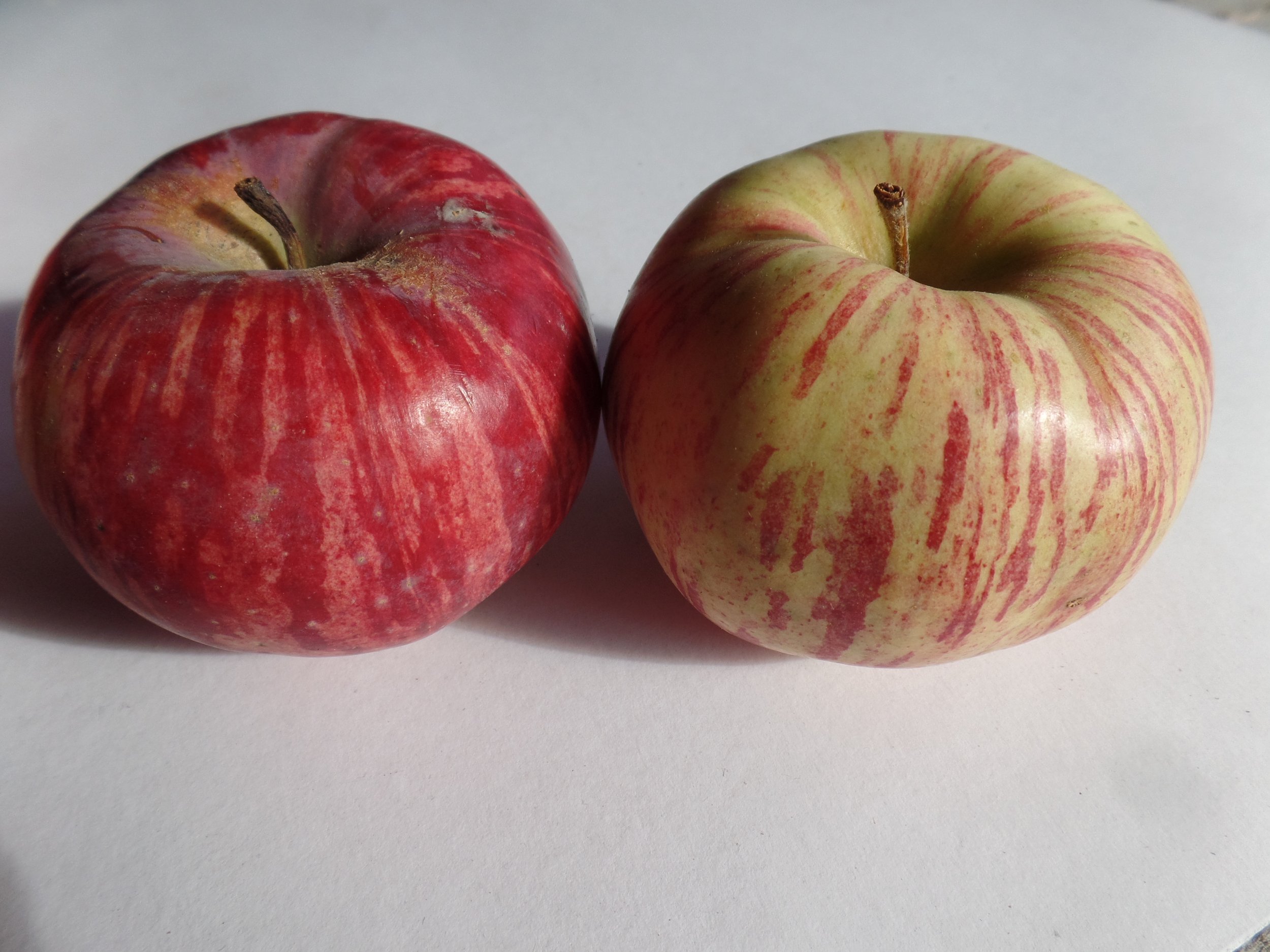
November 25, 2025

Today in the orchard

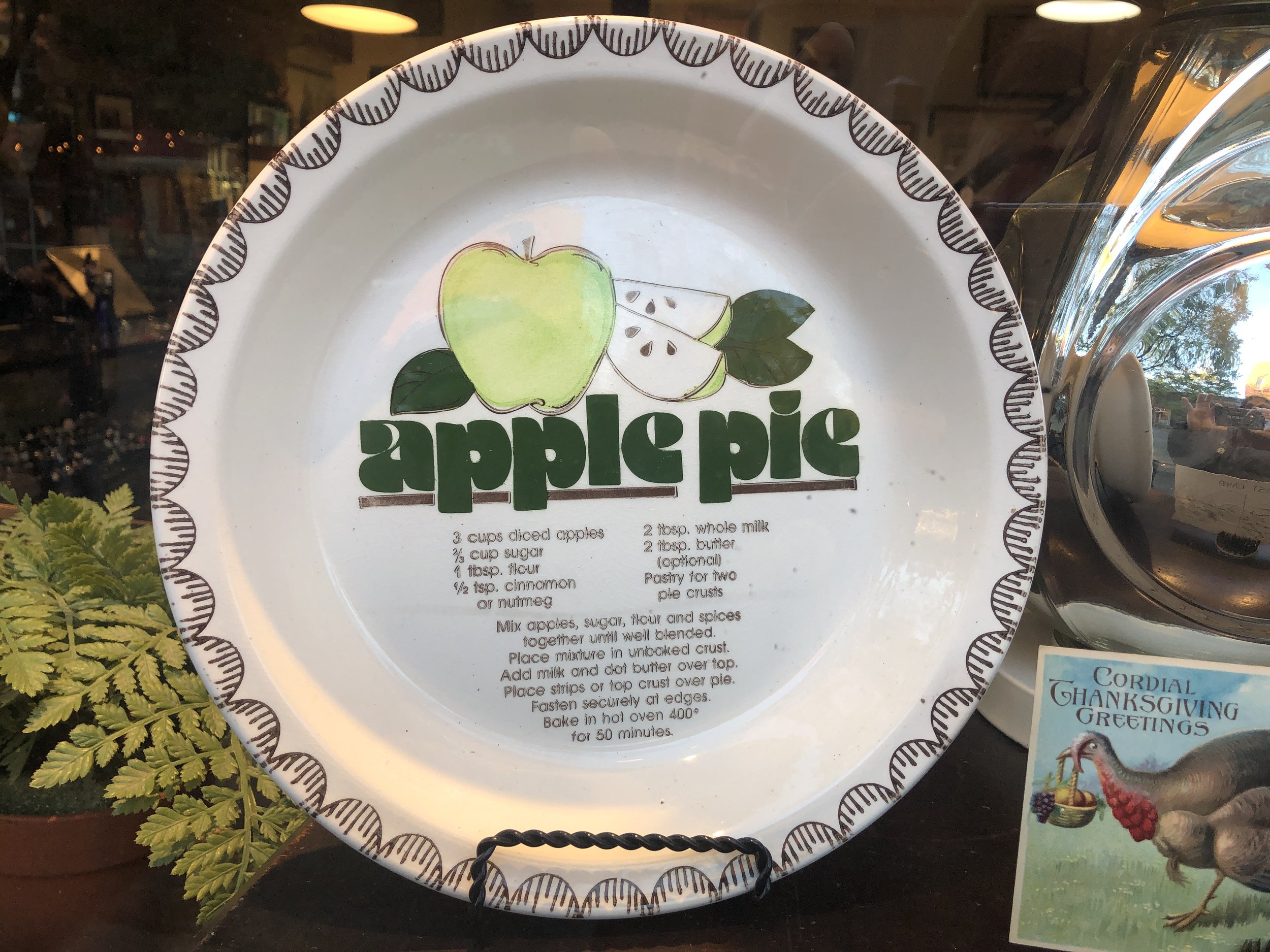
I generally prefer making single-variety pies because I love to see what a particular apple can do. But now it’s Thanksgiving, and I want to go all out with a blend. Yesterday I mentioned Northern Spy, Rhode Island Greening and Gravenstein—all excellent choices. But I prefer to be more adventurous. So I will use Redfield, Blue Pearmain and Grandfather.
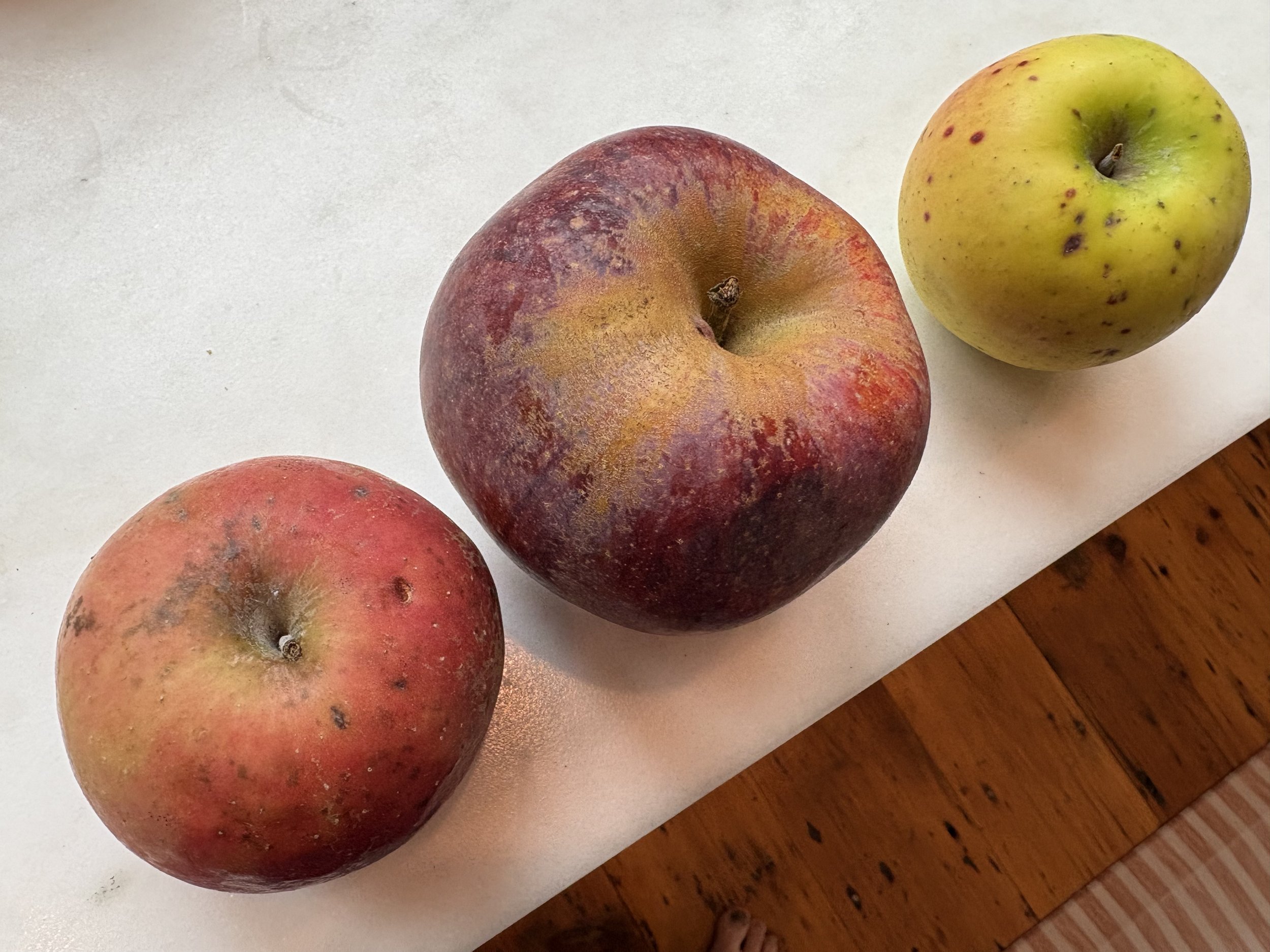
Redfield, Blue Pearmain and Grandfather

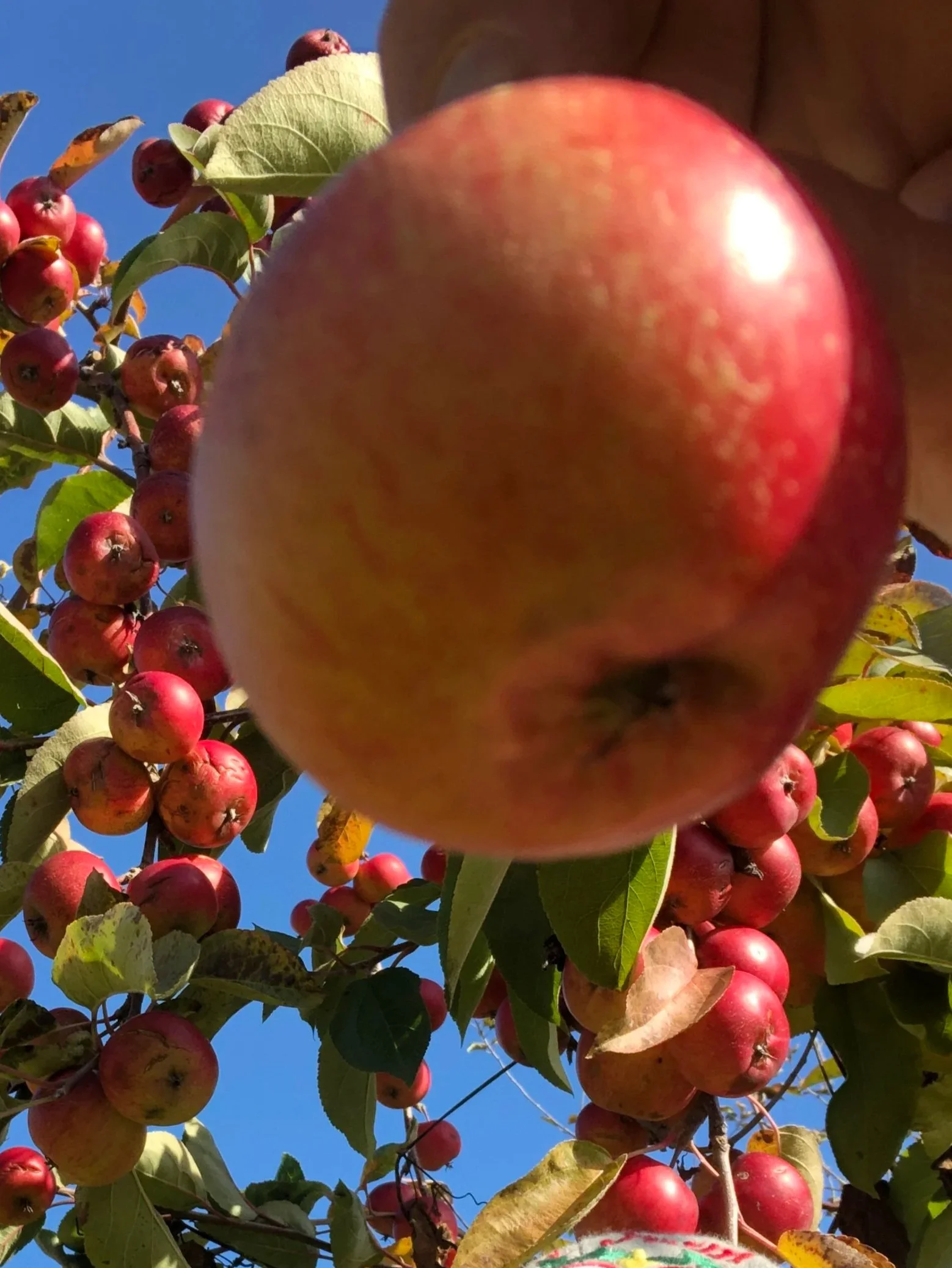
Redfield is a modern (1938) apple and one of my favorite apples ever. It knows how to make sauce, and it definitely knows how to shine in a pie. The slices hold their shape, the texture is tender yet firm, and it has flavor. The tree itself bears prolifically, annually and is relatively easy to grow. And the flesh is red. Who could ask for more?

Blue Pearmain is exceedingly old (c 1725), originated somewhere in Suffolk County—Boston, is of unknown origin and parentage but has the famous ancestor, Reinette Franche as a grandparent. On the beauty-scale it’s up near the top - magnificent. It’s also one of the parents of Black Oxford and a favorite unidentified apple we can “Guptill Lavender.” It is a bakes well whole, so today I’ll give it the ultimate test.

The third (a risk) is a local apple, “Grandfather,” which may be a seedling but which is quite old nevertheless. We grafted ours from an old tree a few miles from our farm. I chose it in part because it is acidic. The pie apple requires acidity. The low-acid apples do not cook well into a pie. I don’t even consider them. Grandfather is also beautiful. True, beauty doth not an pie apple make, but it’s also mostly yellow. Neither Redfield nor Blue Pearmain has a dot of yellow on them, and it seemed like I needed at least some yellow to balance the red. Balance is good for a pie. 

What apples should you use? Better to lean on the acidity side. You can tell—just take a bite of the apple fresh. Love that simple crust. Go easy on the spices and sugar. Use lots of butter. And if all else fails, there’s always ice cream or whipped cream. Or both!  Happy Thanksgiving.      
November 24, 2025

Today in the orchard

I recently visited the Union Square Farmers Market in Manhattan in search of commercially available pie apples. The square was hopping, and there was a lot of produce being sold. There’s not much else more fun than roaming around The Big Apple If you can't be at home!

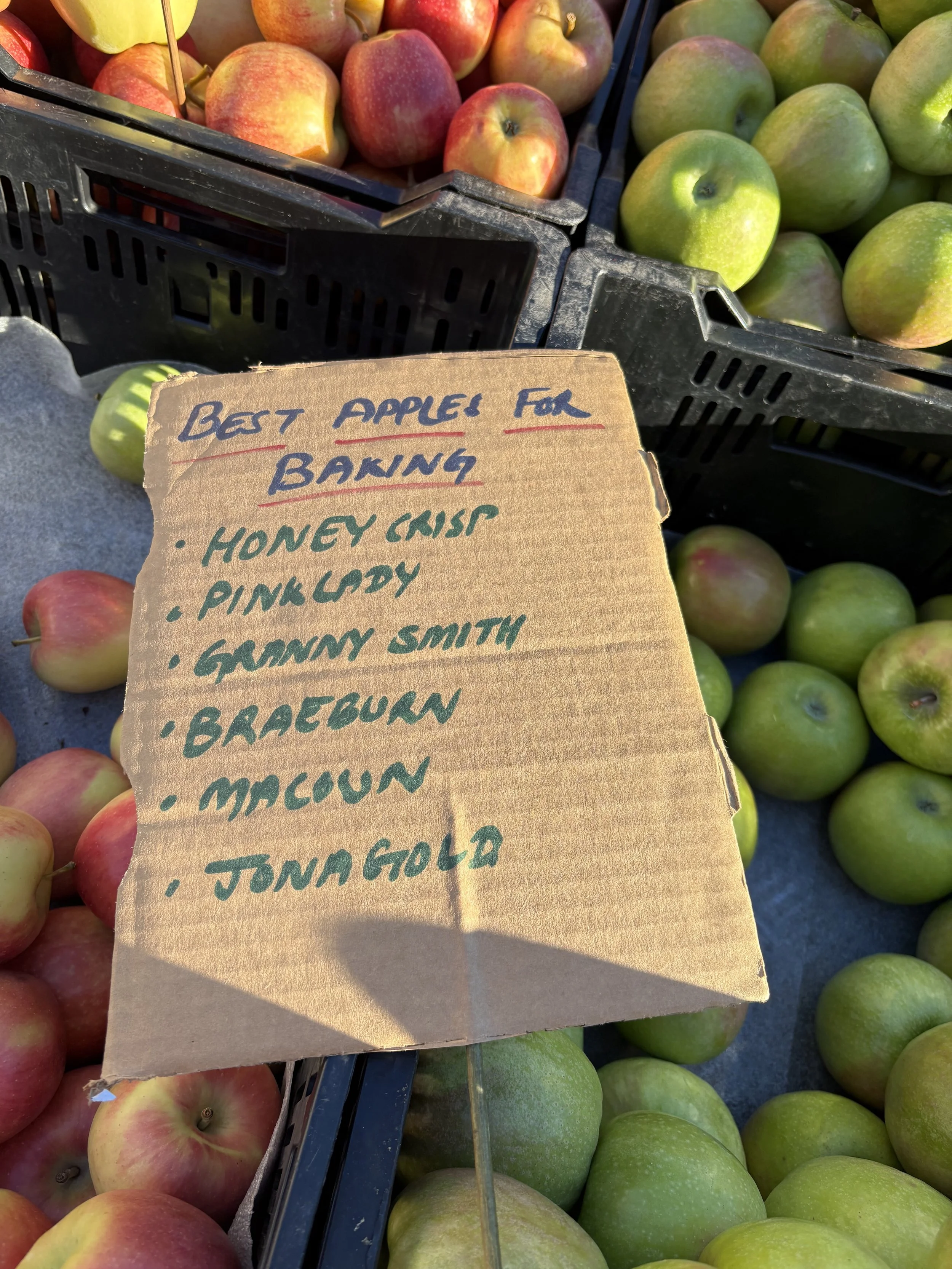
Between the various fruit vendors I was able to photograph an impressive 36 apple cultivars for sale. Surely there must be some decent pie apples in the lot. Well, maybe. Sadly, nearly all of them were those modern, crisp, dessert apples in their various incarnations.  Tucked between the Crispy Crisps, I found a cardboard placard with a recommended “baking” list. I wonder if whoever invented the line-up ever baked a pie. 

Union Square, Nov. 24, 2025

  • HoneyCrisp

  • Pink Lady

  • Braeburn

  • Granny Smith

  • Macoun

  • Jonagold  

But there were a few somewhat common cultivars that might be in contention. You may be able to find these at a farm stand or store near you. These included Winesap, Cortland and Idared.  (Although I confess that I’ve never used any of them so, who am I to say?) 

Winesap is very old and of unknown ancestry, originating well before the Revolution somewhere down near Valley Forge. I recall someone once telling me it was a good pie apple. Cortland is from the early twentieth century. Its parents are Ben Davis and McIntosh. Maine grocery stores will try to convince you it’s good for pies. So be it. Idared is from the mid-twentieth century and is a Jonathan x Wagener cross. Whether it's good in the oven is a guess. If you can find any of these three, I’d say try one, or even better, try a mix of all three. 

November 23, 2025

Today in the orchard

But what about the PIE apples? There are sixteen thousand (give or take) cultivars listed in Dan Bussey’s Illustrated History of Apples in the United States and Canada, not to mention the tens of millions of apple seedlings out there in the US landscape - almost as many as there are stars in the sky or insects on the planet. Practically an infinite array of flavors and textures—not to mention colors and sizes and shapes. So how come it’s so hard to find a good pie apple!

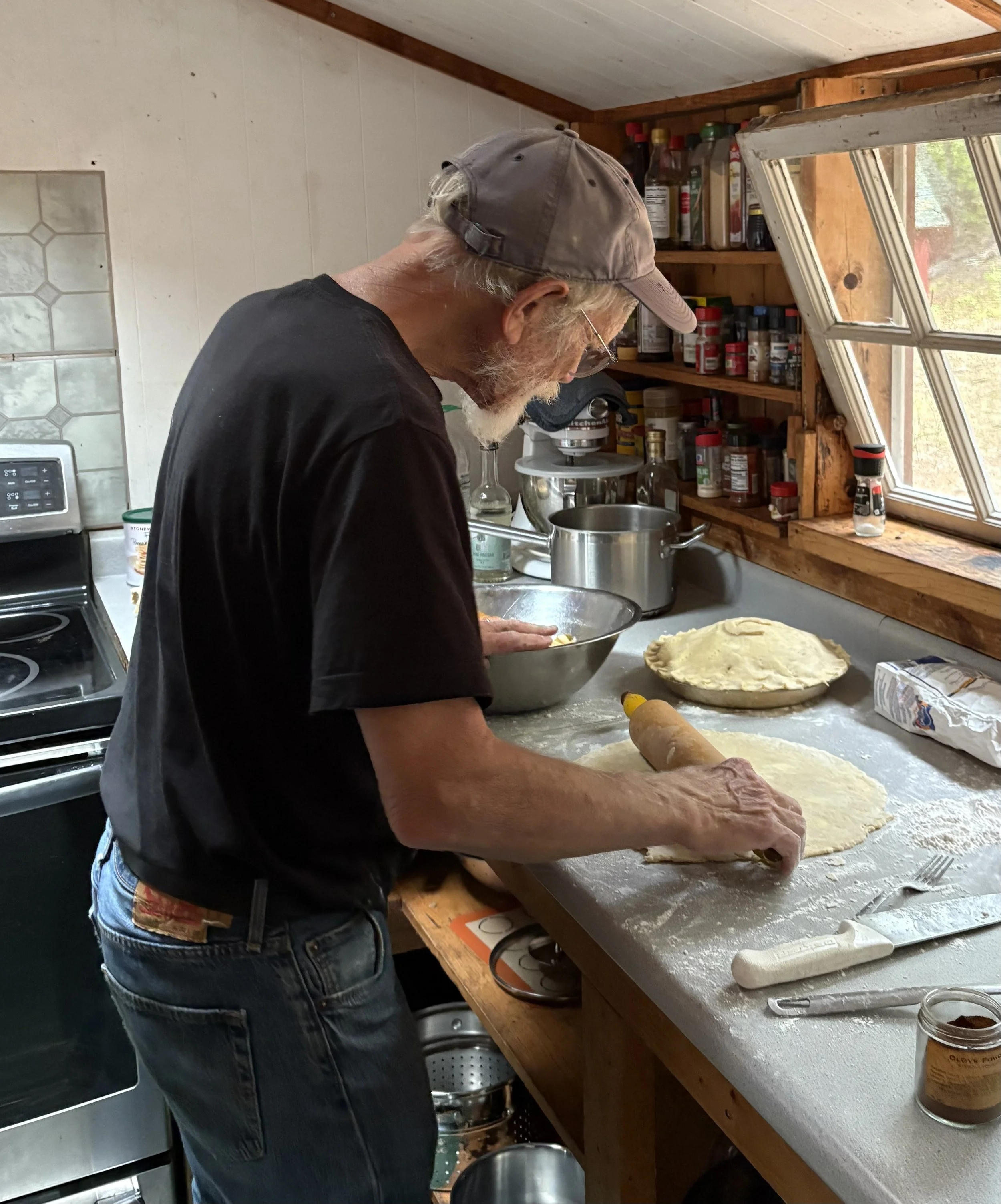
First and foremost, the apple is beholden to The Crust. The Crust—even the simple crust—has got to be edible. All crusts cook in a set amount of time—mine takes 15 minutes at 375F and another 45 minutes at 350F. That’s easy. The challenge becomes the apples: they need to cook to the perfect flavor and texture in the same amount of time. A few minutes out of sync one way or the other and the pie will be a failure. No matter how good the crust, no matter how good the spices, no matter how much sugar and butter, if the apples are poorly cooked, the pie will be a flop. 

So you have to find apples that will cook to the perfect texture in 60 minutes, and not many do. Some will be sauce, some will be leathery, some will be like rubber. Others will be tasteless and vapid, whatever that is. But fortunately a few will be perfectly tender after 60 minutes yet hold their shape. That’s requirement number one. Requirement number two is…flavor. "They got to have flavor." And, they have to be in season. That’s all tricky.

Before I tell you what I’ll be using on Thursday, here are four suggested cultivars you might be able to find with a bit of resourcefulness in some commercial orchards, farmstands and even grocery stores. 

  • Gravenstein (aka Gravensteiner): This is one of the most historically important apples in the world. It is so old that its origins are totally unknown. Guesses have been made but are all probably incorrect. It is a true pie apple and has often been prclaimed to be the best of them all. It’s a bit late in the fall to find them, but they might still be around. Unlike most cultivars, they have been grown on both coasts for generations. If you can find it, your pie will be a homerun.

  • Northern Spy: This classic New York apple first appeared in the mid-nineteenth century and became wildly popular throughout the eastern US. It ripens late but should be OK now. It makes an outstanding pie and, if you can find it, I don’t think you’ll be unhappy.

  • Rhode Island Greening: This is the original Greening, dating from the early days of what eventually became Rhode Island. It is unrelated to all other “Greening” apples. RIG is a premier cooking apple and should be perfectly ripe today. Highly recommended.

  • Bramley: Though I’ve never used Bramley, it is beloved in its native UK. It’s worth a try.   

November 22, 2025

Today in the orchard

Rolling in dough

With Thanksgiving only five days away, everyone in the world must be thinking about that most quintessential of American foods - the pinnacle of culinary creativity, the one food item that combines all five major food groups (dough, spices, butter, sugar and Malus domestica). What else? The apple pie!

There are many recipes for pie crusts. Some are incredibly flakey and delicious, but I fear that they can wind up being a distraction. I’m a fan of the KISS pie crust (Keep it simple, stupid.) The simpler the crust, the more you can taste the number one ingredient: the apple. So I use about 1 1/2 c flour, a stick of butter and a few tablespoons of water. Make a ball of dough, and refrigerate for 2-3 hours. Then roll it out thin, and you’re done. If your pie pan is bigger, use 2 c flour and a bit more butter. “It’s better with butter.” 

And what about the spices and sugar? I also espouse to the KISS plan on both. The best plan is to use none. Not that I don’t love them, especially nutmeg—one of the most wonderful smells in the world. But “less is more” nonetheless. I do use cinnamon, nutmeg and cloves, but in minuscule amounts, about 1/8 tsp of each. It’s sort of the homeopathic version of pie spices, or as we say these days, micro-dosing. With the sugar, again micro-dose. If the recipe says a cup, cut it in thirds or quarters.  

But what about the apples?  Help is on the way... tomorrow.

November 21, 2025

Today in the orchard

Wickson

The orchard is mostly put away for the winter now. All the apples that are going to get picked are done with one exception. We haven’t picked the Wickson yet. Our plan is to pick them frozen and then press them. They tend to be very high in sugar and allowing them to freeze on the tree drives the brix even higher. Wickson can produce one of the most delicious single-variety ciders. (The small fruit are also very good eaten fresh.) But they ripen very late and picking them early is not recommended. One year we pressed 50 gallons of Wickson juice too early, and the cider was a disappointment. 

Wickson was introduced by the innovative California breeder, Albert Etter in the mid-twentieth century. Although Etter left breeding records which are often quoted, DNA profiling has produced nothing conclusive. At this point, although Reinette Franche is likely in its ancestry, neither parent nor any of the four grandparents are known. Still Wickson is a great apple and we better pick it soon!  

November 20, 2025

Today in the orchard

The “Snow” apple

This morning the temperature on the back porch was 15F. It’s the second night in the past couple of weeks that we’ve had it that chilly. That’s cold for mid-November. The farm ponds are now frozen - not enough to skate, but impressive nonetheless. This cold weather may be caused by a weakening solar vortex and a major sudden stratospheric warming. The weather reporters seem to agree that this polar event—whatever it is—is responsible for the colder temperatures. Not being a meteorologist, I can only report what I observe. It really has been colder this month than I remember it being for some years. It could be the coldest winter since 1968 when the snow was so deep you couldn’t park by the side of many central Maine roads and I watched with some amazement as kids jumped out of third story windows into the snow banks at Colby College. (Though not me.) The temperature in the root cellar is now down to about 40F which is great. I’ll let it continue to drop another 5—7 degrees before I close it up.

Turns out we’re not quite done with tree guards. As I work around the farm, I keep running into another tree here or there that could use some protection. So I’ll continue to wrap window screening around trees to deter the voles.

November 19, 2025

Today in the orchard

The vole will find the hole.

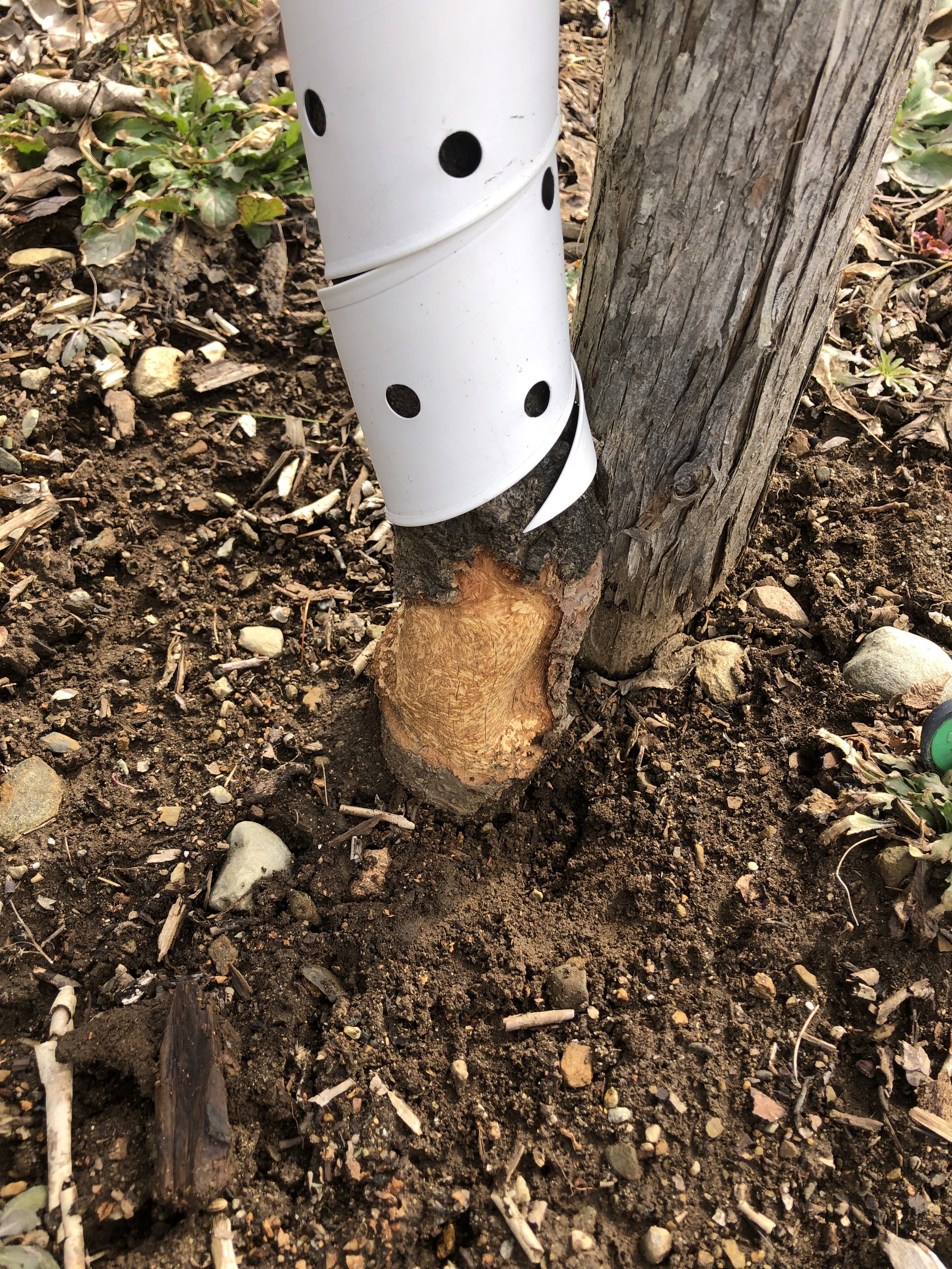
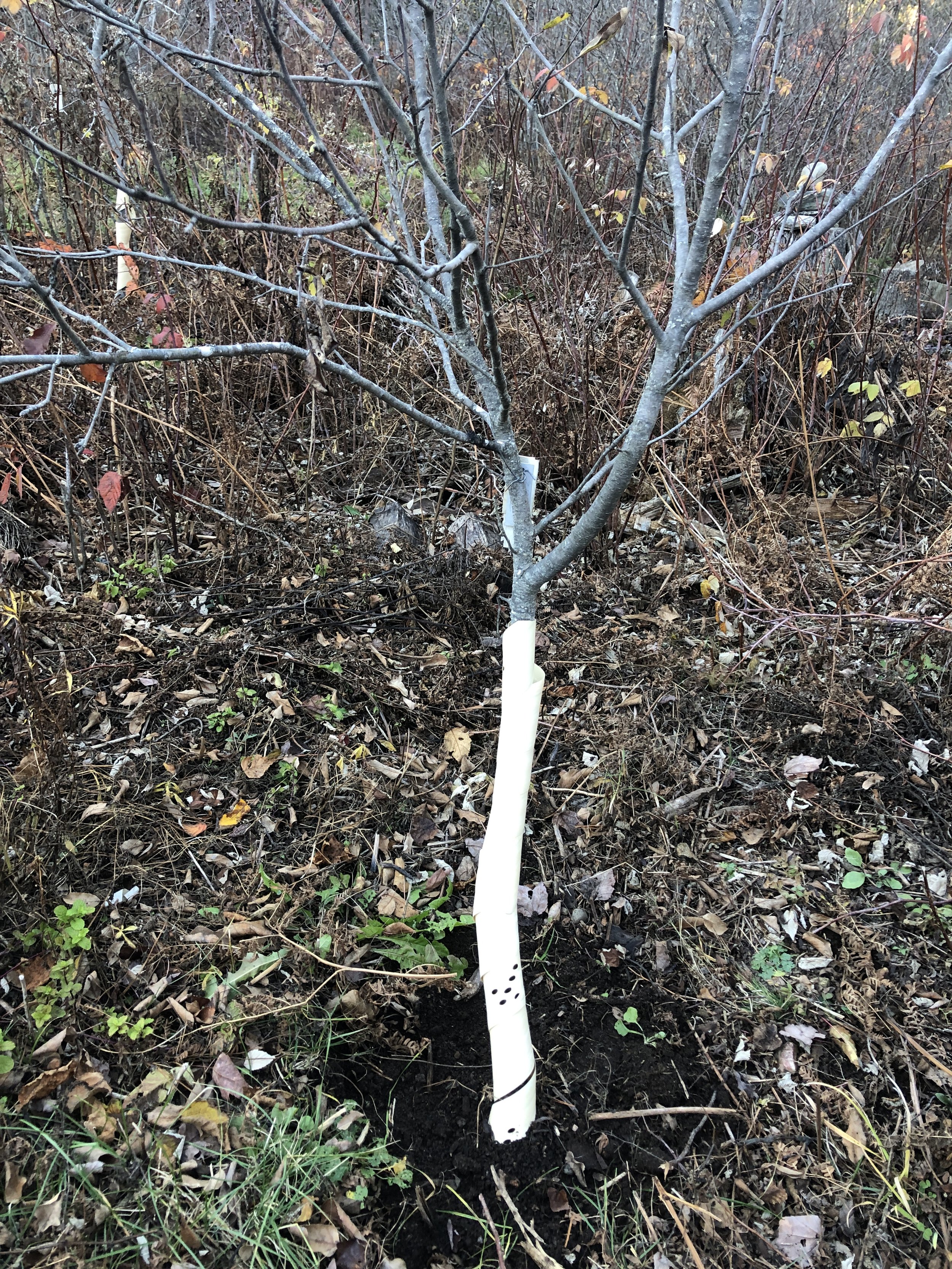
We have finally completed putting on the tree guards. The ones we save for last are the larger trees that require window screening or hardware cloth (aka rat wire) because the spiral tree guards are too small in diameter to expand around the trunks.  We wrap the trunk with screening and then tie it tight with baling twine. The perennial million-dollar-question is, “when is a tree large enough to no longer require a tree guard?” When the bark becomes rough and plated, it’s likely tough enough to withstand the attack of the voles. But, “an ounce of prevention…” as they say. We already found one young tree with fresh chewing, and it’s only November. Agrh! It’s also worth noting that the tree guard must be nestled down into the earth at least a little bit. Last year one of the guards did not quite reach the ground and the voles found it. How do they do that?

November 18, 2025

Today in the orchard

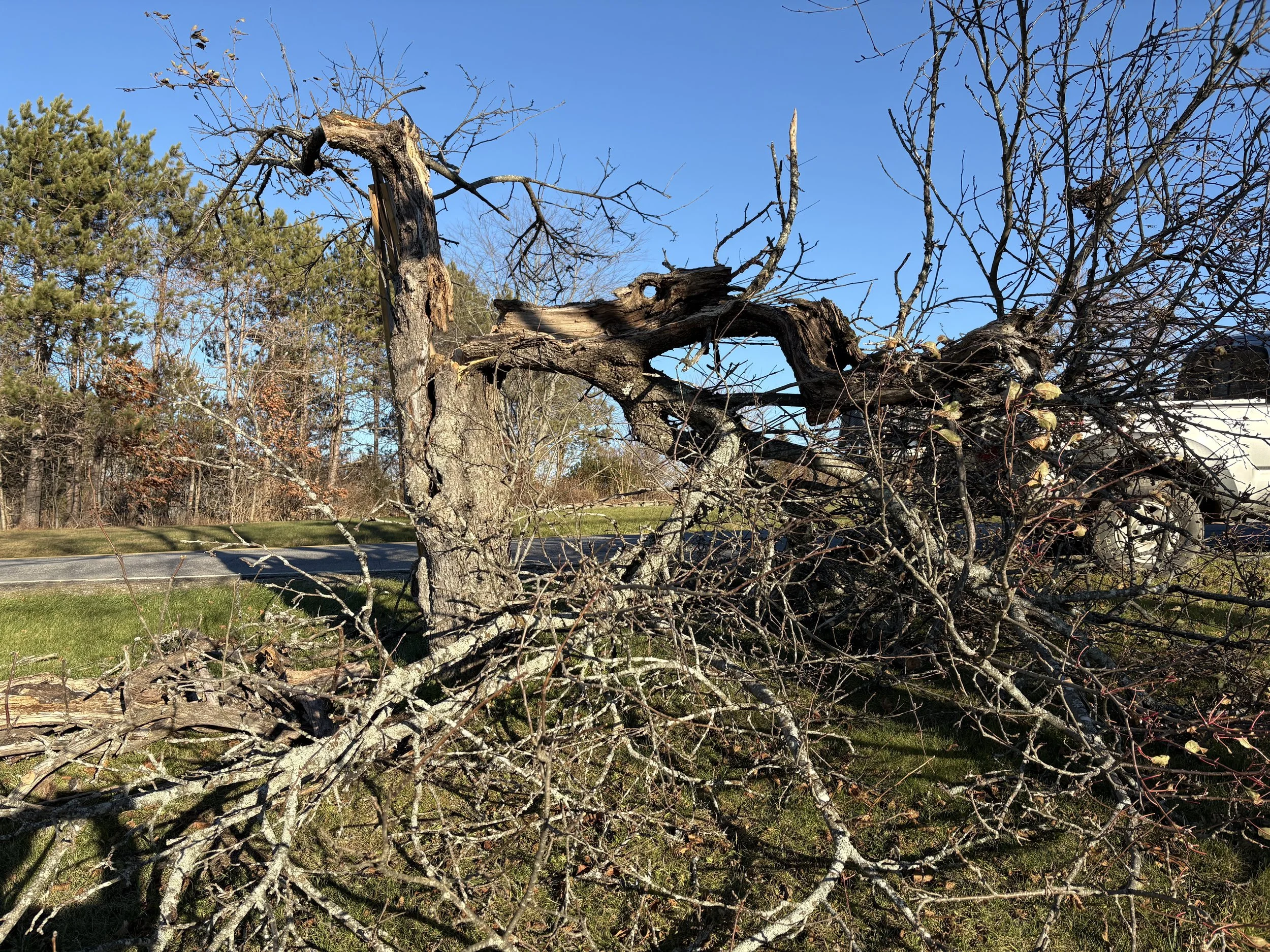
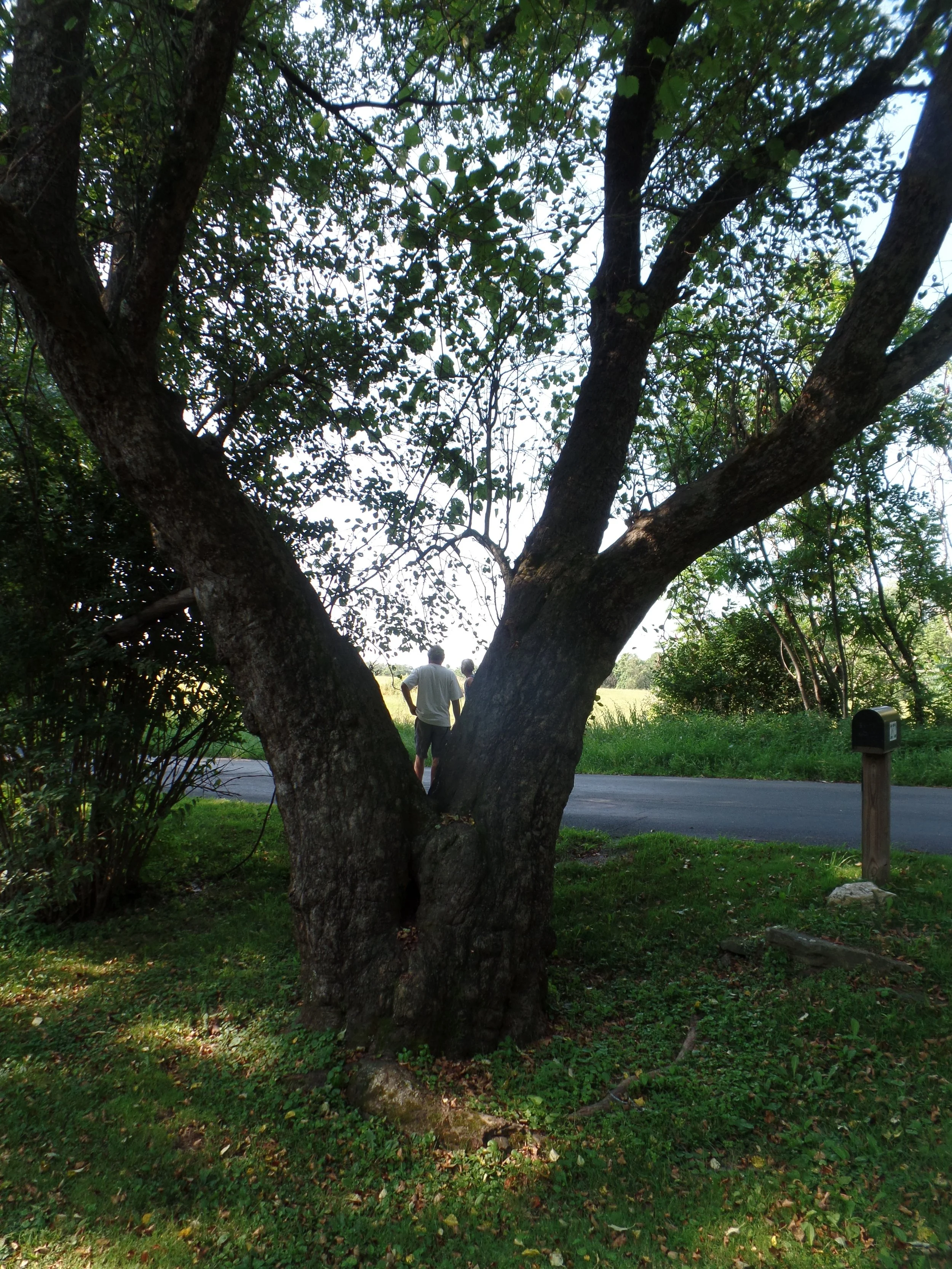
For the second night in a row the pond in front of the house has partly frozen over. The nights have been consistently well below 32F. This fall has been cold. It’s also been windy, which has not been easy on the oldest apple trees, including the old Opalescent tree up on Turner Ridge about two miles from the farm. That tree has been producing delicious, beautiful, red, mid-fall fruit since long before cars, electricity and radio—and maybe even before trains—came to Palermo. 

Opalescent, November 18, 2025

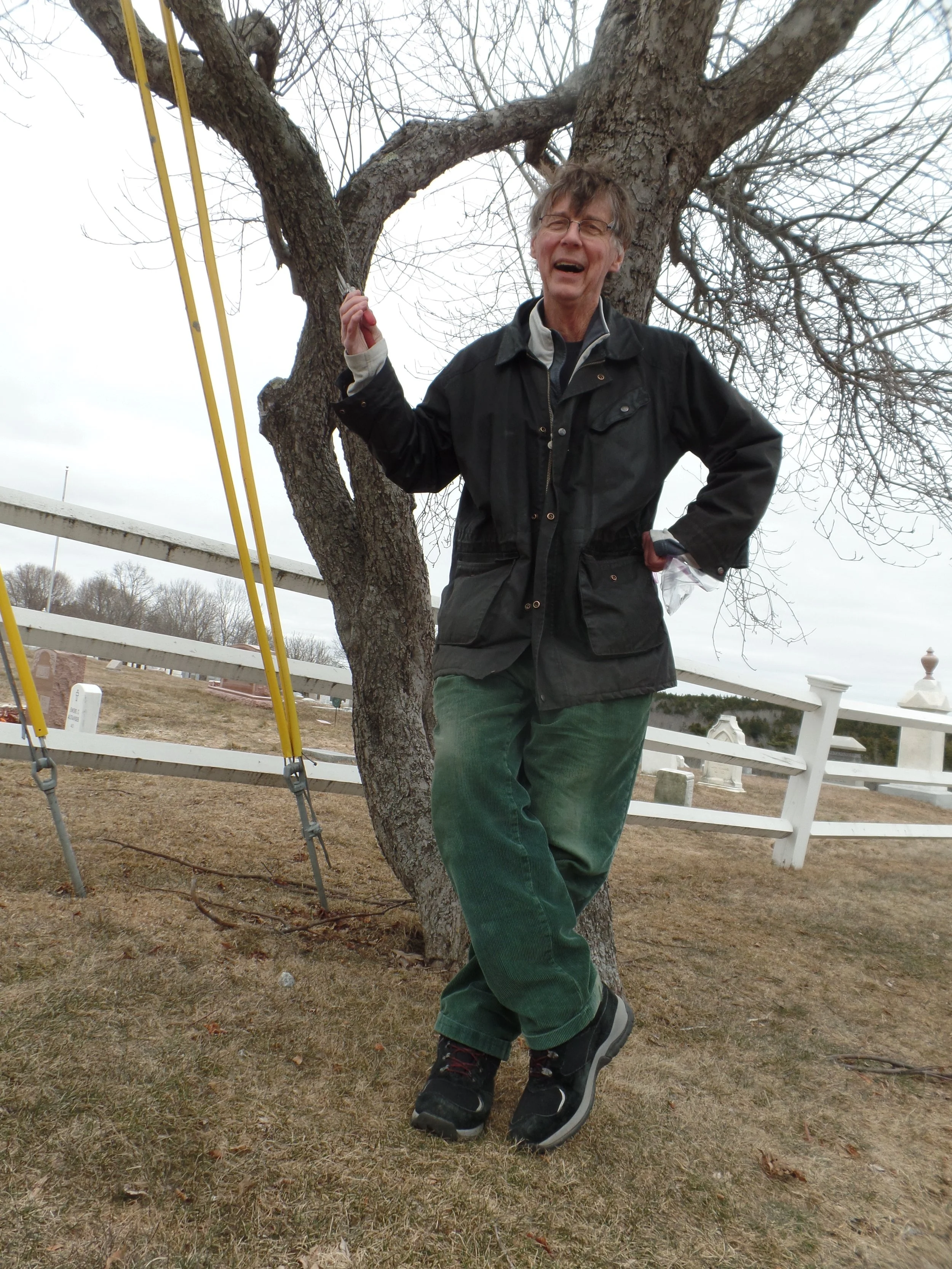
On a recent windy day about 3/4 of the top broke off the ancient tree and, although not entirely detached, it does not have enough connection to the trunk to remain viable. So this afternoon I took a ladder and a chainsaw up to the ball field where the ancient tree resides and pruned off the broken top. It’s on town land. No one gave me permission but anyone who notices will be happy not to have to deal with it. They would likely just cut it to the ground. I wouldn’t.

My plan was to cut out anything that was burnable in our wood stove, one 16” piece at a time. I didn’t want to make any large gallant cuts that might tear off a big chunk of the remaining live bark or, even worse, cause the entire tree to break apart. So I picked away at it, and in a couple of hours I had it cleaned up. It looks pretty bare. Hopefully there’s enough live growth on it to keep it going for several more presidents. I’ll save some scionwood from what I cut and graft a bunch of trees, at least one of which will go in our orchard. Don’t want to lose this one.   

November 16-17, 2025

Today in the orchard

More rain and snow and sleet and hail and gray and dark and gloomy. It’s November! I ventured out into the orchard to pick our first crop of “Burnham Sweet,” grafted from an ancient tree introduced to us a few years ago by Peter del Tredici. Peter had been taking care of the tree for several decades out in Cornwall ,CT.

Burnham Sweet tree, Cornwall CT.

My provisional name for the apple was “Cornwall del Tredici,” but I now believe I've found Burnham Sweet, an apple introduced by a locally famous Cornwall resident and Revolutionary War officer, Oliver Burnham (1760-1846). The Illustrated History of Apples in the United States and Canada .(Bussey, vol I p 312 and 438) lists both Barnham (aka Barnham Sweet) and Burnham (aka Burnham Sweet) as originating in Cornwall and first recorded within a few years of one another (1869 and 1872.) Bussey’s descriptions of the two cultivars  are nearly identical. All that separates them is one vowel and that from a time when most documentation was in handwriting, not print. When does an “a” become a “u” or vice versa?  

We did a DNA profile (AMHO 311) and found no match in the Reference Panel. The DNA results did show that the famous ancestor of many American apples, Reinette Franche, is likely a grandparent or a more distant relative. The fruit is yellow and it definitely ripens late.

November 15, 2025

Today in the orchard

Thank you, Nathaniel Haskell!

Todd Little-Siebold and I gave a presentation at the New England Botanic Garden at Tower Hill this afternoon. Our focus was historic apple identification and how the use of DNA has helped to inform our understanding of apple history in New England. It was part of a well-attended, all-day seminar on apples. 

The day was topped off in fantastic style when one of the attendees came up to me and identified herself as a descendent of Nathaniel Haskell, the fellow who is thought to have found the original Black Oxford. Needless to say, she now has my full attention and contact information. She will be talking with relatives, and I hope to learn everything I can about the Haskell family and the past 240 years or so. I told her I’d send her some Black Oxfords this fall.

November 14, 2025

Today in the orchard

Cammy continued to prepare the nursery and the orchards for winter. This includes more weeding in the nursery and wrapping more treeguards onto the young trees. It’s a long, arduous task but always worth the effort. Always means Always. That’s Always with a capital A or you might say uppercase or in the olden days, “majuscule.” In any event, do it!  I’ve heard numerous stories of trees as old as ten years being lost to happy voles scampering down the network of I-95’s under the snow.  

Beneath the snow…

November 13, 2025

Today in the orchard

Stearns Lothrop Davenport… and apple of course.

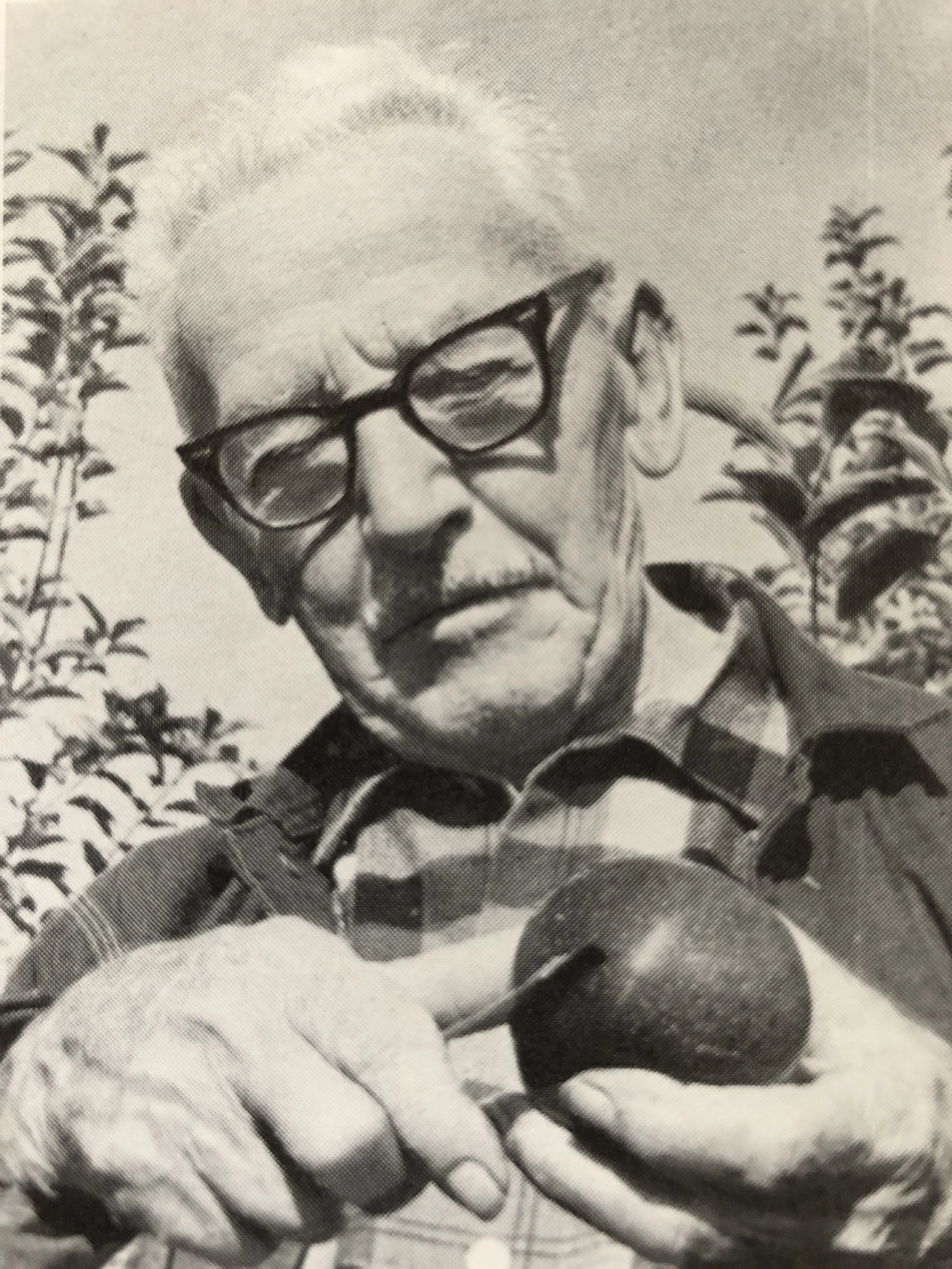
Today I spent several hours reviewing the DNA results for the historic apple collection at the New England Botanic Gardens at Tower Hill. Tower Hill stewards what became one of the most important “heirloom” collections in North America since being assembled by Stearns Lothrop Davenport and his apple friends in the mid-twentieth century near Worcester, MA. It has had its challenges including phenotypic errors, pests, disease and aging out, but it persists and has been a source of thousands of sticks of scionwood as well as a huge inspiration to apple researchers, orchardists, historians and collectors across North America and beyond. Including me! 

At this point all 119 accessions in the collection have been DNA profiled. My goal today was to put together a document with all the results as well as suggested action items for those accessions that need further testing or research. I sent off a draft to the Historic Fruit Tree Working Group and received a number of corrections and additions from Cameron Peace to incorporate into the document. I will post a link to it in the coming days. 

On Saturday, November 15, Todd Little-Siebold and I will give a presentation at Tower Hill that will focus on the history of apples in New England, including Tower Hill. If you’re in the area, come join us.

November 12, 2025

Today in the orchard

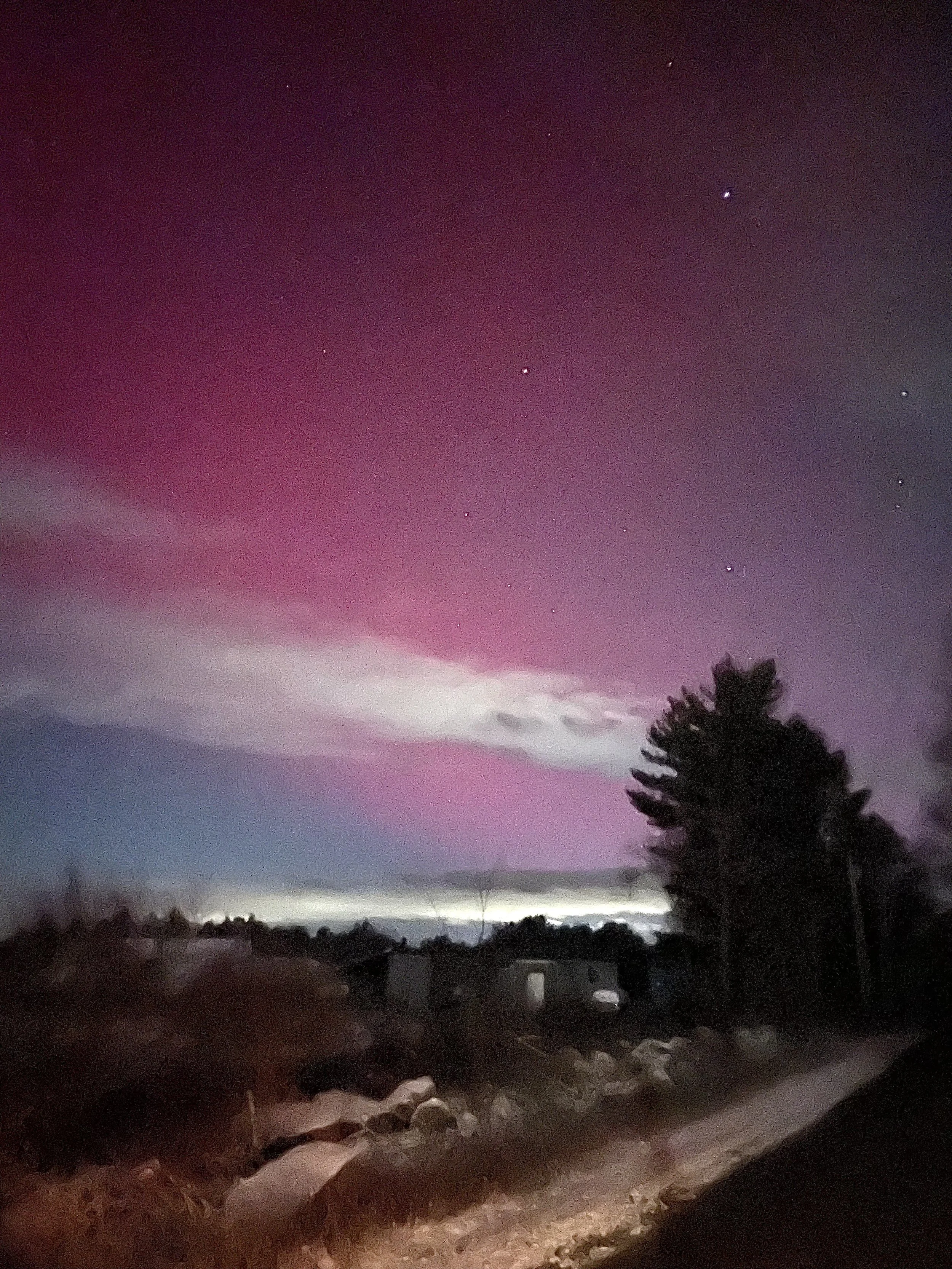
It’s not often that I quote newspapers in the Orchard Report, but never say never. Here’s the latest from USA Today: “A strong geomagnetic storm means there is a chance to see the aurora borealis, not just one night this week, but three over New Hampshire and Maine. …NOAA’s Space Weather Prediction Center issued a watch for a G4 geomagnetic storm on Nov. 11. They said the storm will be severe on Nov.12 strong on Nov. 13 and minor on Nov. 14.”The paper was correct. Late last night we did have northern lights which Skylar was able to photograph during a break in the clouds while on a late night drive. There were also northern lights in a bunch of other locations across the US. 

I guess you could say that winter is just around the corner. Last night it snowed about an inch. It eventually melted but it is a reminder of things to come. After a breakfast of oatmeal and Belle de Boskoop sauce, I worked  until midday on sorting identification priorities. In the afternoon we put on more tree-guards. By then the grass was snow-free and the temperature had warmed up enough to give us a few hours of perfect weather to be out in the orchard. 

November 11, 2025

Today in the orchard

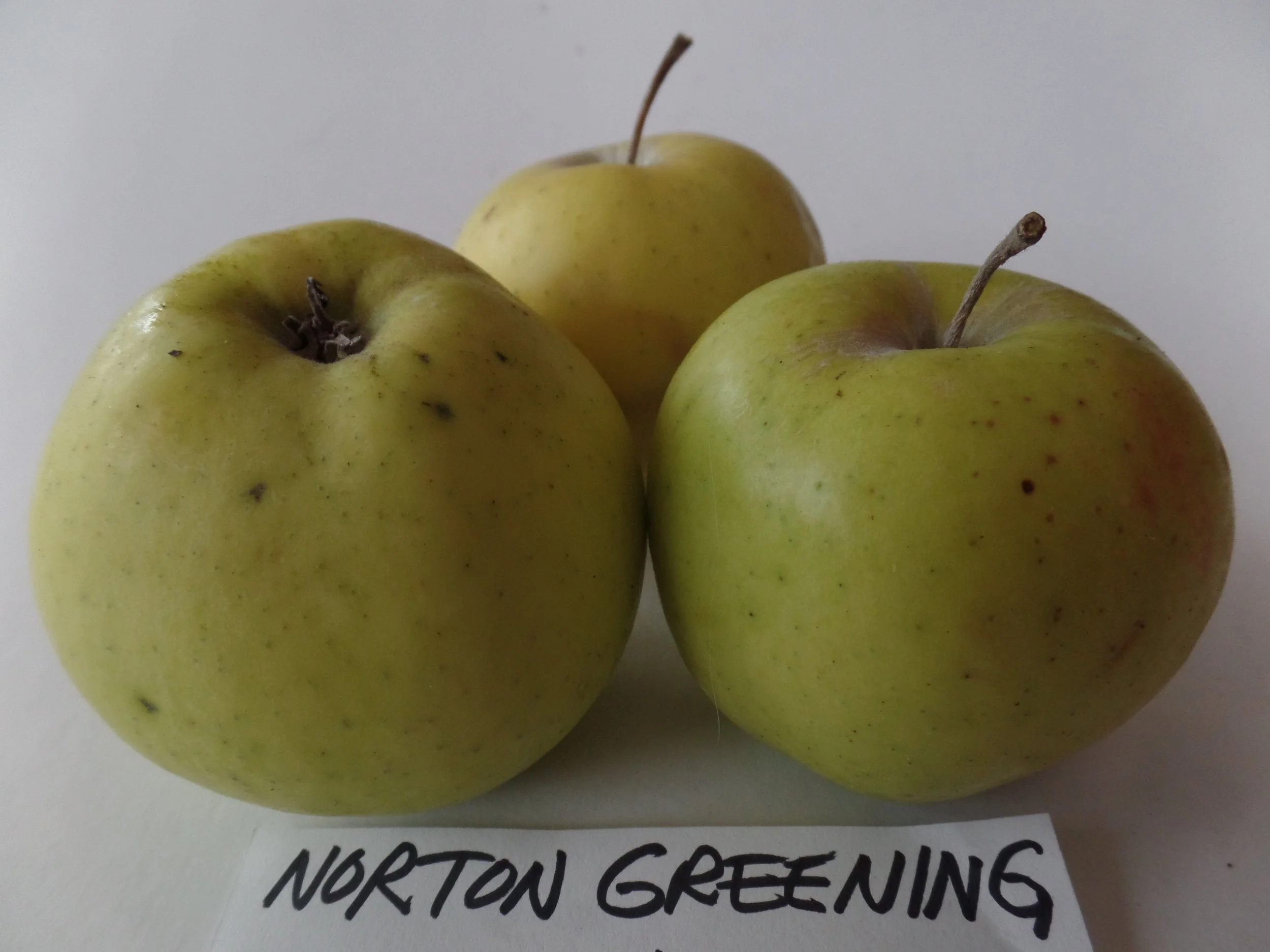
Time to say goodbye to the Norton Greenings for 2025. They have officially reached their limit. It’s a great apple, but, alas, like many other early fall cultivars, it doesn’t keep. Before we bid farewell, however, I should share some new information I learned from Dorothy Rosenberg in Harpswell on Sunday about the apple’s history. 

Although I was correct that the seedling was planted (or first discovered) at the Norton “old farmhouse” in Harpswell, I had the wrong person for whom it was planted. I had thought that the seed (or seedling) was planted on the day of Helen Norton’s birth.  But that was incorrect. Helen Norton was not born a Norton, she was born Helen Appel. The seed (or seedling) actually dates from the birth day of Helen’s sister-in-law Hannah Dring (nee Norton).

I think I may have met Helen Norton with Roberto McIntyre some years ago, but I don’t believe I’ve met Hannah Dring. Both women are still living as far as I know, and both are well into their 90’s. I need to go say hello and tell them how much I love ”their” apple… and that I hope I now have the story straight.

One added note about the Norton Greening. The original tree died a few years ago. By then I had recognized its value and had grafted it up here on our farm. We subsequently grafted a few trees from our wood and reintroduced it to Harpswell.  What goes around, comes around!  

November 10, 2025

Today in the orchard

Charlamoff in Bridgewater, 2015

I made what will be the last batch of Charlamoff sauce of the year. I picked the crop on September 1st and made a very decent pie a few days later. The fruit I cooked today was in the cooler for a month or so at about 38F and then in the root cellar for another month at 50F. Amazingly they are still in decent shape. The sauce is still flavorful; the fruit is on the acidic side as all good sauce apples are; cooks quickly. 

Charlamoff is a Duchess-type, of Russian origin, medium-sized, roundish and rather distinctly red-striped. If you saw one, you might think “Duchess”; but if you see them side by side, you know they are distinct cultivars. I first came across Charlamoff in the northern Maine town of Bridgewater about ten years ago. There were two old trees on the farm. Unlike Duchess, the stripes and blush are more lavender than red. I was able to identify the Bridgewater trees and have since also obtained scionwood from the Geneva, NY collection. We now have trees grafted from both locations.  It’s beautiful, productive, cooks well and is delicious. 

November 9, 2025

Today in the orchard

Roberto McIntyre

This afternoon Laura, Skylar and I led an apple tasting for a small but enthusiastic group in a cozy, old, tool-lined carpentry shop in Harpswell. (You never know where the next talk may be.) The event was a tribute to Robert McIntyre who spent many years fruit-exploring down the peninsulas and islands off Brunswick. He was never afraid to knock on a door, and I think he knew every ancient tree in every dooryard on every old road south of Bowdoin College. He made numerous excellent discoveries including a spectacular Golden Ball and the bizarre Danziger Kantenapfel which he dubbed, “Lumpy Red”. We grow two of the seedlings he introduced me to: Norton Greening and Orr’s Island Cemetery (aka “Roberto”). He also found three beautiful ancient Baldwin specimens from which I took scions for our own Baldwin trees. He is someone we miss everyday, especially in the fall when the fruit begins to drop and the trees are begging to be visited once again. 

Skylar began the tasting by introducing the basic apple flavors: tart (sub-acid: Ashmead’s Kernel). sweet (low-acid: Tolman Sweet), bittersweet (low-acid and bitter: Damelot) and bittersharp (acidic and bitter: Kingston Black). From there we went directly to “pear-flavored” in the form of Hudson’s Golden Gem. Then, for the next two hours we tasted an assortment of Harpswell apples collected by Dorothy Rosenberg and Charles Strickland. Laura, Skylar and I tag-teamed the answers to numerous questions all along the way. By 4:30 it was getting dark and time to go home.   

November 8, 2025

Today in the orchard

Voles: I don't think so!

In a brief respite from the gray and the cold, the sun and its heat returned to the farm today. Off came the sweaters and the sweatshirts. Alyssa, Kevin, Skylar and I spent the day in the Finley Lane Orchard. We began the annual task of putting on the “tree guards.” These are the spiral plastic sleeves that protect the trunks of the younger trees from being nibbled by voles and mice during the winter when there’s not a lot to eat and the tender bark is too tempting to pass up. In summer there’s lots of more palatable stuff in the orchard, and the small rodents rarely cause any damage. 

But winter is another thing, especially once it snows and the voles create networks of tunnels beneath the crust. A ten-year-old tree can become toast (literally) in a day. Once the trunk is “girdled” it may be too late to save it. So we put on the tree guards in the fall and take them all off in April. We remove them in the spring because the borers (Saperda candida) love to sneak in behind the sleeves in the summer. On off on off. It's that amazing endless circle. 

November 7, 2025

Today in the orchard

Not much warmer today with more rain by evening. Cammy and I packed up the truck with ladders, picking buckets and boxes and returned to The Apple Farm to pick Ashmead’s Kernel, Roxbury Russet, Kingston Black and Hudson’s Golden Gem. These are trees I grafted there almost twenty years ago. The trees are tucked away in a corner of the orchards where they often go unnoticed. Steve mentioned that they weren’t planning to pick the fruit so it seemed like it would be worth grabbing them before it’s too late. Steve even gave us a hand with the picking. The season there is nearly over.

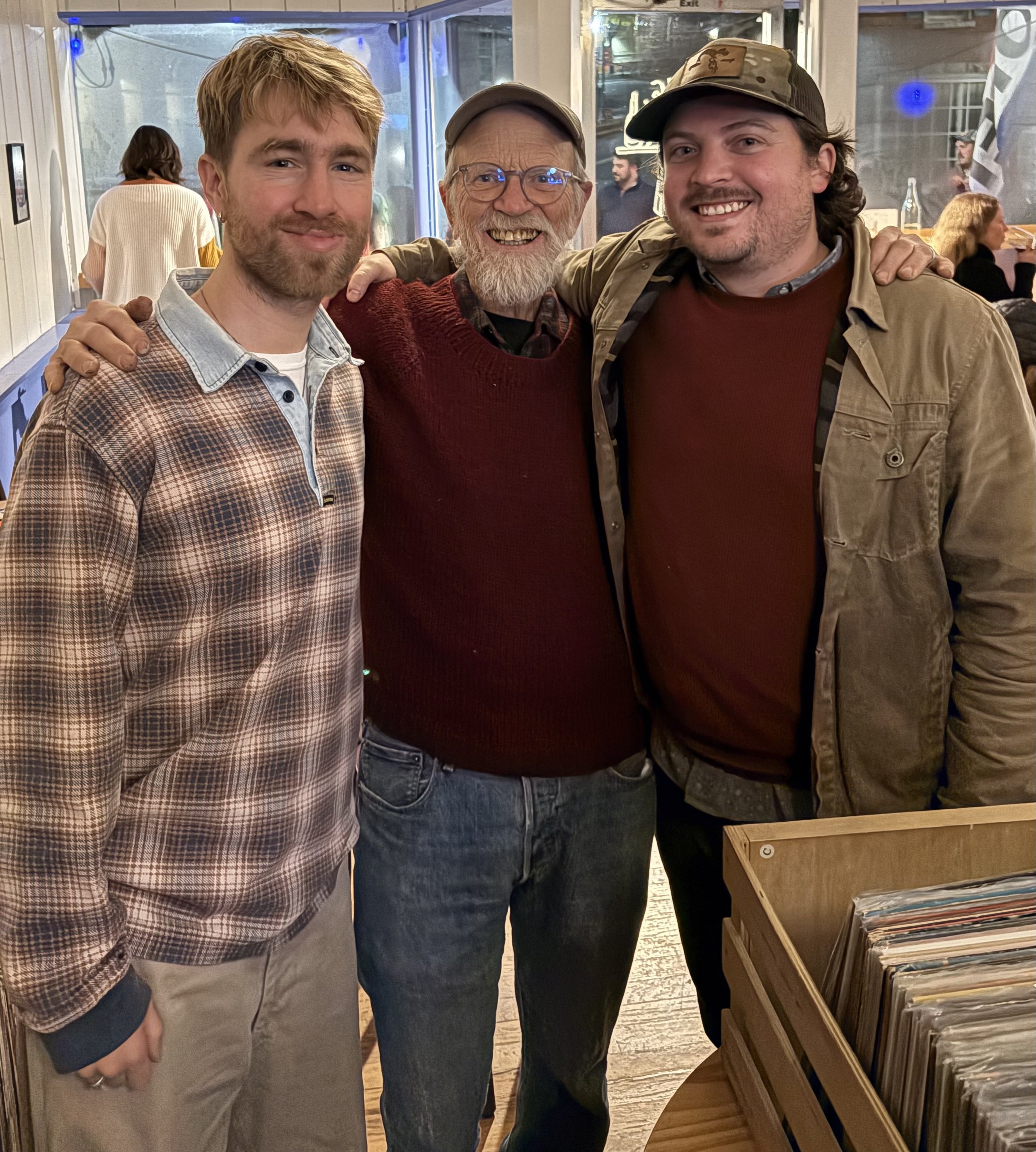
Bill, Bunk and Zack, November 7, 2025

From Fairfield we traveled south to Gardiner where we attended an apple and cider tasting at a tiny bar/restaurant called “Table Bar.” The place was packed. Zack Kaiser of Absolem Cider, Bill Mullen the NY apple photographer and I shared the stage (corner) where we traded stories about apples and cider. Zack brought three single-varietal ciders—Ashmead’s, Northern Spy, and Harrison—and I provided the fruit. We passed out plates of cut up apples and then followed each round with a pouring of the corresponding cider. In between we told stories and answered lots of questions. If you haven’t been to Table Bar, give it a visit. It was started by a group of friends who wanted a place to share conversation, food and drink with each other and the local community. An evening there feels like hanging out in your neighbors’ living room - familiar, comfortable, lively and you don’t have to clean up when everyone leaves.

November 6, 2025

Today in the orchard

The weather continued to be cold and raw as I drove to The Apple Farm in Fairfield, ME, home of the oldest Gray Pearmain trees in central Maine (or possibly, anywhere). I was in pursuit of a few good specimens of Ashmead’s Kernel and Northern Spy to use in a cider and apple tasting that I’ll be helping to lead at Table Bar in Gardiner, ME tomorrow. We have both of those varieties here, but The Apple Farm has many more trees and I was looking for a good excuse to go visit the owners, Steve and Marilyn Meyerhans. I also wanted to check out some trees I had topworked there years ago to see if they had any fruit left. I was not disappointed - Kingston Black, Roxbury Russet and Hudson’s Golden Gem hadn’t been picked. We’ll bring our ladders and boxes back tomorrow and pick them. The Apple Farm is located on a ridge with amazing views both east and west. They have a large collection of unusual cultivars along with the typical ones. It’s well worth making the trip.

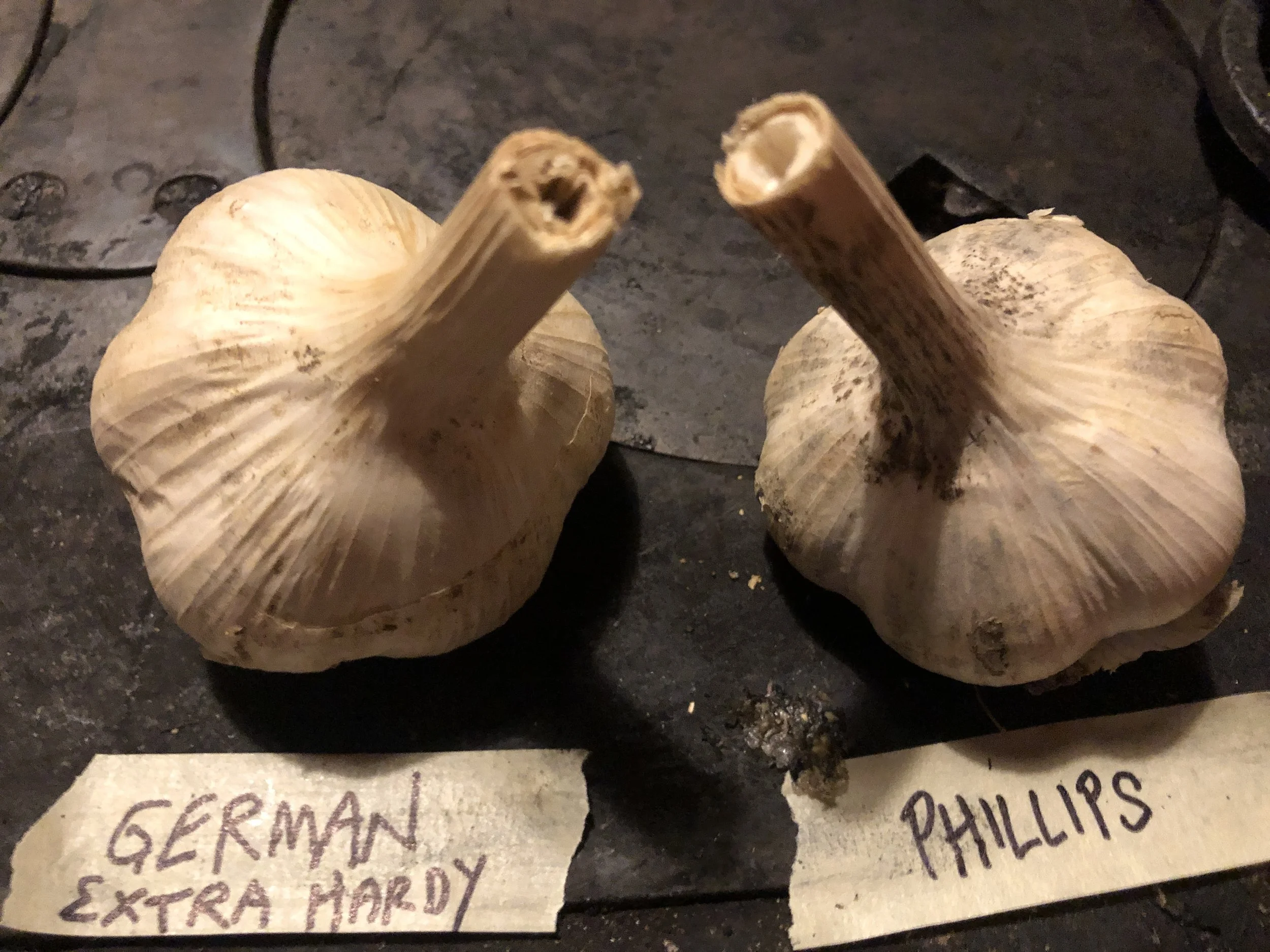
In the afternoon we planted the garlic back on the farm. We grow two garlics: Phillips and German Extra Hardy. Both are excellent. At one point it began to snow - perfect weather for planting. We covered the bed with hay and made a bee-line for the heat. Another fall task complete.

November 5, 2025

Today in the orchard

More apple sauce for the flying saucers of the omniverse. I’ve been using up the early-season apples lately. It’s interesting to see how they do after a month or two in storage. The Red St. Lawrence are still in remarkably good shape. I made sauce with them today and was pleased with the result. Red St. Lawrence is a sport (mutation) of the classic “St. Lawrence,” which is a seedling of Fameuse (aka Snow for its glowing white flesh). Fameuse is one of the most important of all historic, northern cultivars. It’s one grandparent of McIntosh and is in the ancestry of many other cultivars. It’s a great dessert and cooking apple in its own right. We have a very old Fameuse tree at our place. Both Fameuse and St. Lawrence migrated to Maine from Canada back when the border was not much more than a formality. You can find old trees of both sprinkled around much of the state. We certainly scored when those two apples showed up. 

Red St. Lawrence apparently arose spontaneously from a St. Lawrence tree in Newburgh, a few miles south of Bangor sometime in the early twentieth century. The ground color (“background color”) of the apple is red unlike the original St. Lawrence which has a distinctly green ground color.  Mutations like this happen in all plants and are often coveted by collectors. For a reason I’ve never been able to determine, such a mutation is called a sport. Although sports can be maintained asexually through cuttings or grafting, they are—as far as we can tell—not genetically different from the original plant. I’ll talk again about sports in the orchard report, but for now I’ll just say Red St. Lawrence has a rusty red ground color. It’s a very good, early-mid-fall apple.