July 28, 2026

For the past thirty years we’ve have collies here on the farm. What fantastic dogs; they’re fun and friendly and wonderful. They’re a veritable canine fence around the orchard. They bark away the deer and the bear and the raccoons and whoever else might be contemplating a dinner of apples or apple trees. You can hear them out in the orchard at night barking, “Don’t even think about it!” They love to be outdoors 24-7-365 (although they rarely object to an open door policy, especially when it’s 20F and raining.) They’re the ultimate welcoming committee. They don’t bite your friends or neighbors orthe UPS guy.

On the delta-side, they may bark a lot. For us, that’s a good thing—it’s their job, but it can be an issue if you don’t have lots of space and the neighbors are close by. They shed. As the welcoming committee, they love to race out to meet incoming vehicles. That makes them potential car-chasers. They can get into porcupines (a bummer.)
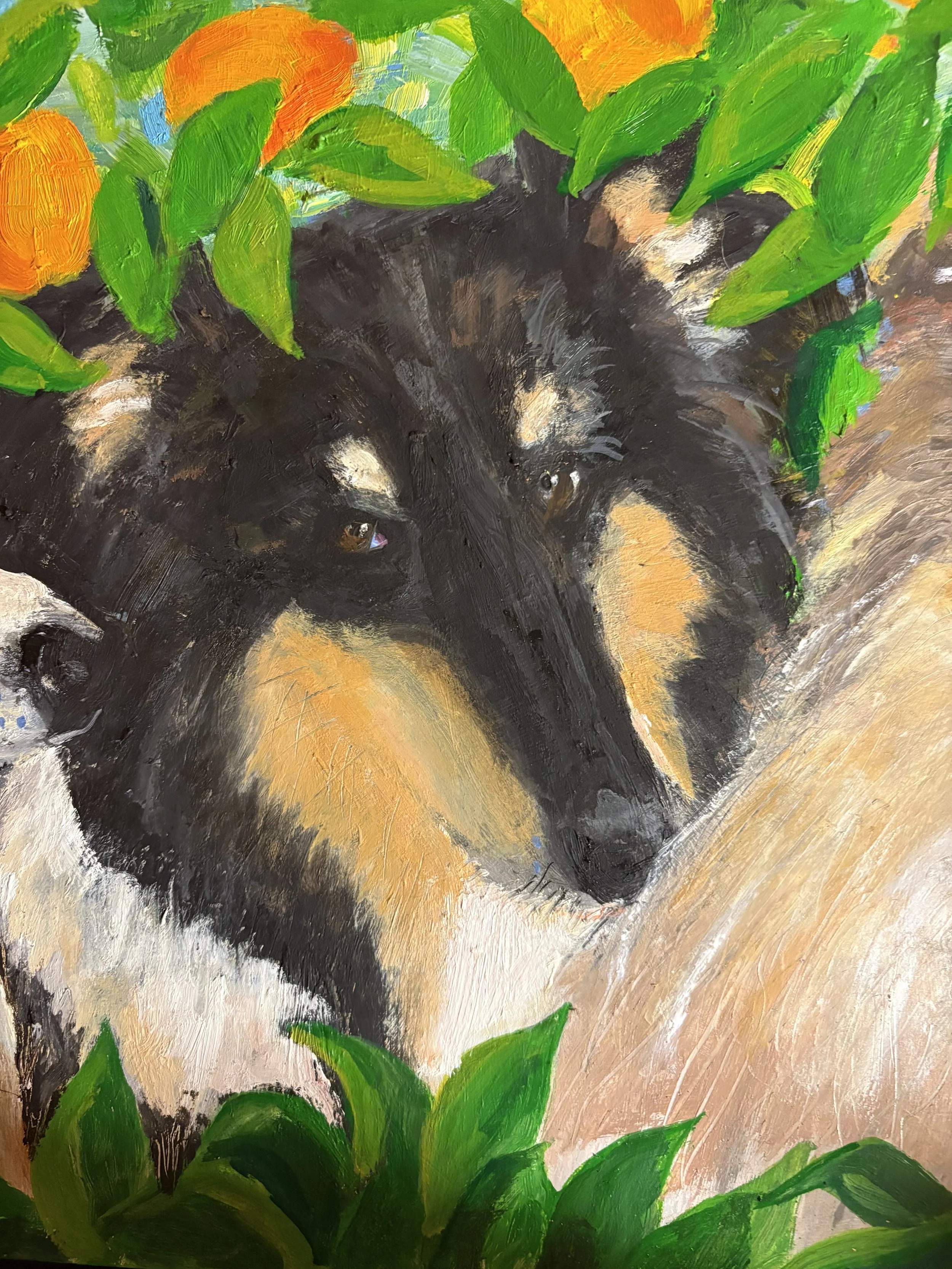
The world’s greatest orchard dog

Why do I mention this? Friends just told us about a 5-year-old tricolored male collie looking for a home. His people died recently, and he’s in the market for a new orchard to look after. His name is Rex. We met him today, and he seems affectionate and bright. He’s from the same litter as the two collies we have living here. If you know someone (you?) who might be interested in adopting one of the world’s best dogs, please be in touch with us today. You probably need a collie in your orchard.
July 27, 2026

It ain’t gonna rain no more no more
It ain’t gonna rain no more
How in the heck can I wash my neck
If it ain’t gonna rain no more

It's dry in central Maine. We need rain. They say it’s coming later in the week. The plants will be happy. Us too. Our newly planted trees are starting to look droopy. Some worse than others, but all are suffering. After a full year in the orchard, they’ll typically do quite well on their own, but the first summer can be rough. They need a lot of rain or else regular gifts from a bucket or a hose.

One of the first plants to show the signs of drought are the blackberries. This could be because the vigorous first year “primocanes” put on so much growth they require a lot of water. The plants are so incredibly rugged, you’d think they could handle anything, but that’s not the case. They need water. Ours are now showing signs of thirst. They’re drooping.

So today I filled buckets and watered our new trees and companion plants out in the BRC. Tomorrow I’ll water the new row of trees up at Finley. If you planted apple trees this spring, go water them today. That’s an order. Your trees will thank you.

July 26, 2026

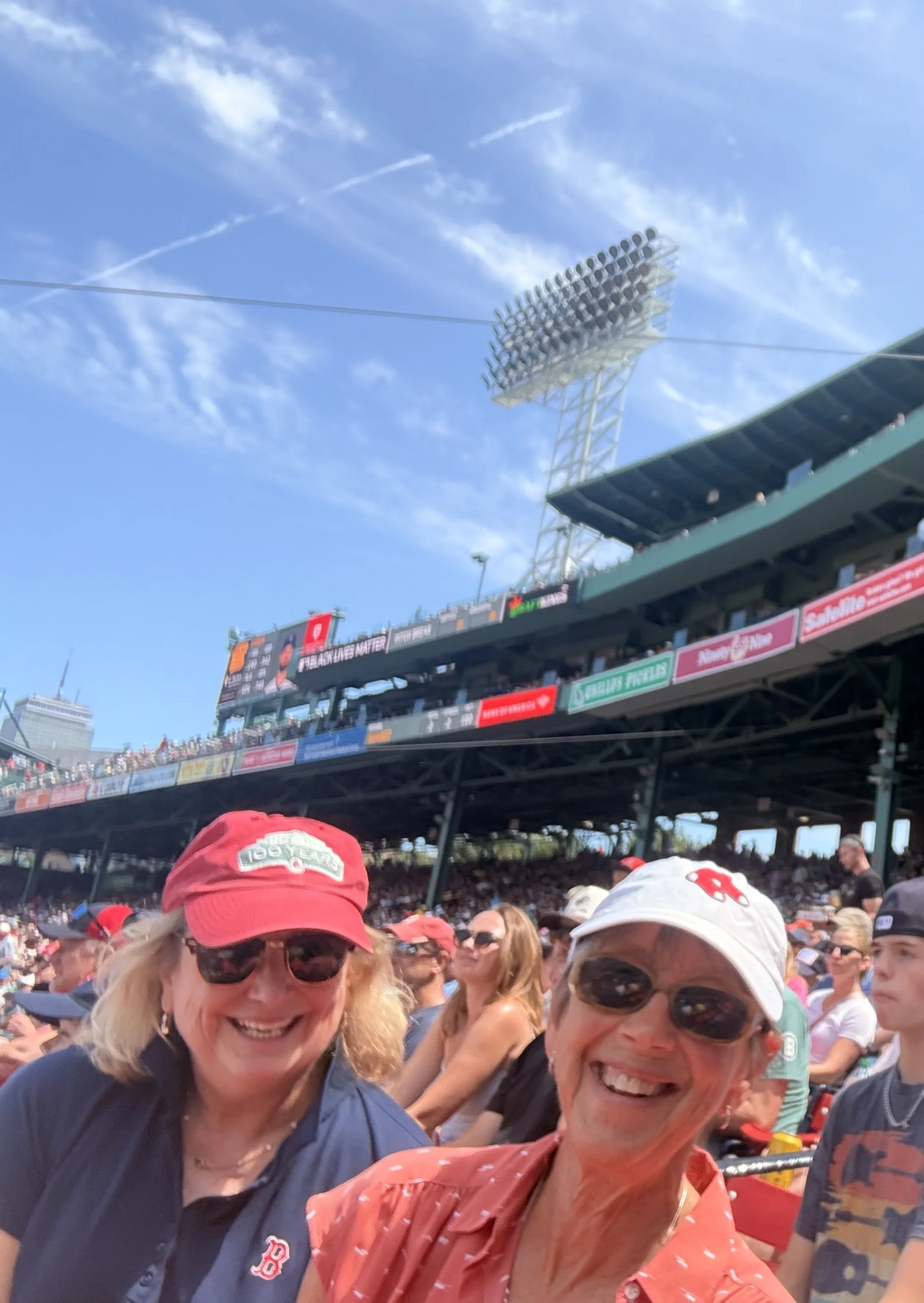
Before heading back to the farm we detoured to Boston and attended the Red Sox win over Toronto with Andy and Bill. In case your not a Sad Rox fan, they went from being worse than the worst team in baseball (is that possible?) to being better than the best (equally impossible). They were so bad, I almost stopped listening. (Well, not really.)

What does baseball—or Fenway Park for that matter—have anything to do with farming? First off, the only place in The Universe greener than the orchard up at Finley Lane is Fenway Park. The grass and The Wall are so green, a farmer could even feel right at home.

Secondly, watching baseball is like watching plants grow. You could swear that nothing’s happening. But don’t kid yourself, a lot is. You think there’s no apples on your Blake or Black Oxford or Sidrunkollane Talioun tree. But look again. You just might come back a few days later and—like magic—a whole bunch of apples have appeared. And then a week later and they’re the size of ping pong balls. Before long, you’re up on a ladder picking.

It’s like that with baseball too. You think nothing’s happening. You get bored and start gazing at the advertisement billboards or the Citgo Sign (which has been taken down for some reason) or the people in the next seats who are drinking too much beer and, oops, you just missed a three-run homer. Darn.

Whether you’re at Fenway Park or out in the orchard, pay attention. You just might miss the Goldfinch that flew by. Or the Monarch feeding on the milkweed. Or the Monarda flowers or the first apples on the Radar Love tree or that wall-ball double that just knocked in two runs. Sure, there’s instant reply on the Jumbotron. But nothing beats the real thing.

July 25, 2026

We found ourselves on a beautiful lake in New Hampshire today - a chance to get away from the farm for a couple days and spend time with close friends. Our hosts, Miner and Helen, are namesakes of two seedling apple trees in our front yard. Miner (aka Minor) is the child of the English bitter-sweet, Major. Helen is a seedling of Sweet Alford. Both trees are fruiting for the first time this year.

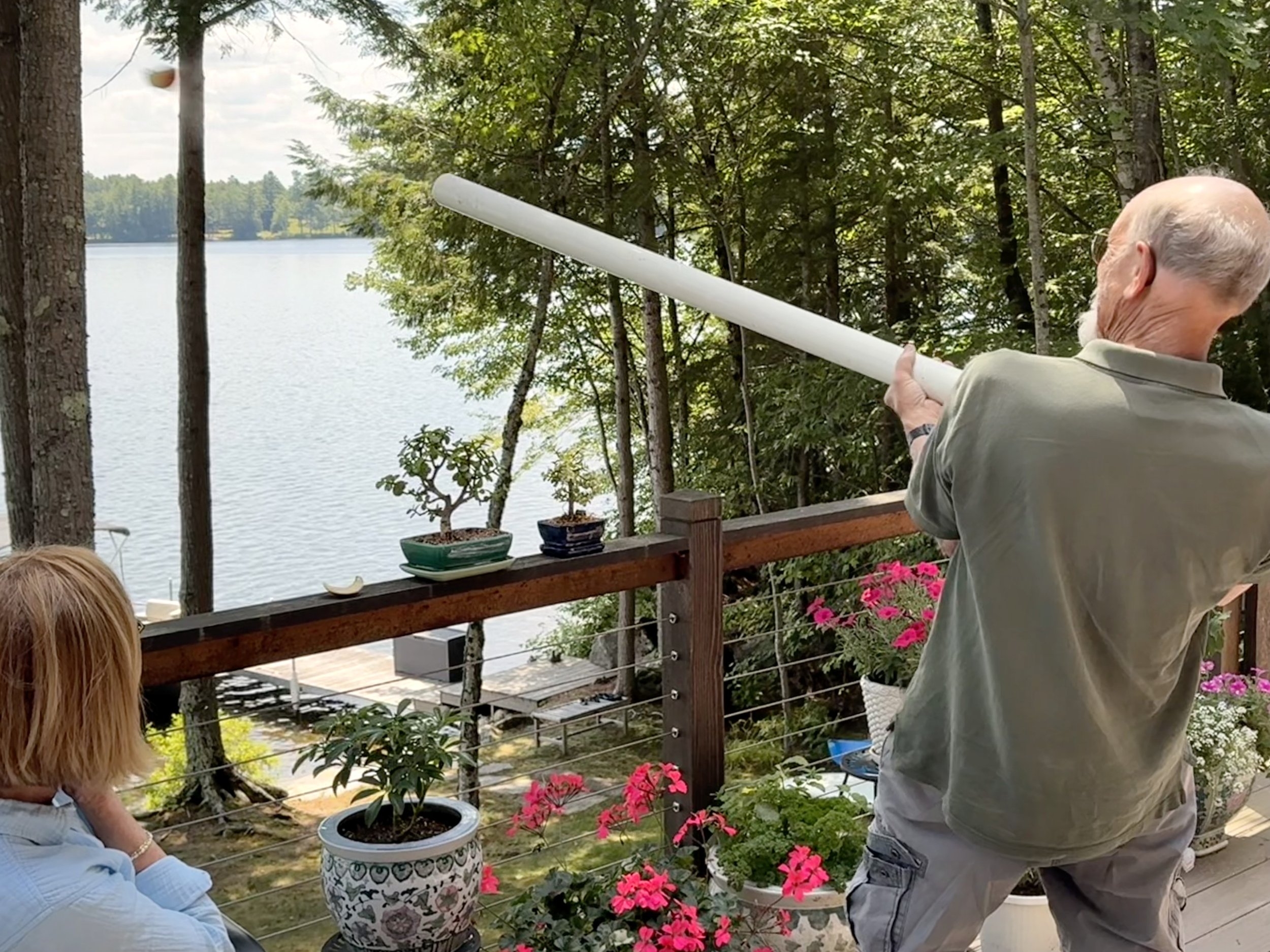
Miner (the person, whose nickname is Mac—not to confuse things further) built himself a potato gun many years ago out of old plumbing pipe. I’m not exactly sure how it works, but it does involve hairspray. This afternoon Mac got it out and shot a few potatoes off the deck into the lake. (Organic, I’m sure). As the ultimate shoot-off, he brought out one apple. It was—what else?—a Cosmic Crisp.

A good use for a Cosmic Crisp (visible in the upper left corner whizzing its way to the cosmos)

I was given the honors and a few minimal instructions. Mac loaded the apple, sprayed a bit of hairspray into the tube, closed it up, and I aimed for the clouds. I pressed a button attached to a cord and “ka-blamm”, the Cosmic Crisp ascended skyward towards the Cosmos. It rocketed between several pine trees removing several twigs in its path. Eventually it descended back to Earth and splashed down out beyond the float. It was successful mission and maybe the best use of a Cosmic Crisp ever. My shoulder is still a bit sore, though it was definitely worth it.

July 23, 2026

Today we sprayed. We could have sprayed a number of products that are known to kill Apple Maggot Flies. Of the many options the most effective, organically-certified pesticide is called Entrust (aka Monterey), which is, according to the manufacturer, “spinosad, … biologically derived from the fermentation of Saccharopolyspora spinosa, a naturally occurring soil organism.” Sounds good. The challenge with Entrust is that it is largely indiscriminate in what it kills. It’s one of those pesticides that is not kind to the bees.

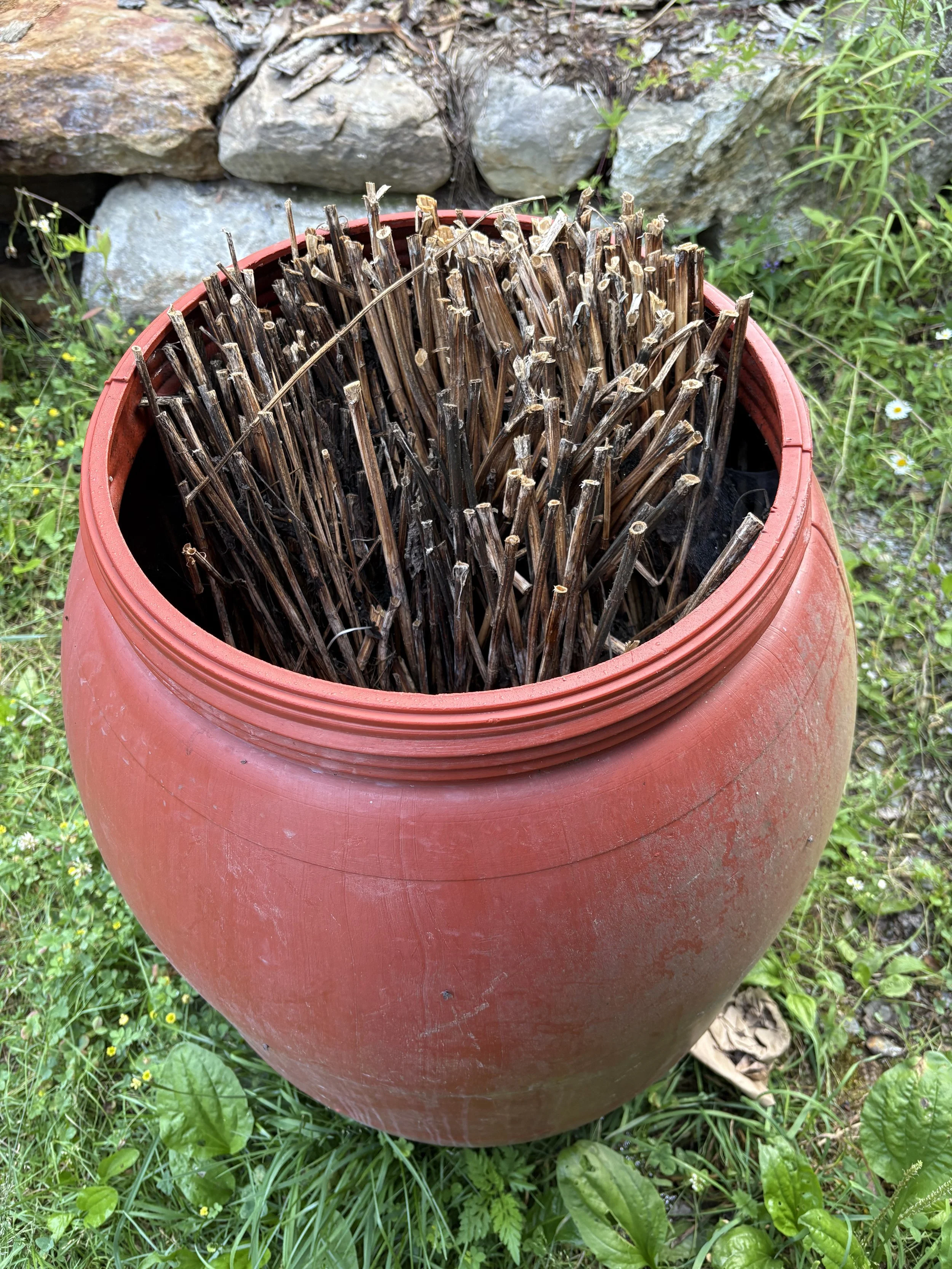
Nettle tea, July 23, 2026

So today we did not reach for the Entrust. Instead we sprayed liquid kelp, liquid fish and an insanely pungent combination of barrel-fermented herbal teas: comfrey, nettles and cannabis. Fortunately we’ve sprayed it all before ,and the trees haven’t died. Will the Apple Maggot Flies take a sniff or two and fly away? We hope so.

July 22, 2026

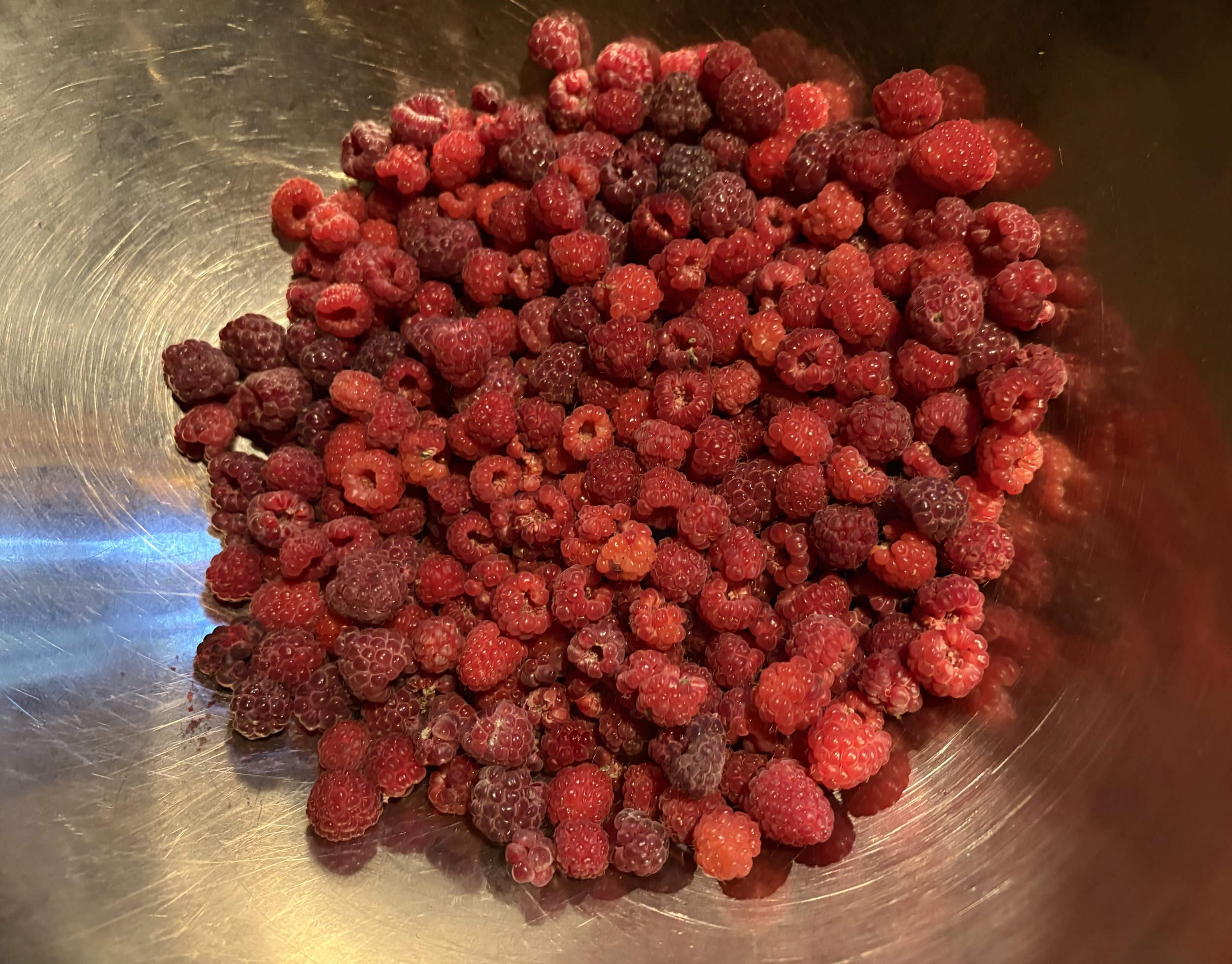
Raspberries, July 22, 2026

(By Skylar Bodeo-Lomicky) I’ve checked the Apple Maggot Fly traps two of the three days that have passed since setting them out. When I checked the traps on July 21, I found two of the four Ladd traps to have one or two apple maggot flies in them. One is on a standard size tree in row one, and the other is grafted on a 10-year-old dwarf rootstock in the nursery.”The two traps are not located in the same row, but they are both located somewhere between the north and easternmost parts of the orchard.

The raspberries are now ripening a week or two later than normal. Cammy picked a big bowlful. Berry-season is entering full swing. Summer is here, although with 50 degree nights, it feels more like September. 

July 21, 2026

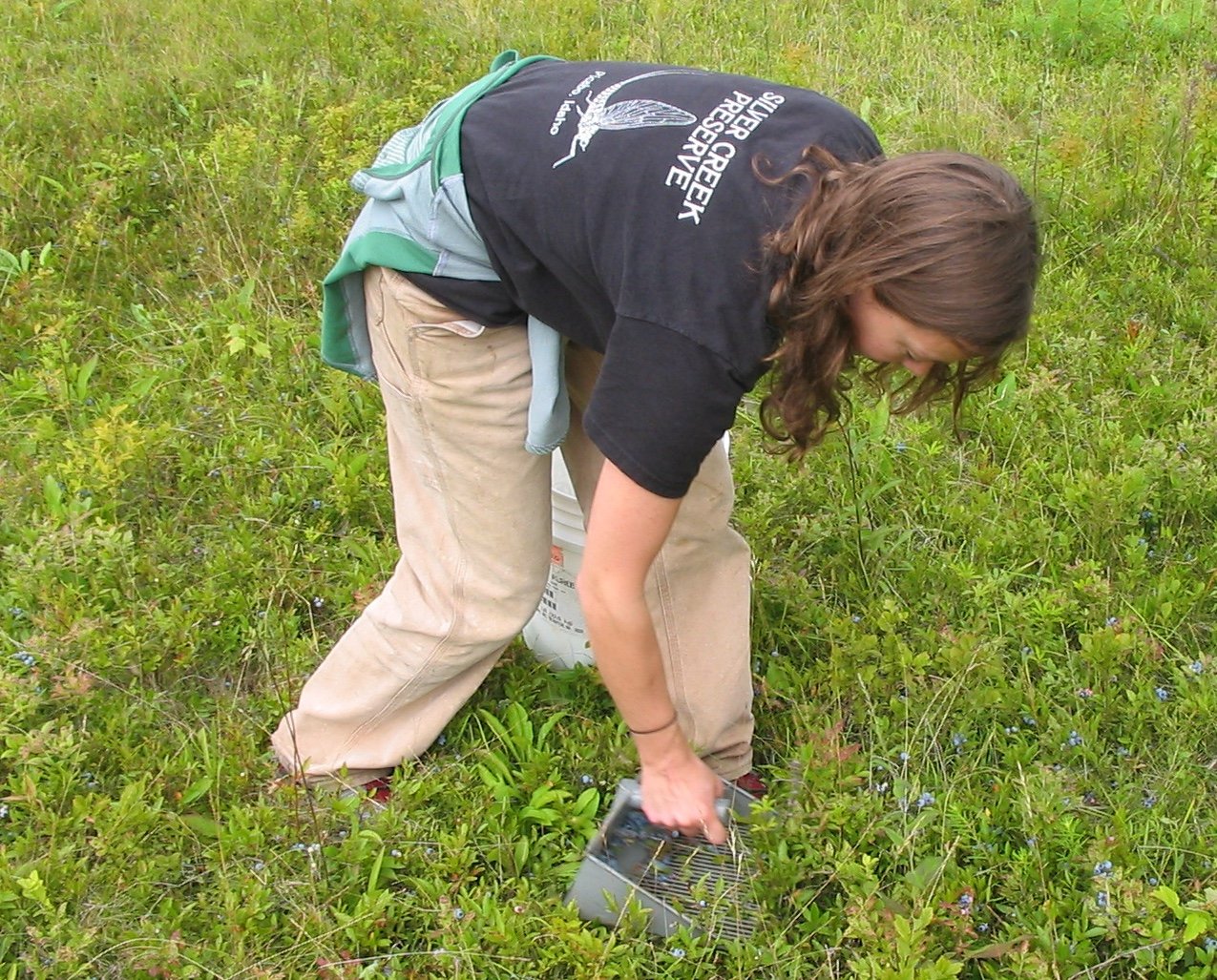
Raking lowbush blueberries

Today Cammy picked the first big bowl of blueberries. These are the “highbush” type. We pick them by hand, one at a time. They’re not like the wild “lowbush” type that we harvest with a rake, a tool that looks like a cross between a comb made of knitting needles and a dustpan. (see photo) Some Mainers don’t even consider the highbush blueberries to be blueberries at all. I like both though I do agree that the lowbush may be tastier, but they are both worth growing… and eating.

It began to rain late in the day—a welcome event. Although we don’t need 20” like they got in Texas, we could definitely use 2 or 3. But we’ll even take a quarter inch if that’s all there is allotted to central Maine this evening.

July 20 2026

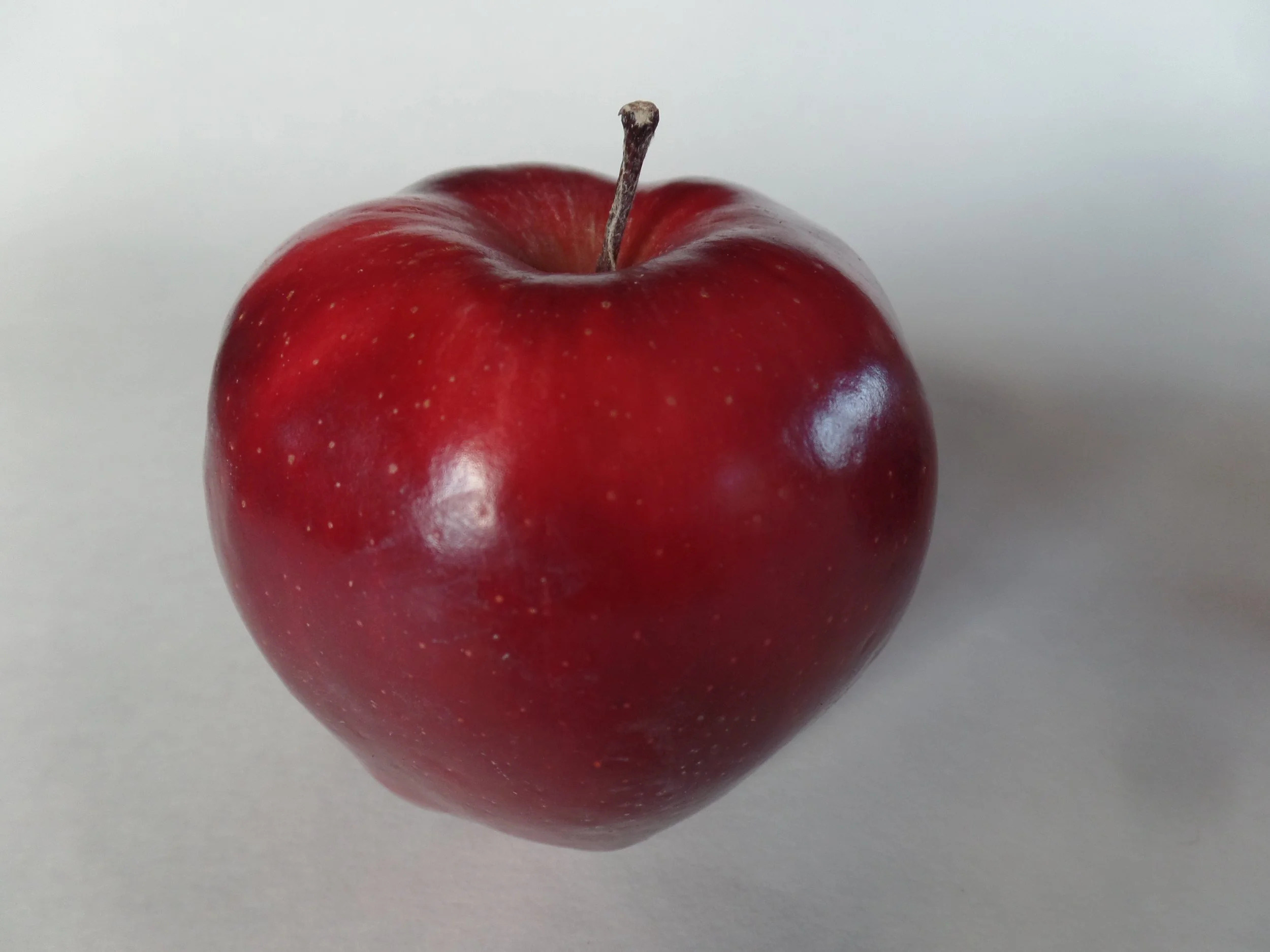
The perfect apple? July 20, 2026

Perfect fruit. What does it mean? In US food culture, the word “perfect” is about an expectation of a certain appearance. It has nothing at all to do with the safety of food or its nutritional value. The lettuce or whatever it was that caused the recent outbreak of cyclospora almost certainly looked perfect. Apparently it was not actually perfect at all. In fact, quite unhealthy.

When it comes to apples, perfect means there can be nothing visible to suggest any possibility that an insect might have disturbed the surface of the fruit. We use words like blemishes and, yes, “imperfections” to describe undesirable apples. For many years, even the color had to be mono-chromatic. Now, with the introduction of Honeycrisp, at least stripes are allowed.

When I hear that growers are forced to spray because consumers want perfect fruit, I wonder, “what if perfect fruit meant apples that are really good for you and don’t make you sick… regardless of how they look?”

July 19, 2026

Now that the apple maggot (Rhagoletis pomonella) traps are in place, many questions come to mind. Will we catch any apple maggot flies? What do we do if they are in the orchard? Should we spray pesticides? Organic? Biodynamic? Can the pesticides harm the bees or the beneficial insects? Should we quit growing apples? Help!

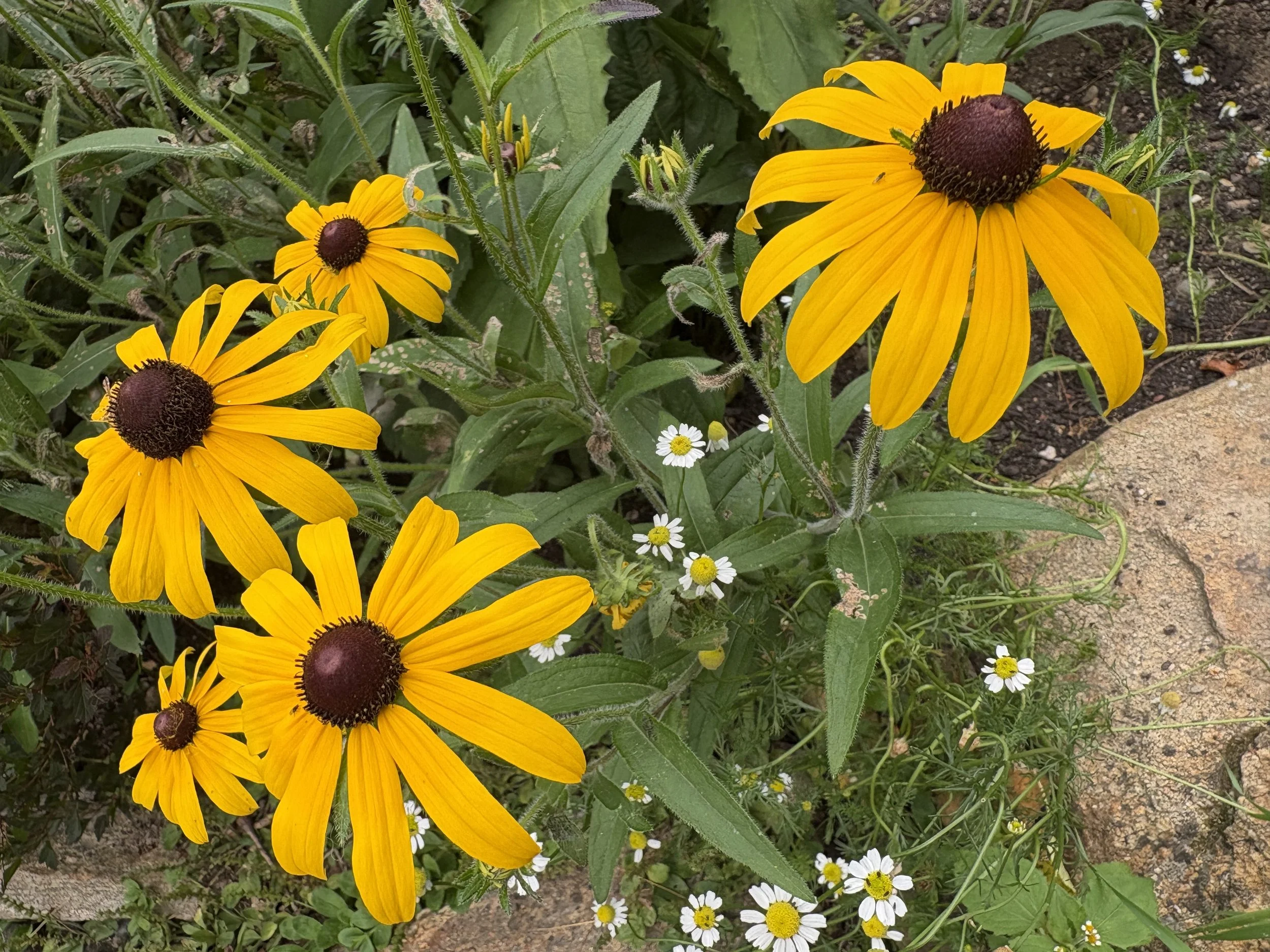
Today’s photo: Black-eyed Susans in the Orchard, July 19, 2026

In most commercial orchards, the fruit has to look a certain way or it won’t sell. Some say it has to look perfect. Because of the demands—or perceived demands—of the marketplace, fruit growers generally feel compelled to spray pesticides on the fruit trees. Most of these products—including the organically certifiable ones—are toxic to bees and other beneficials. So commercial growers often discourage or even eliminate all flowering plants from their orchards for fear of killing bees. With no flowering plants, pollinators leave, and the chance of killing them is reduced. But what a drag to have to have a flower-less orchard.

In our orchard we have encouraged flowering plants. We have hundreds or maybe even thousands of them. And we have bees everywhere. So what do we do? We search for alternatives. We experiment. Might there are other products—plant teas perhaps—that hold a key to growing usable fruit without risking harm to the orchard ecology. Nettles? Comfrey? Cannabis?

July 18, 2026

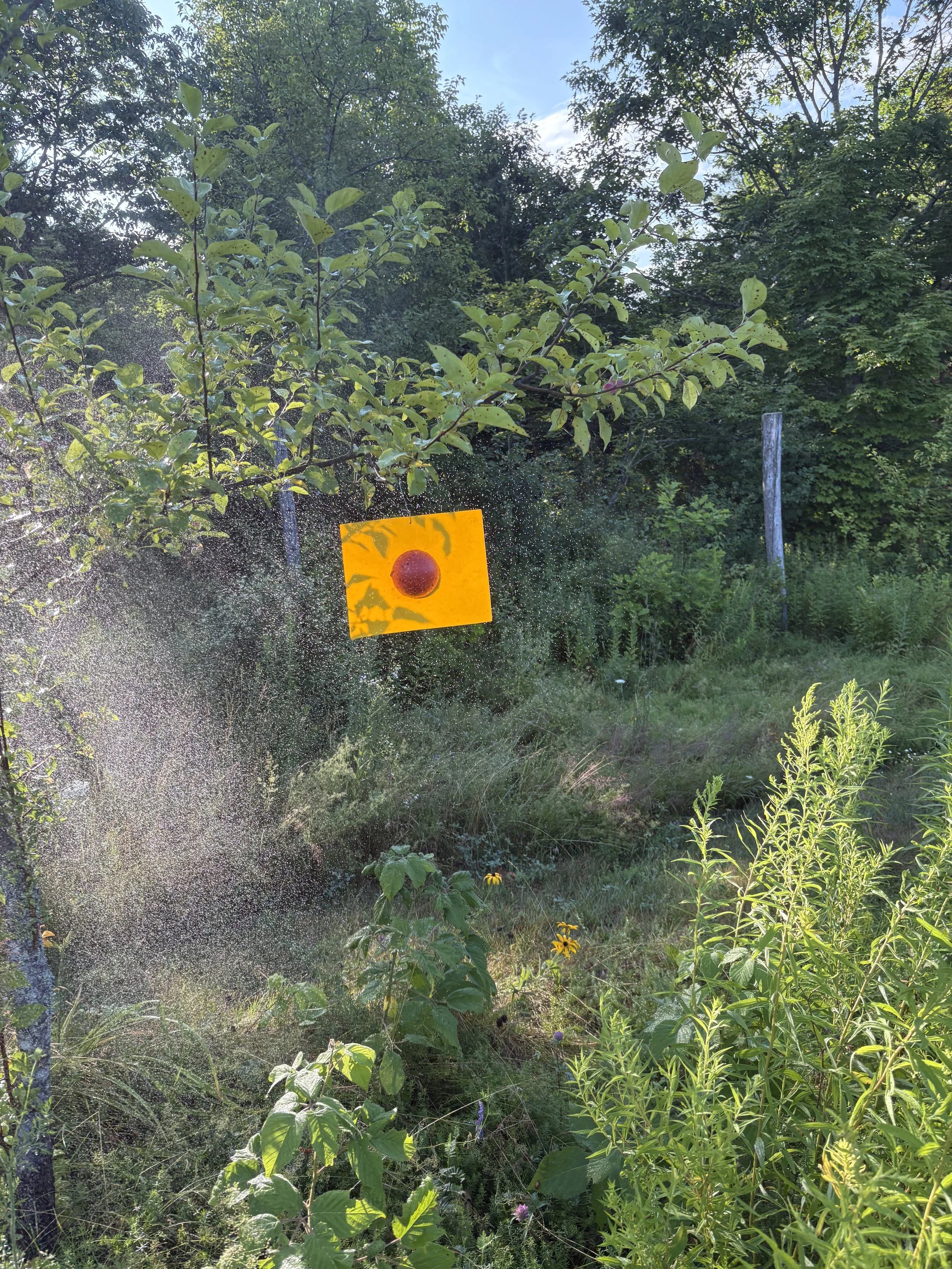
Apple Maggot Fly Ladd Trap, July 18, 2026

(By Skylar Bodeo-Lomicky) Today I set out six Apple Maggot Fly traps, four of which were baited Ladd traps and two of which were unbaited ball traps. The Finley Lane Orchard is 3 acres in size, with about 400 total cultivated apple trees. I walked the perimeter of the orchard to find four trees that would be suitable for setting out the Ladd traps. I chose only locations on trees that had developing fruit on them and hung the trap within three feet of the apples. Each trap is shoulder’s height above the ground or a bit higher. I coated the traps with a thin layer of Tanglefoot,and dripped a hexanoate bait onto each. I also set out two tester ball traps that had no bait around them in the central part in the orchard. All of these traps were set out on July 18th.

July 17, 2026

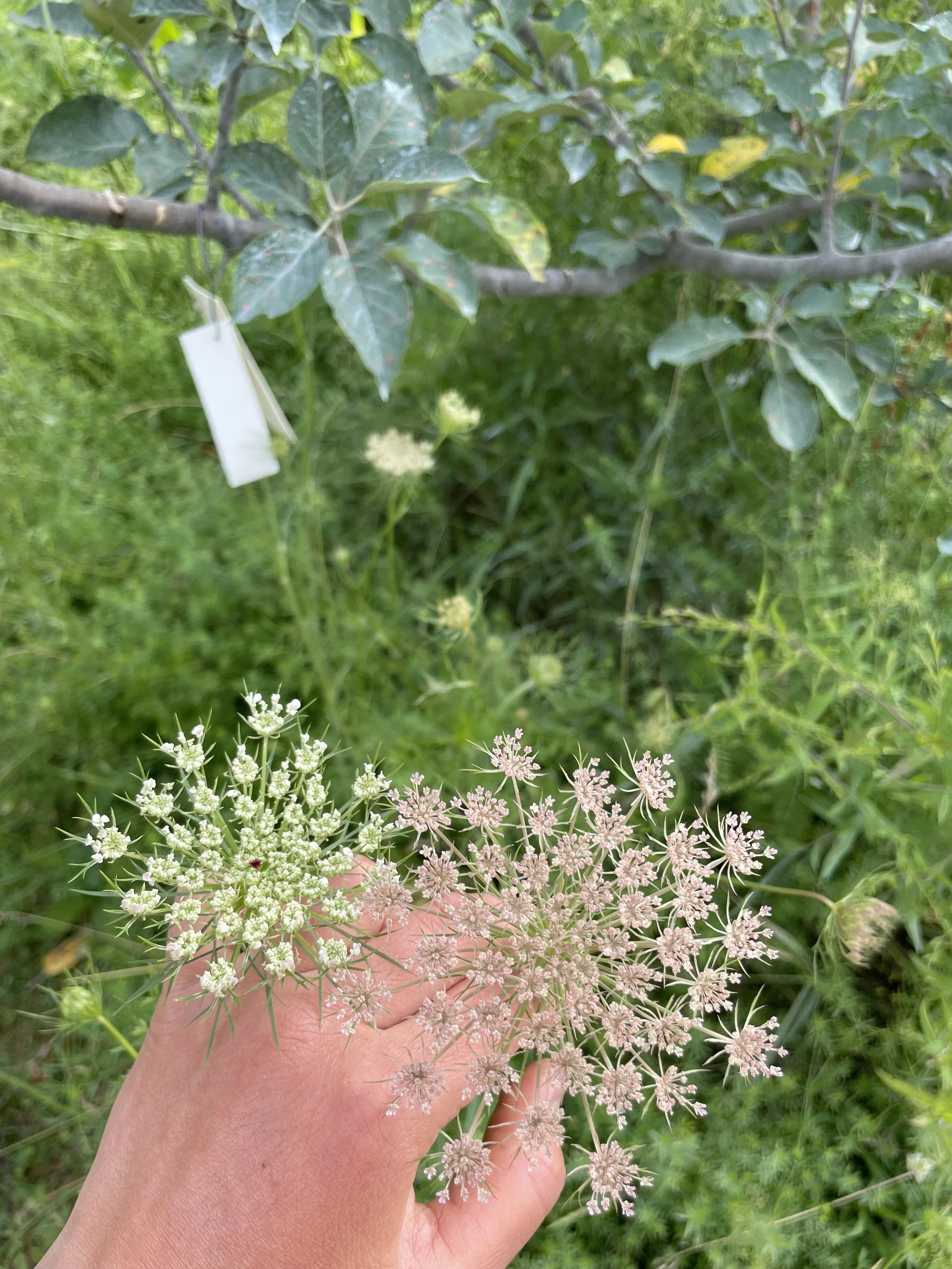
(By Skylar Bodeo-Lomicky) An ode to Queen Anne’s lace, Daucus carota , aka the wild ancestor of the domestic carrot. Leaves and stems are fresh and herbal and smell of, well, carrots. The flowers are not so aromatic on their own, but bunch a handful of their umbels together and suddenly they smell grand, sweet, and similar to honeysuckle. It’s in full bloom right about now. 

Daucus carota, July 17, 2026

As I spent time cutting out fireblight at Finley Lane, the wild carrot caught my eye. I noticed how many insects are taking a liking to their great big umbels of teeny tiny flowers: beetles in the family Cerambycidae, sweat bees (Halictidae), hover flies (Syrphidae), ants (Formicidae), and more little mystery beetles that I have yet to identify. Oh, and wasps in the family Braconidae. That’s exciting to see! 

As the sun gets low and the air gets cool, the insects start to settle in for the night. At this point there aren’t as many bugs out on the flowers anymore. If I was only out at this hour, I might not even realize just how much of a haven Daucus carota is.

July 16, 2026

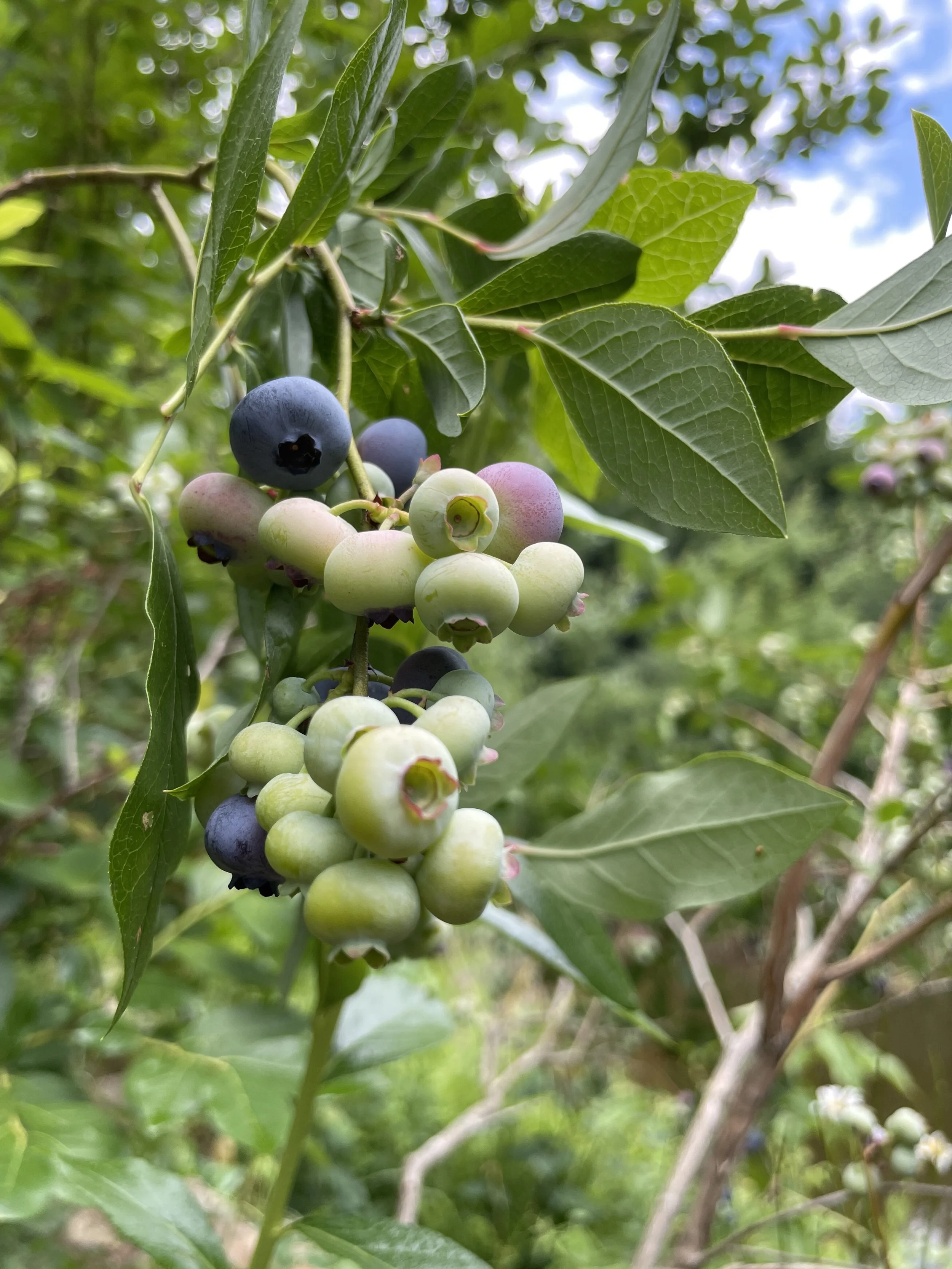
Blueberries entering their magical pearlescent pink stage. July 16, 2026

(By Skylar Bodeo-Lomicky) The morning started bright and early with another round of spraying. Again our tank was filled with fermented plant teas, kelp extract, and lots of water to top it off. I may be improving at my job because we partitioned the spray almost perfectly among the trees at the Finley Lane Orchard, so that when we finished, we had almost no spray leftover. After a shower (not fully effective in eradicating the fishy smell) and breakfast, I joined Cammy in weeding the blueberry terrace, bringing the brush to the BRC and distributing it. It doesn’t get tossed just anywhere— it’s far too valuable. It doesn’t get thrown into the compost heap— the plants we weeded out are far too likely to reseed wherever the compost is later used. So, we found a spot in the corner of the BRC to lay down the brush and prepare the soil for future years’ plantings. 

In the afternoon, I ‘glazed’ a few more windows, a term I just learned to mean setting the panes into the frame. Friends and family often ask me what it is that I do in my work here, and it’s almost impossible to accurately answer. Our activities vary greatly from day to day, as well as within the day itself. After glazing and gathering more brush for the BRC, I spent a couple hours researching and devising a plan for monitoring the apple maggot flies that are likely to be arriving at the farm. 

July 15, 2026

A balm for the bees, July 15, 2026

Sprayed half the orchards today with a blend of fermented herb teas and sea products (kelp and fish). What a smell!  Enough to scare away the meanest bugs. In the middle of the day we had a flash rain storm. It was windy enough that the rain gauge was probably inaccurate but I’d guess we got about 1/3” in about 5 minutes. We can use it.

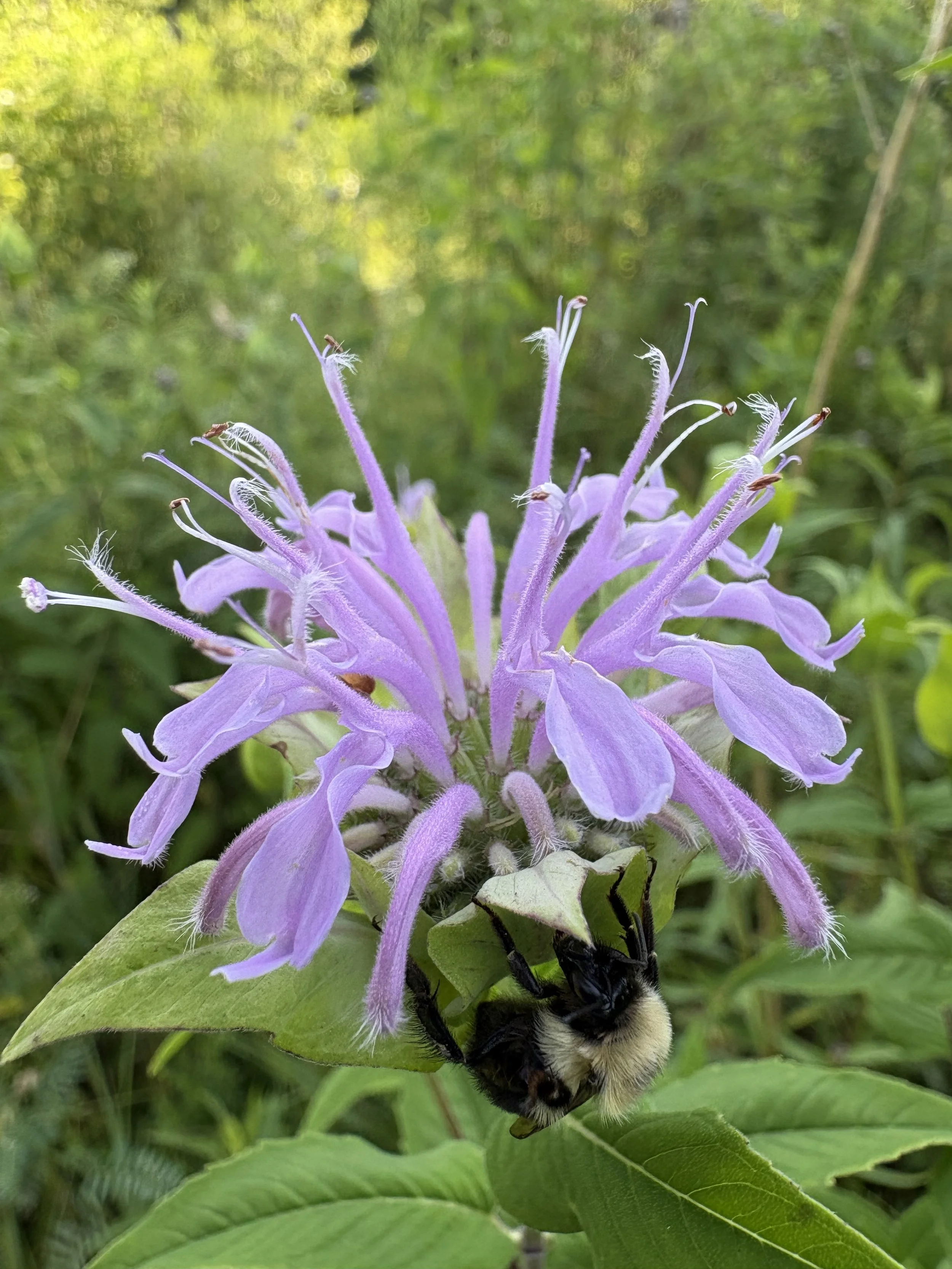
Beebalm, aka Wild Bergamot or Oswego Tea, (Monarda fistulosa) is now coming into bloom. I saw the first few today in the Finley Lane Orchard. Within a few days there will be thousands of flowering stems. It has become one of the most common plants in the Finley Lane orchard. It even competes easily with Bedstraw (Galium aparine) which is the dominant plant in the orchard and one I often wish would go away. Monarda, on the other hand, cohabitates the orchards quite well with the trees and all the other herbaceous plants. The pollinators love it, and I do too.         

July 14, 2026

Frostbite and clay, July 14, 2026

Much of the day was spent weeding apple trees and painting them with a biodynamic-inspired concoction of Jersey cow manure and clay. My hope is that the clay/manure combo will deter the round-headed apple tree borer (Saperda candida) while nourishing the bark on all our trees and healing those with damaged trunks. Fortunately (or unfortunately) there always seem to be a good sample set of trees with unexplained bark damage, perfect for testing the special “paint.”

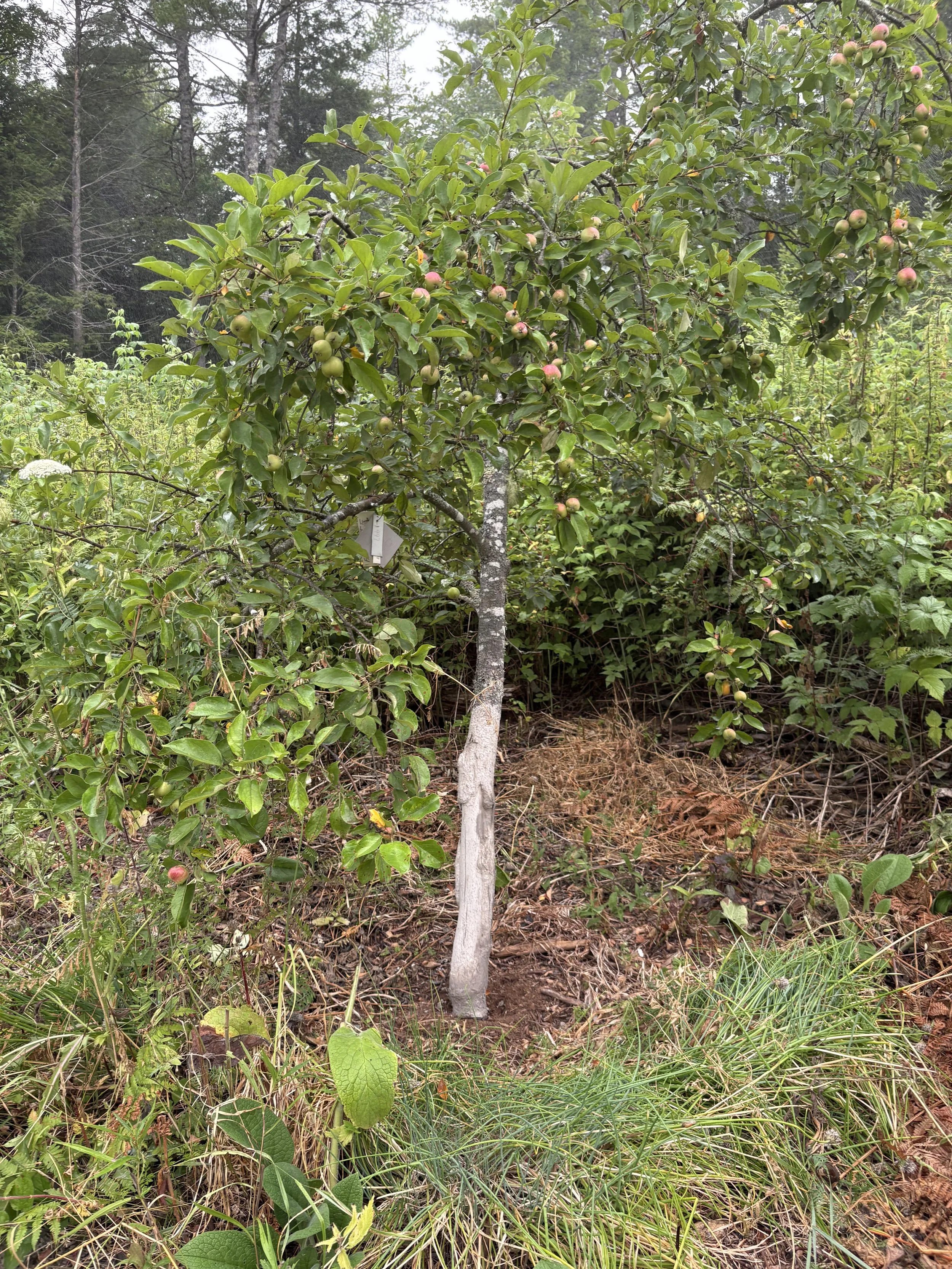
One good candidate is the Frostbite (AKA MN 447) in the BRC. The tree has an excellent crop as well as a large bark-less swatch on the southwest side, quite possibly the result of winter injury. So it got a healthy coat of the “patented” blend. I’ll let you know how it responds.   

July 13, 2026

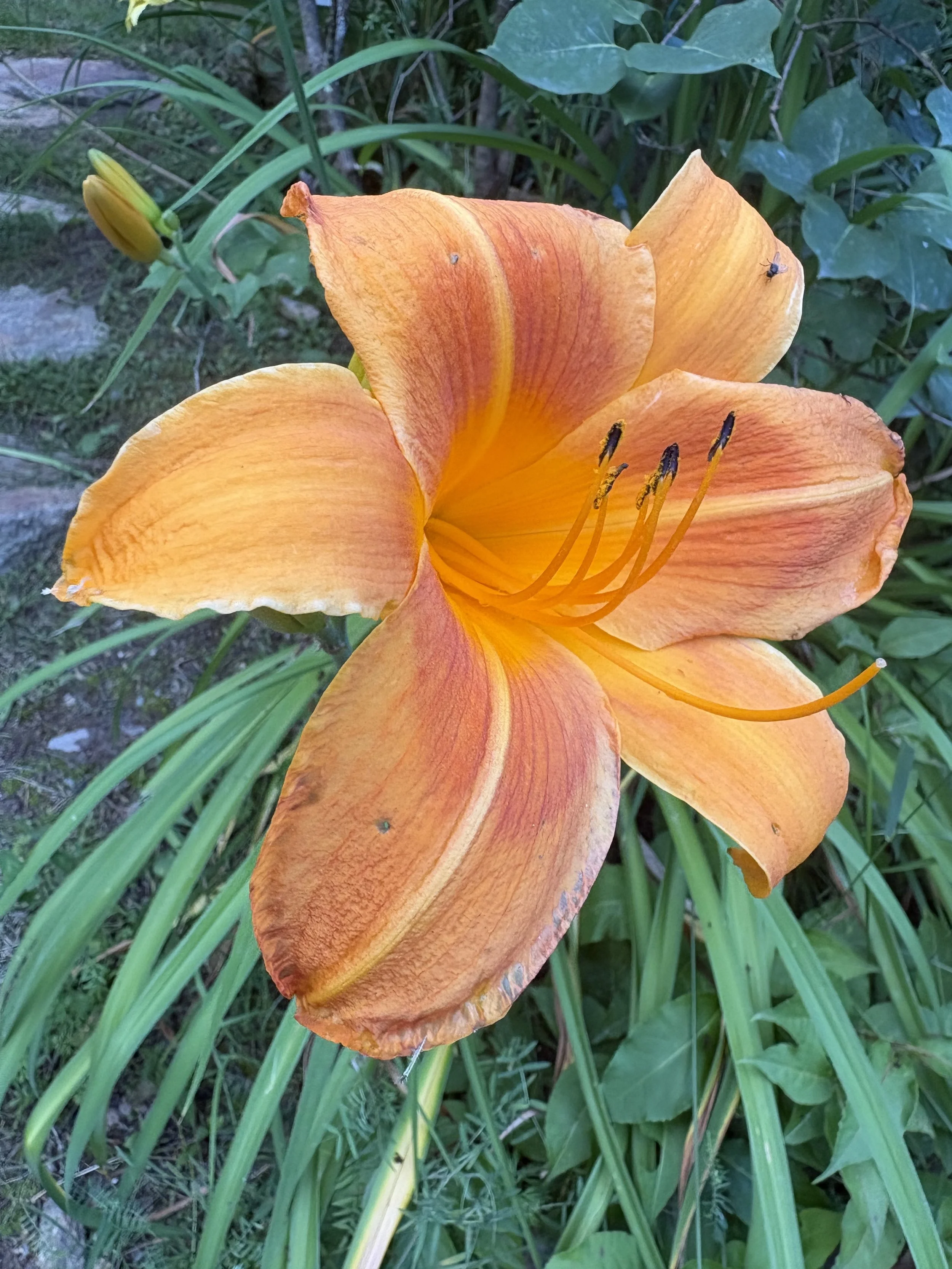
Daylilly, July 13, 2026

The Daylilies (Hemerocallis sp.) started blooming about a week ago on the farm. Now more of them are showing up daily. Throughout much of Maine the plain orange ones have naturalized along the roadsides. You see them almost everywhere. There are thousands of selected cultivars. We have a few dozen of them that we’ve planted over the years, mostly obtained from an amazing grower in Carlisle, MA called Seawright Gardens. Anytime I was nearby when the daylilies were in bloom, I’d stop by and purchase two or three more. Sadly they closed about ten years ago. Fortunately, there’s probably at least one grower near you.

One of the wonderfully convenient things about the plant is that you can easily transplant them when they are in bloom. You go to a daylily place, see one you like, they dig it, you take it home and plant it. Perfect. I like the strong but subtle colors. I’m not a big fan of the frilly, garish ones. But, with thousands to choose from, you should be able to find many you can love. And, they are edible!

July 12, 2026

The Yarrow (Achillea millefolium) is now in bloom throughout the orchards. It’s time to harvest it for its healthful, but bitter, winter tea. Or maybe I should say, healthful and bitter tea. As all cider-lovers know, “It’s always OK to be bitter.” Or “Bitter is better.” We snip off the plants just above the ground, dry them in bunches and then strip off the frilly leaves and flower-heads for tea.

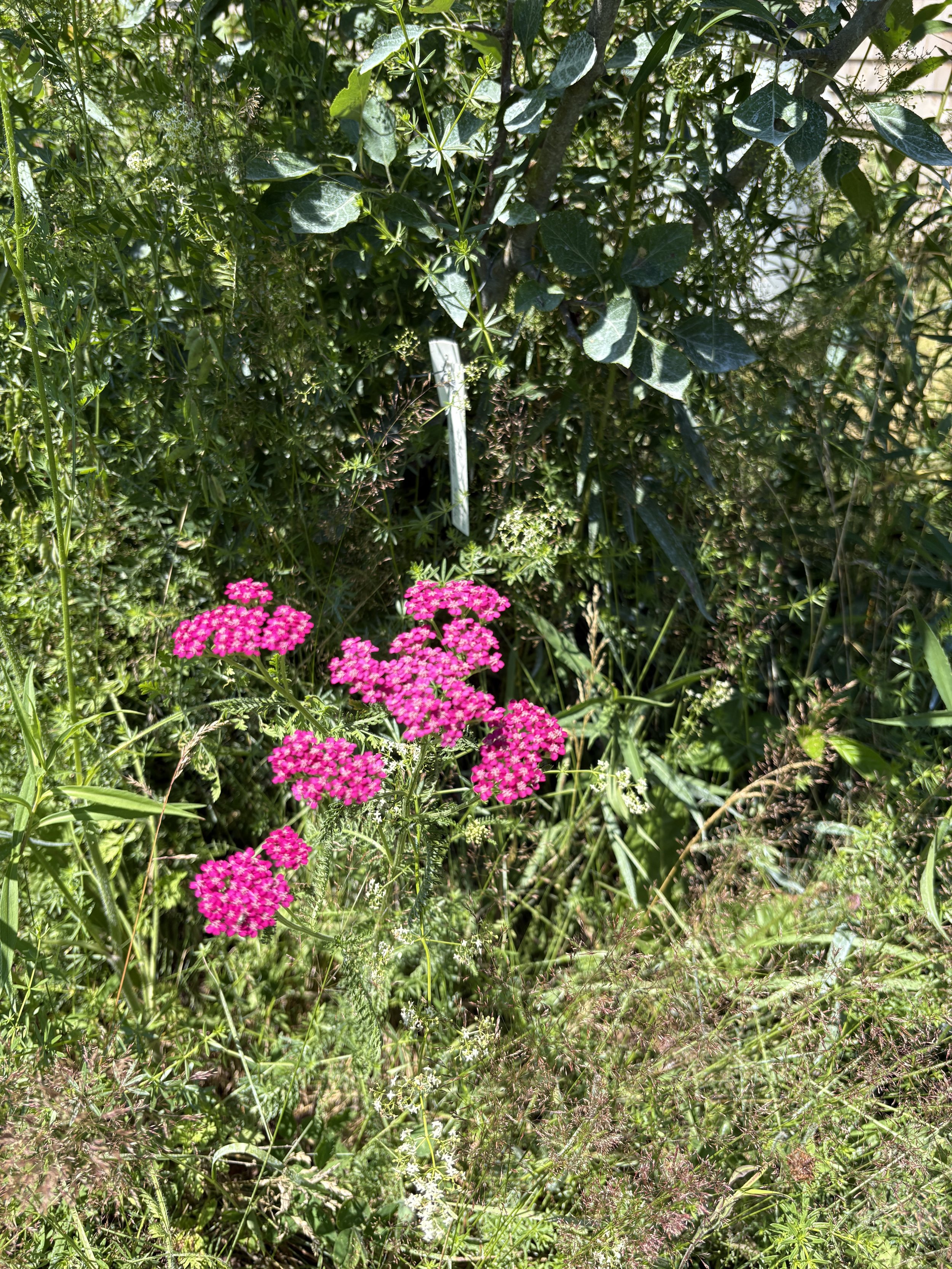
‘Super Chilly’ Yarrow? July 12, 2026

We use the wild, native, white-flowered yarrow for tea. The colorful pinks and reds are selections that don’t show up on their own. Or, at least I didn’t think so until a couple days ago when a pink-flowering yarrow showed up in row 7 in Finley Lane beneath the Malus sikkimensis tree. I’m positive we didn’t plant it. Maybe we’ve found a new yarrow cultivar: “Super Chilly” !   

July 11, 2026

I was in the orchards solo today. Well, not entirely. I was joined by two goldfinches. Both seemed quite happy to see me. Or maybe they were just happy to be alive and didn’t actually notice me at all. They are so yellow!

The pace was slow. It is Saturday after all. I bounced from one small task to another. It was so nice to be there. More fire blight cutting. It keeps coming back. It’s been a nuisance throughout the state this year. Irrigating thirsting trees. It’s been dry despite the rain a couple nights ago. So happy when it does rain. The trees are happy too. Stapling down landscape fabric between rows of newly grafted cultivars to keep those pesky weeds down and keep that good moisture in.

I took the time to look at the hand-pollination I did this past May. Black Oxford x Redfield and Wealthy x Redfield. Both crosses have the potential to produce pie/sauce apples of the future. I have about a dozen small, good-looking apples of each. With two dozen apples, I could wind up with 50 seeds of each cross. I’ll save the seed this fall and plant them all next spring. One day I may have several red-fleshed Black Oxford-types as well as red-fleshed Wealthy-types. This is fantastic. But, help, what will I name them? I’ll need 50 clever new apple names. A new generation of the world’s best culinarialistic apple cultivars coming to every farm-stand, Walmart and gourmet grocery store near you.

July 10, 2026

Last night it finally rained. We got a third of an inch. Not a lot but it came down over the course of several hours which likely meant that all of it soaked it. We needed it.

Weeding and scything continued in the orchard. Later I met with my orchard preservation colleagues from across the US for a two-hour zoom meeting. One of our many on-going goals is to correctly identify the historic apples we’re constantly finding. Today we were working on what we call the Sorrento apple. It’s one we’ve found through DNA profiling in multiple locations across the US. We don’t yet know its identity, but we suspect that it may be Pennock or Wine. It would be great if we can identify it someday.

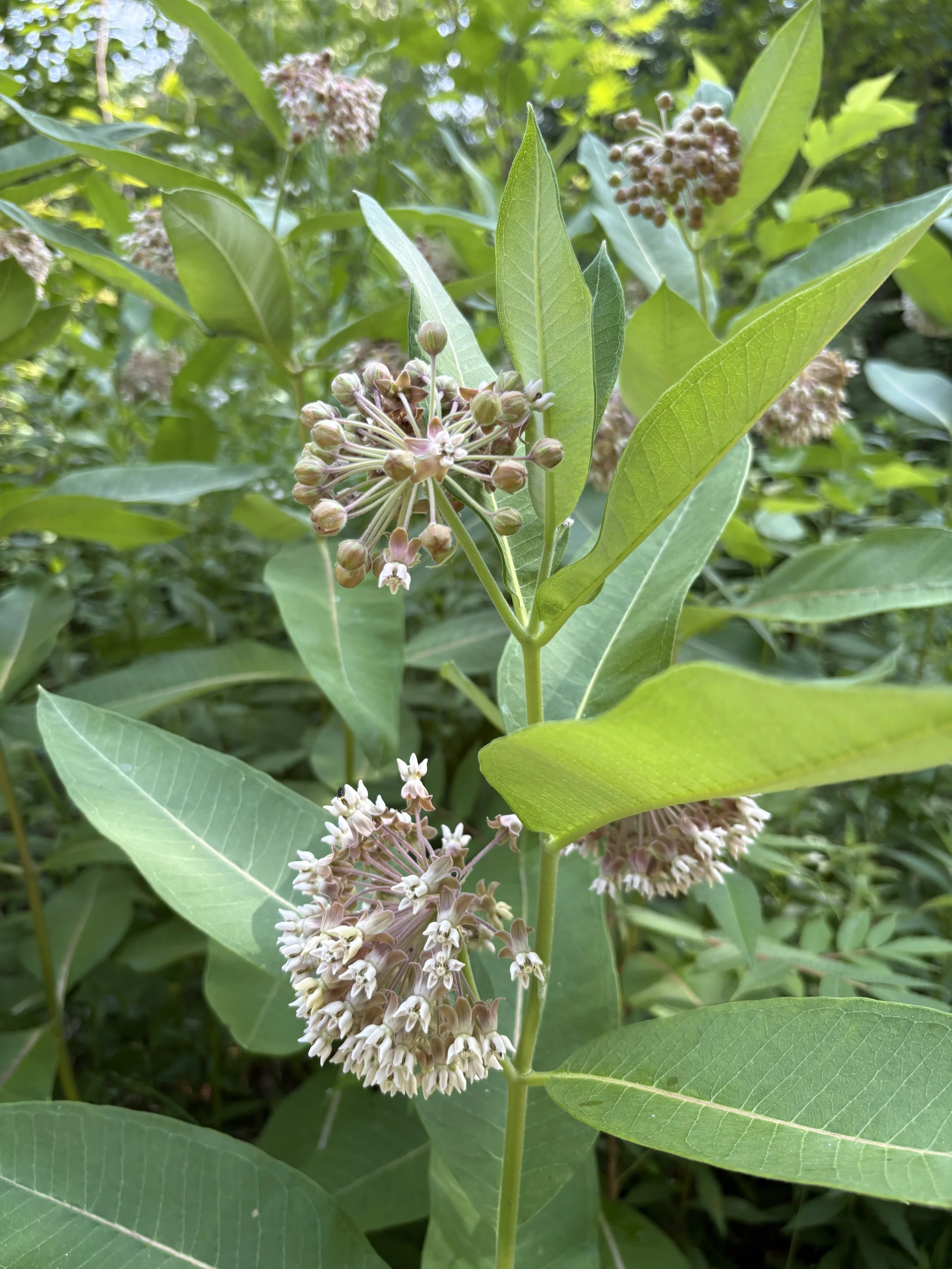
Asclepias syriaca, July 10, 2026

Meanwhile the milkweed (Asclepias syriaca) is now blooming, and I’ve seen the first Monarchs (Danaus plexippus) in the orchard. I’m eating broccoli and peas as I wait for the first apples. Although I heard today that the Yellow Transparents are dropping in Iowa, our first summer apples are still about a month away. I’ll be ready.

July 8, 2026

I spent the day in the big orchard up at Finley Lane scything, weeding and inspecting. It’s a huge job. Over four hundred trees. I dive in, and move along at a meditative pace. If I look ahead I might wonder if I’ll ever get done. With different eyes I can see how much joyful life still remains to be experienced. In any event the trees always seem to respond very well to the TLC. Weeding the trees is a wonderful way to spend these summer days.

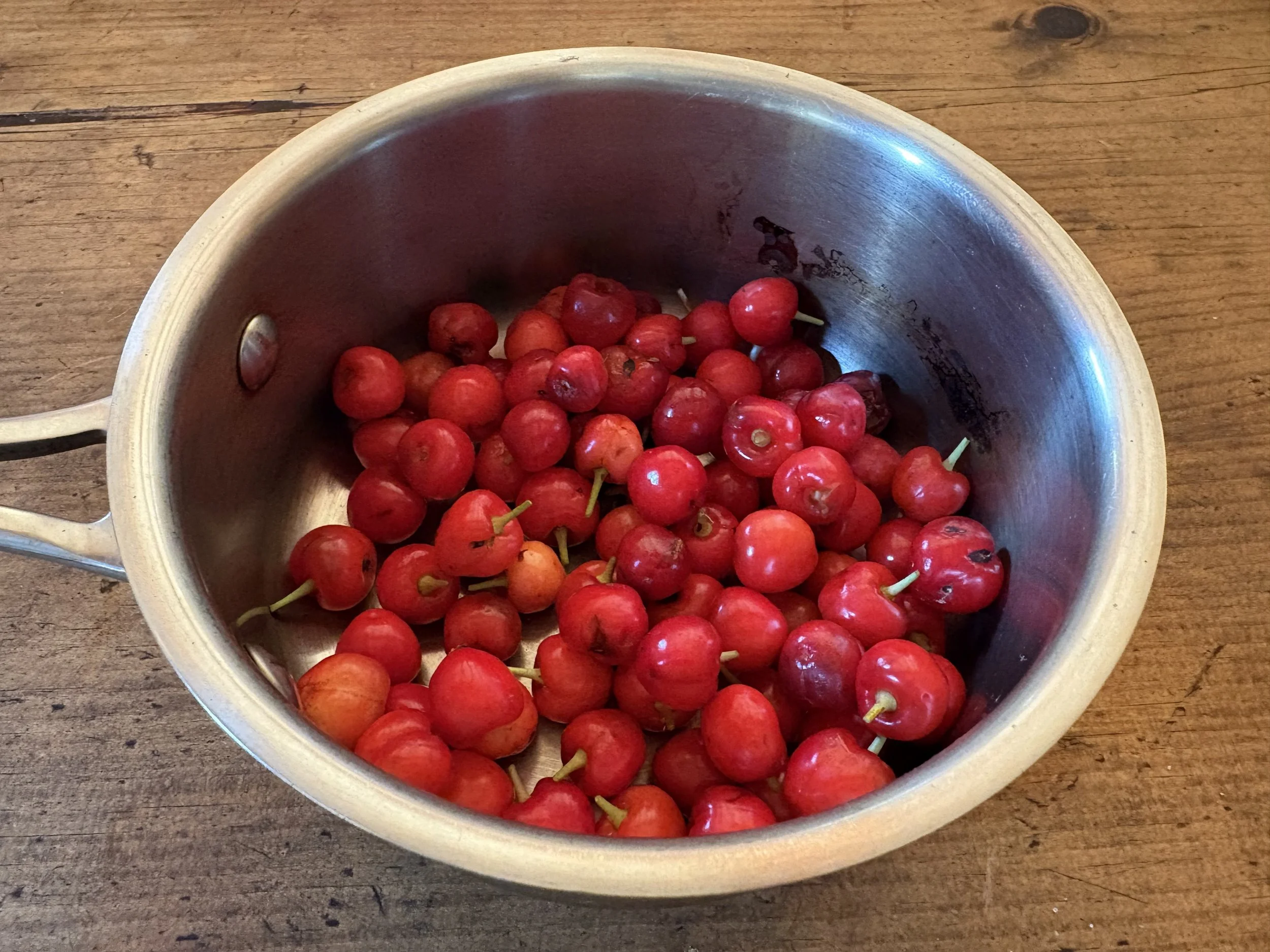
Surefire cherries, July 8, 2026

Today was also the day to harvest the Pie Cherries before the birds finish them off. Pie Cherries have mostly not done well here, but some years we do get a small crop. This year the “Surefire” tree is fruiting. They are incredibly tart. I’ll cook them up tomorrow and eat them with my oatmeal.

July 7, 2026

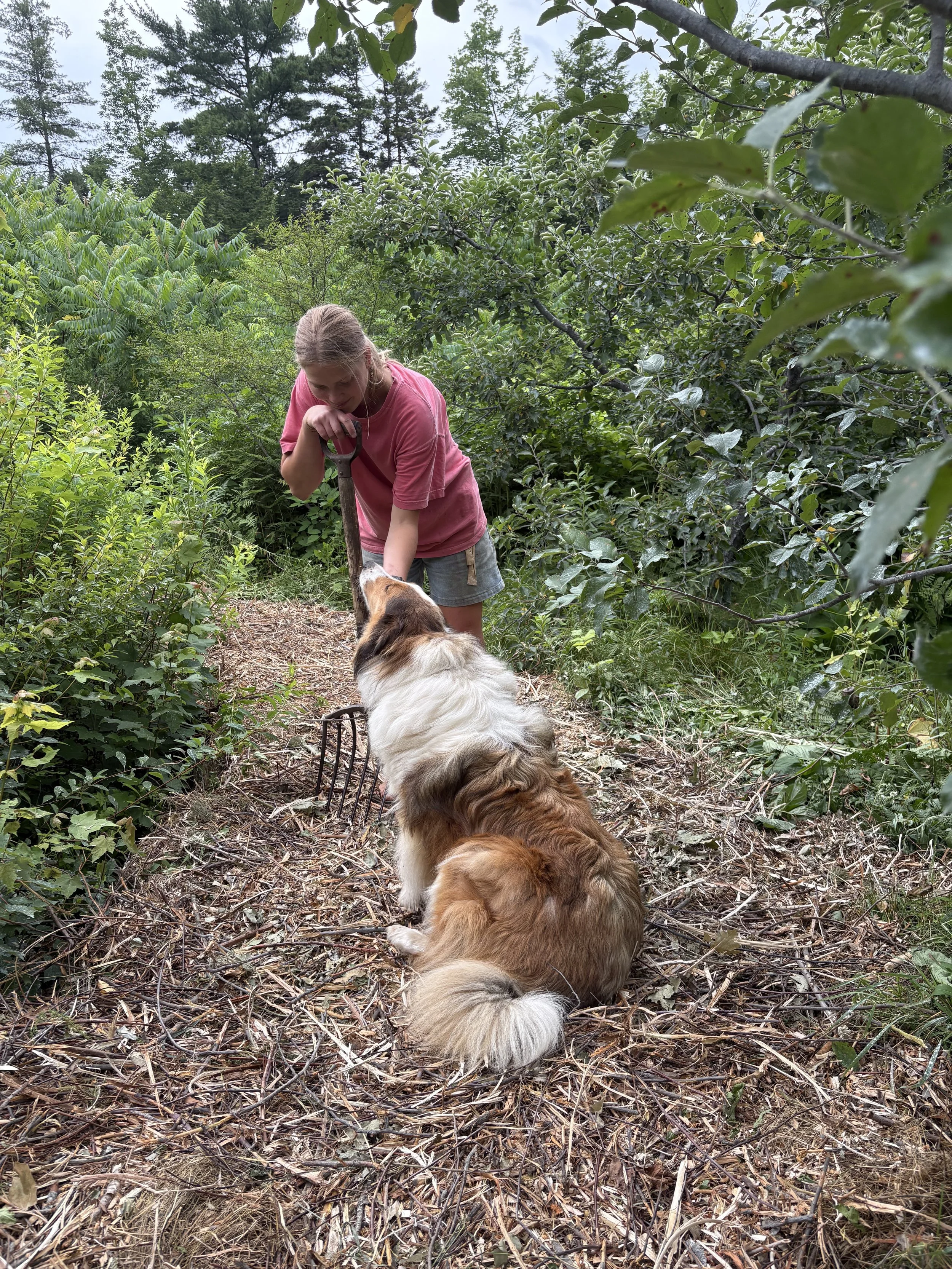
Spy exploring the new path

Skylar and I finished a path in the BRC orchard that I had begun two years ago by laying down a “corduroy” of rotting beech logs. You could call it a version of a hugel-mound (aka Hügelkultur). The side-by-side logs provided the base of the path. Today we covered the logs with a layer of old hay and then covered the hay with about four inches of fresh chips from our recent chipping effort. The new path will serve a number of functions. It gives us access to several apple trees that weren’t easy to get to. It will provide those trees with soil nutrients for the next thirty or forty years. It also creates an edge at the east end of the central pond in the orchard. It’s a job I’d been scheming about doing for years and it was great to have the opportunity to do it.

The weather has been prefect for working outdoors - not as hot and lots of sun. However, it is getting dry, and we do need rain. We could use a couple inches or more.