November 6, 2026

Ben Davis, November 6, 2026

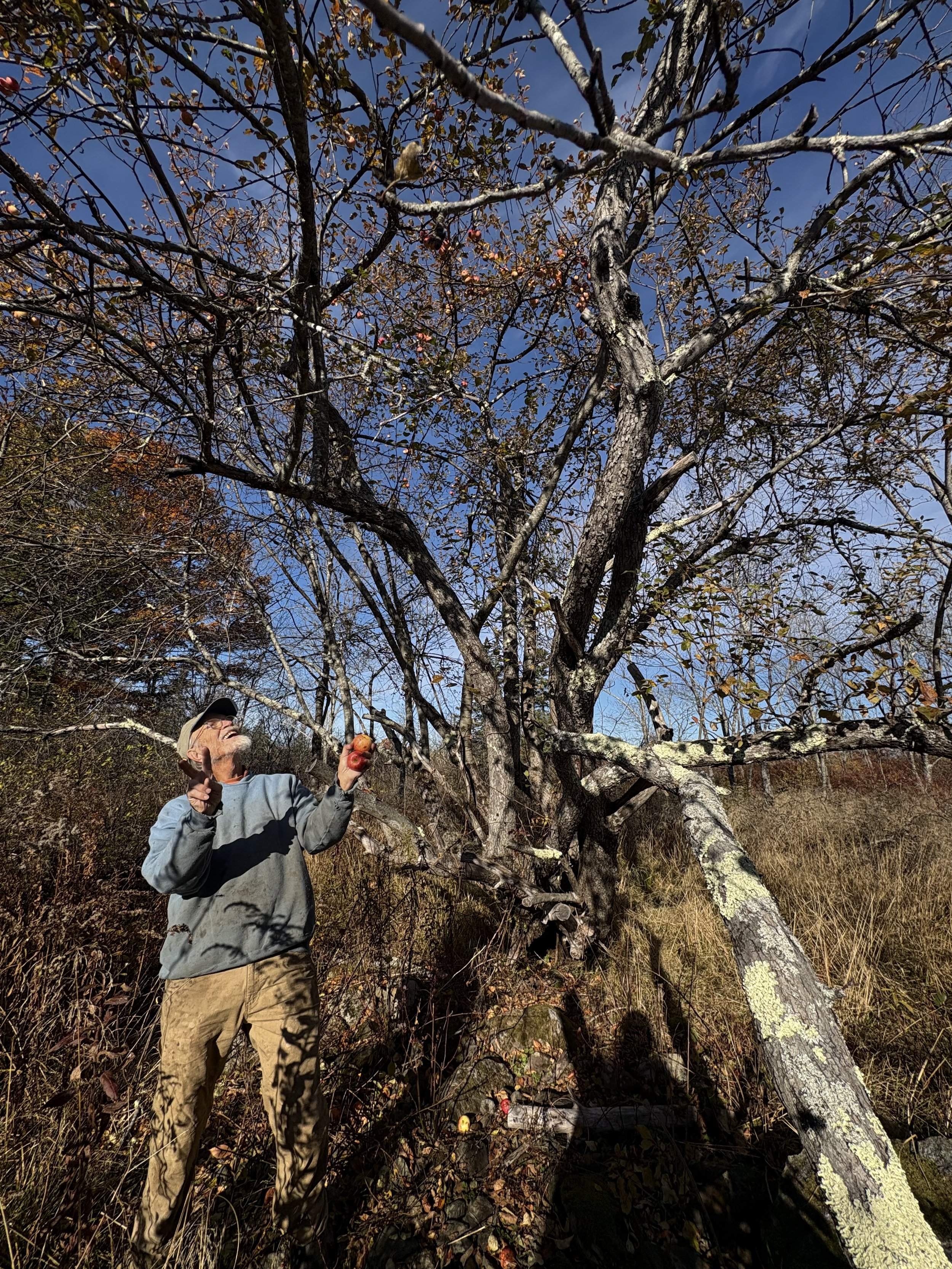
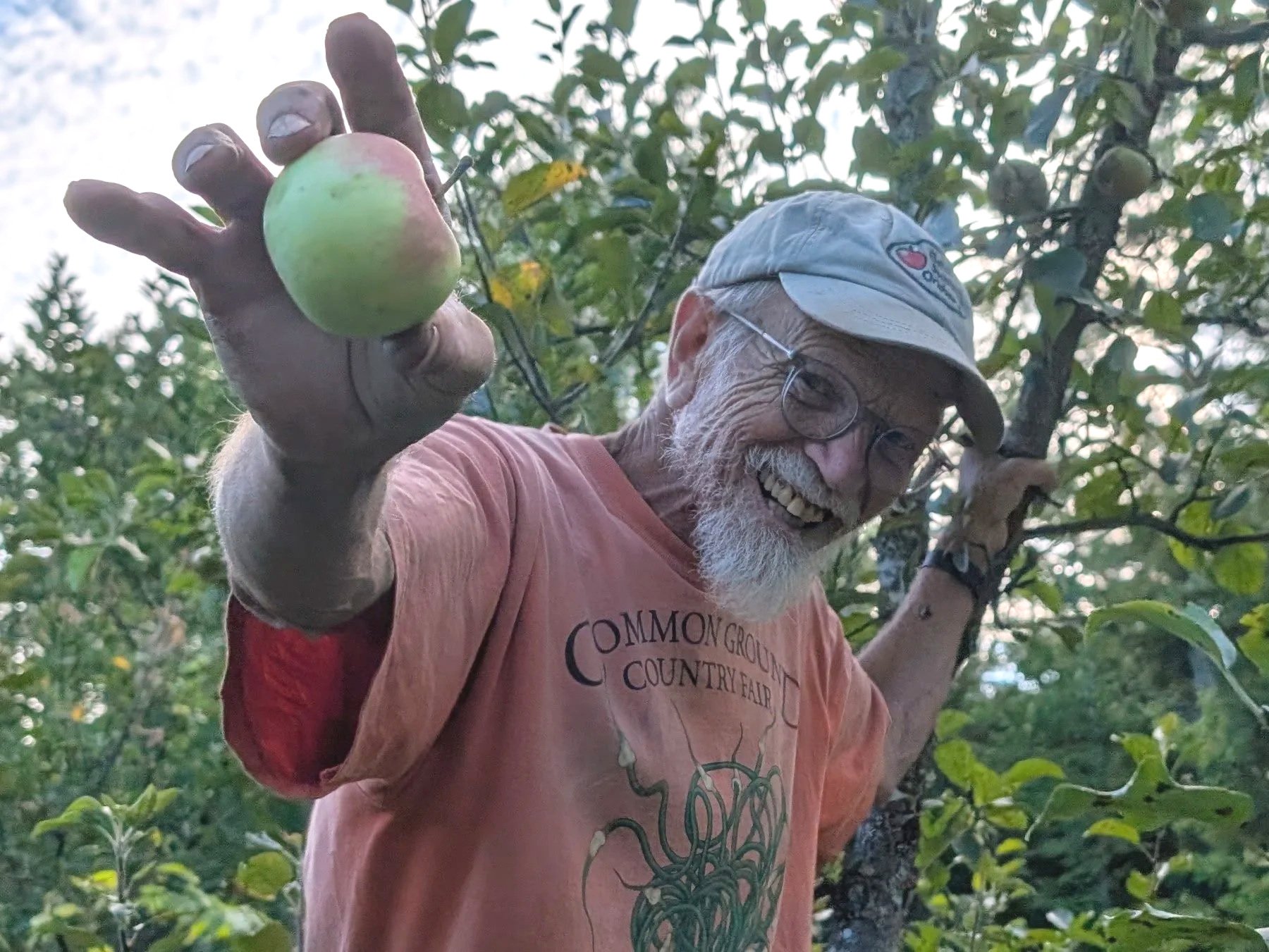
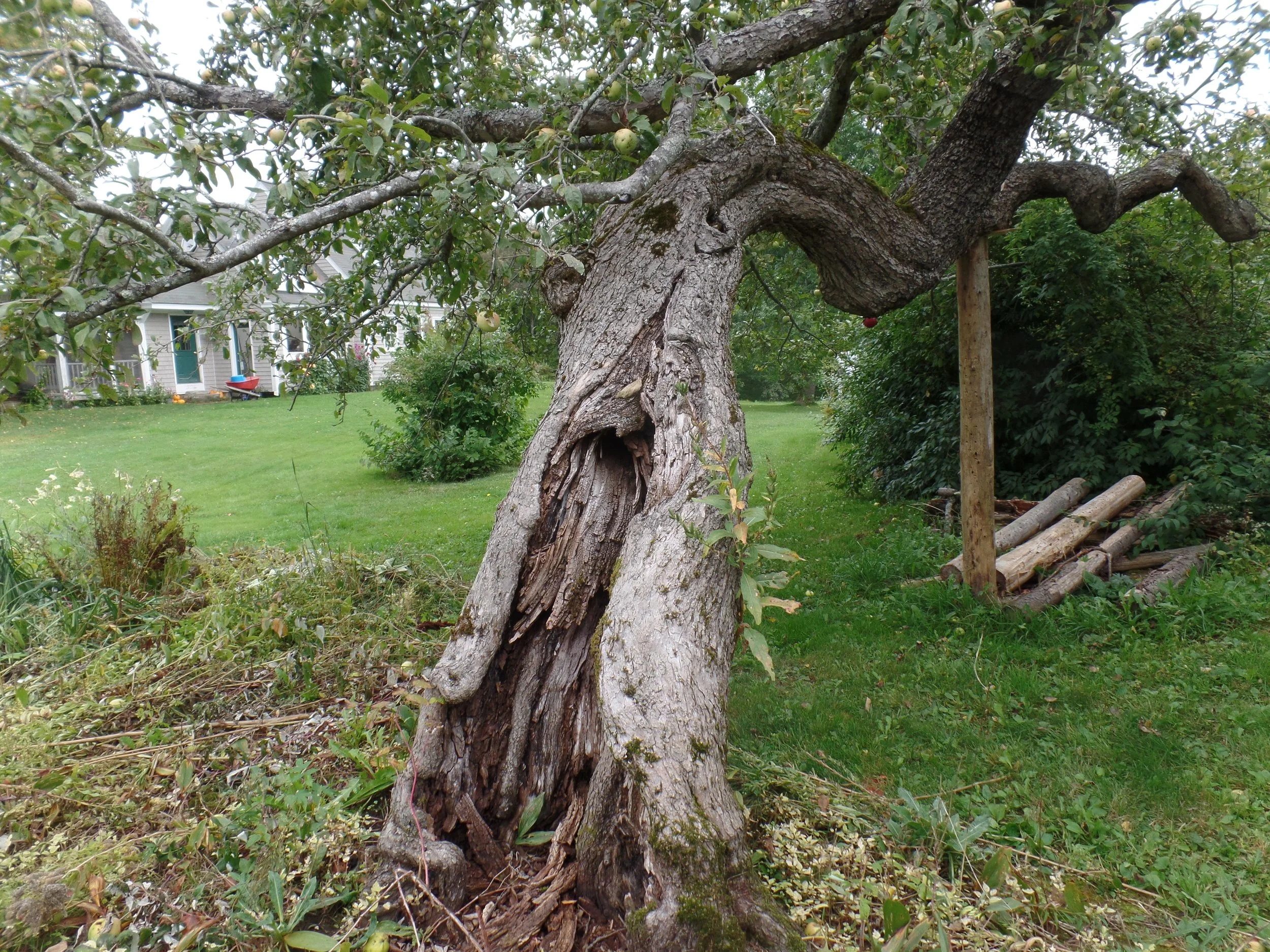
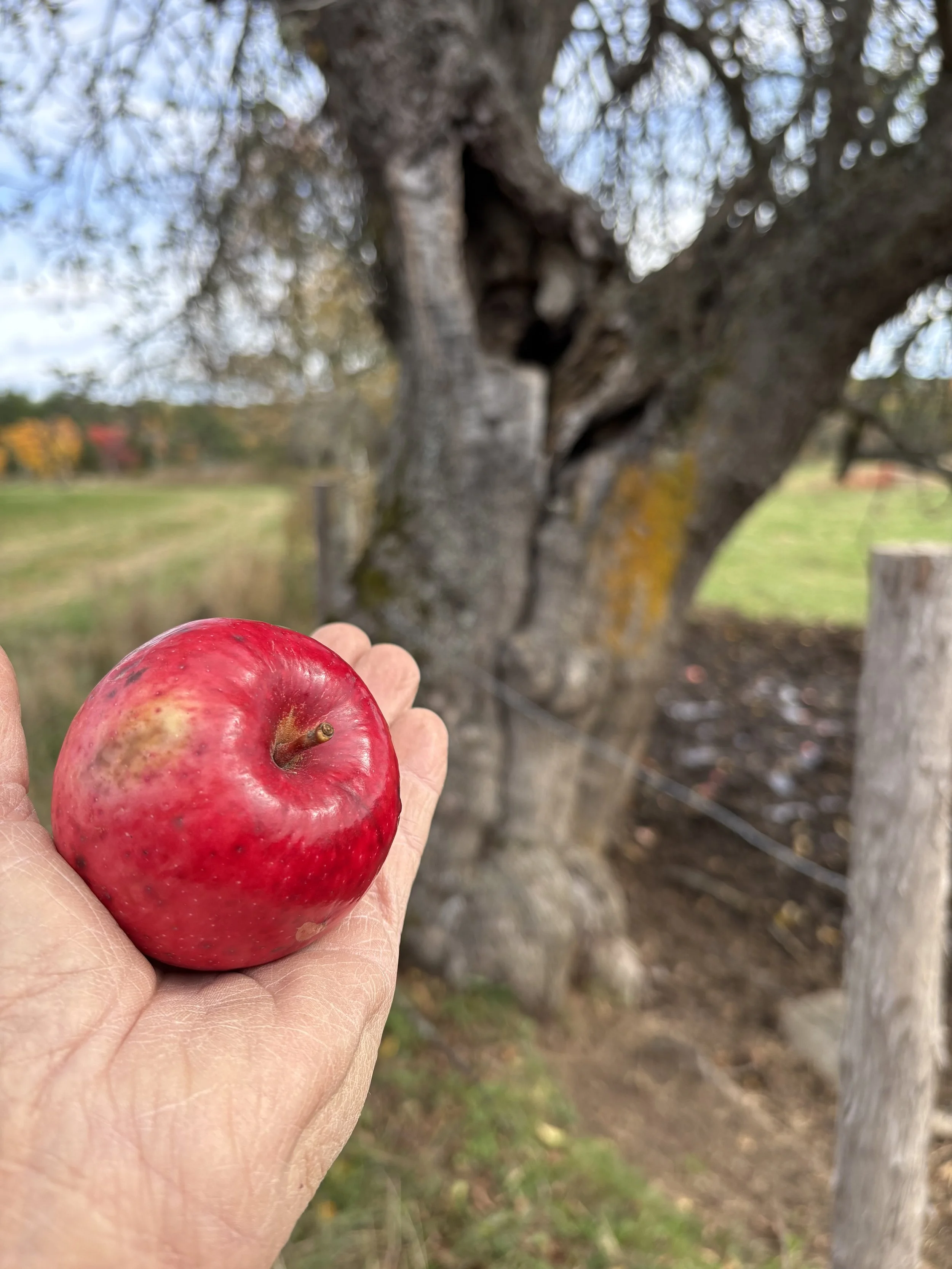
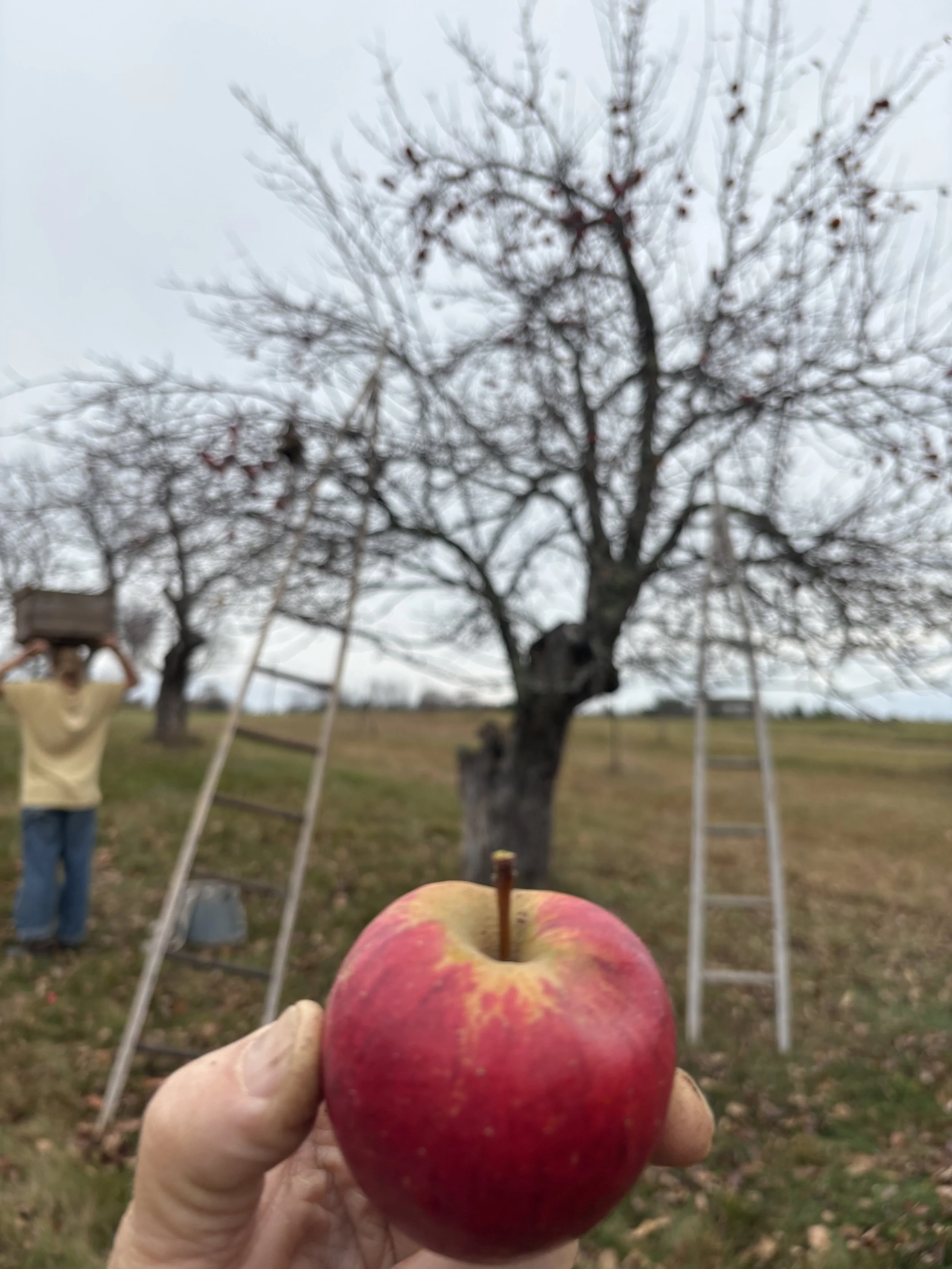
The heatwave continued though the temperatures are predicted to drop over the course of the next few days. It may have been the last day of T-shirt weather. We ventured up to the neighbors’ where we picked three old heirloom winter storage apples: Golden Russet (of western New York), Ben Davis (hard-as-a-baseball and about as tasty) and Stark (not Baldwin though often confused with it.) The apples were in good shape, and I don’t think any succumbed to freeze damage despite the very cold temps a couple weeks ago. It felt good to be up in the ladders for what might be the last time of 2026. The apples are in the barn, the root cellar and the cooler. We have lots. 

In the afternoon we returned to the ID table. We have somewhere between 150 and 200 apples to ID. We’ll do our best to get to yours! In the evening, the much needed rain arrived.

Meanwhile, down in western Mass, folks were celebrating seedling apples at the 7th Annual Wild & Seedling Pomological Exhibition. I missed being there, but I look forward to attending in 2027. Tomorrow and Sunday will be Franklin County Cider Days. If you’re anywhere near western Mass, check it out. You won’t be disappointed. 
November 5, 2026

Different meanings...

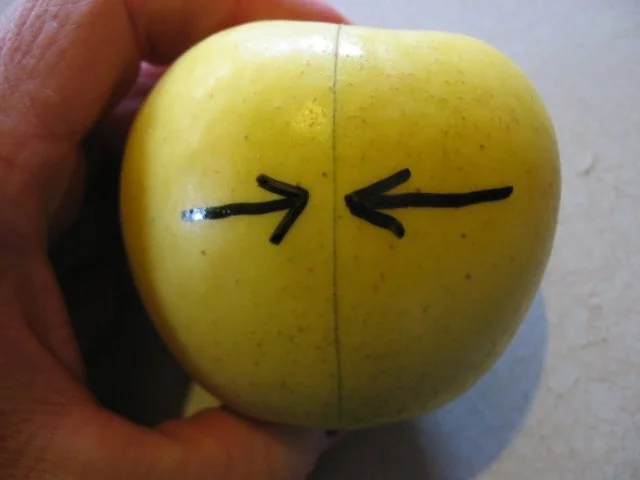
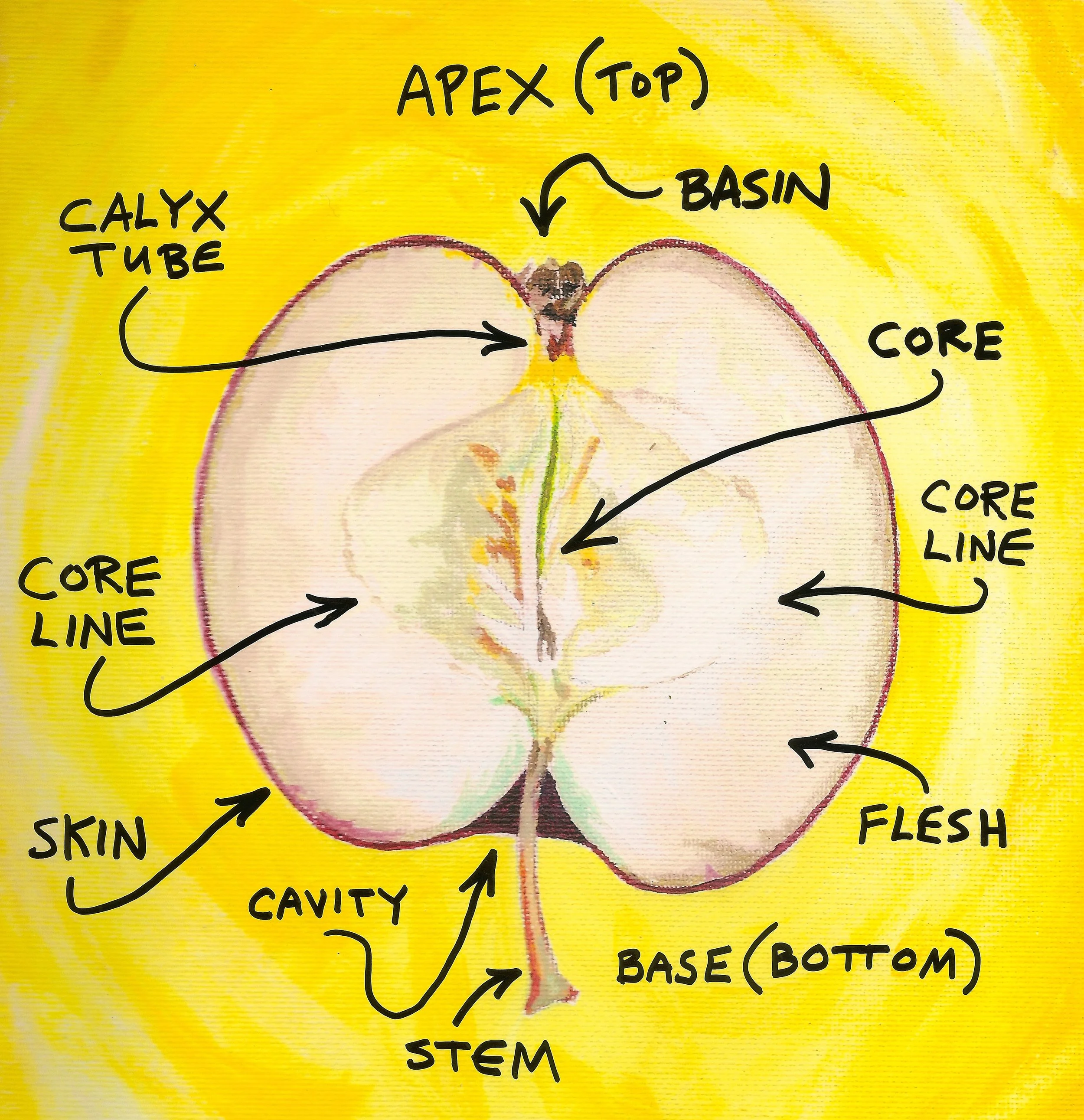
The COA Apple Class returned to the farm today, and we sat under the arbor in T-shirts and looked at apple characteristics. If you’re going to become an apple identifier, you’ve got to learn the parts of the apple. And you’ve got to re-learn words that you thought you knew the meaning of. The cavity is not in your teeth. The basin is not in the sink. The base is not in the ballpark. The core is not in the army. The stem is not in the cell. The flesh is not on the bone. The skin is not in the game. The carpel is not in the syndrome. The blush is not on the cheek. So much to learn.

Before heading back to Bar Harbor the class did a mad dash through the orchard wrapping trees with tree guards, those spiral plastic protective sleeves we put on the young trees in the fall to deter voles and mice from chewing the bark. You can get a lot done when you’ve got a big crew.

November 4, 2026

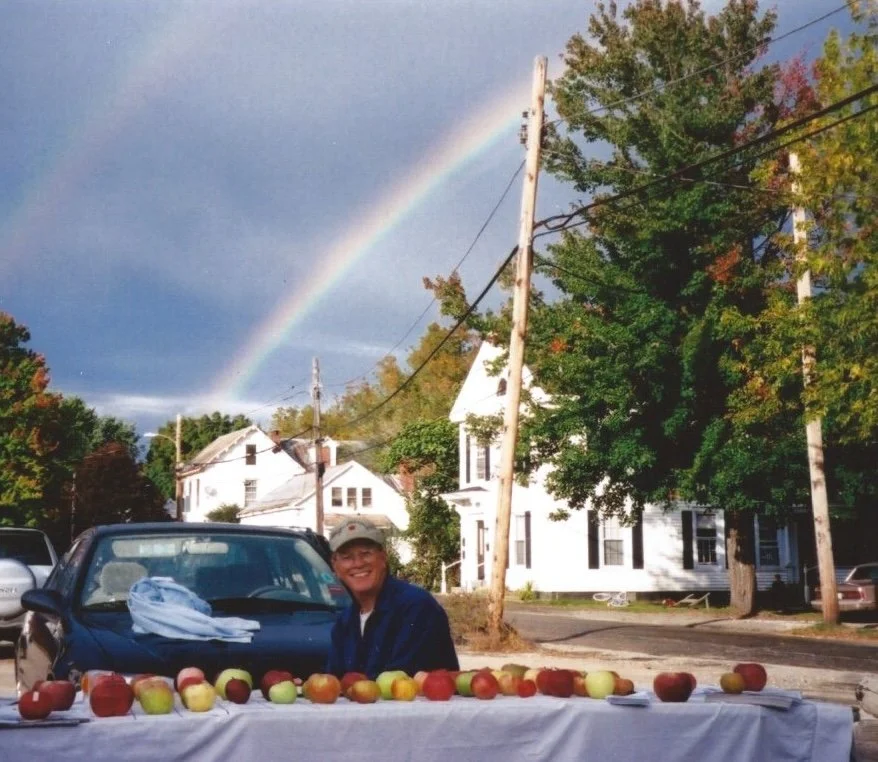
A double Rainbow of apples 

The national election came and went. I’m not sure if the apple trees know (or care) who won or lost. Maybe when I’m out there with them in the coming weeks, I’ll get to hear their political commentary. I confess sometimes it’s hard to get a word out of them. I do know they’re thirsty. It’s been dry. Like many American’s these days, you might hear them say, “I need a drink!” But blue or red? Some are blue (Blue Pearmain), some are red (Red Astrachan), some pink-o (Pink Pearl), some yellow (Yellow Transparent), some green (Rhode Island Greening), some orange (Orange Sweet), some white (Snow), some brown (Brown Snout), some gray (Gray Pearmain), and some black (Black Oxford!). It’s a serious rainbow out there in the orchard!

To celebrate the orchard post election, (Isn’t everyday a celebration in the orchard?) we picked the last two Wickson trees today. We may do some picking at the neighbors, but, at least here on the farm, we’re done with picking for the year.

November 3, 2026

We’re having a mini-heatwave in central Maine. It was 44F this morning at 6AM. Although the weather forecast was for cloudy, dry skies, it misted off and on during the day. Maybe that was to dampen the dust of discord as voters from across the US went to the polls. As Dylan put it many years ago, “If the arrow is straight and the point is slick, it will pierce through dust no matter how thick.” We voted.

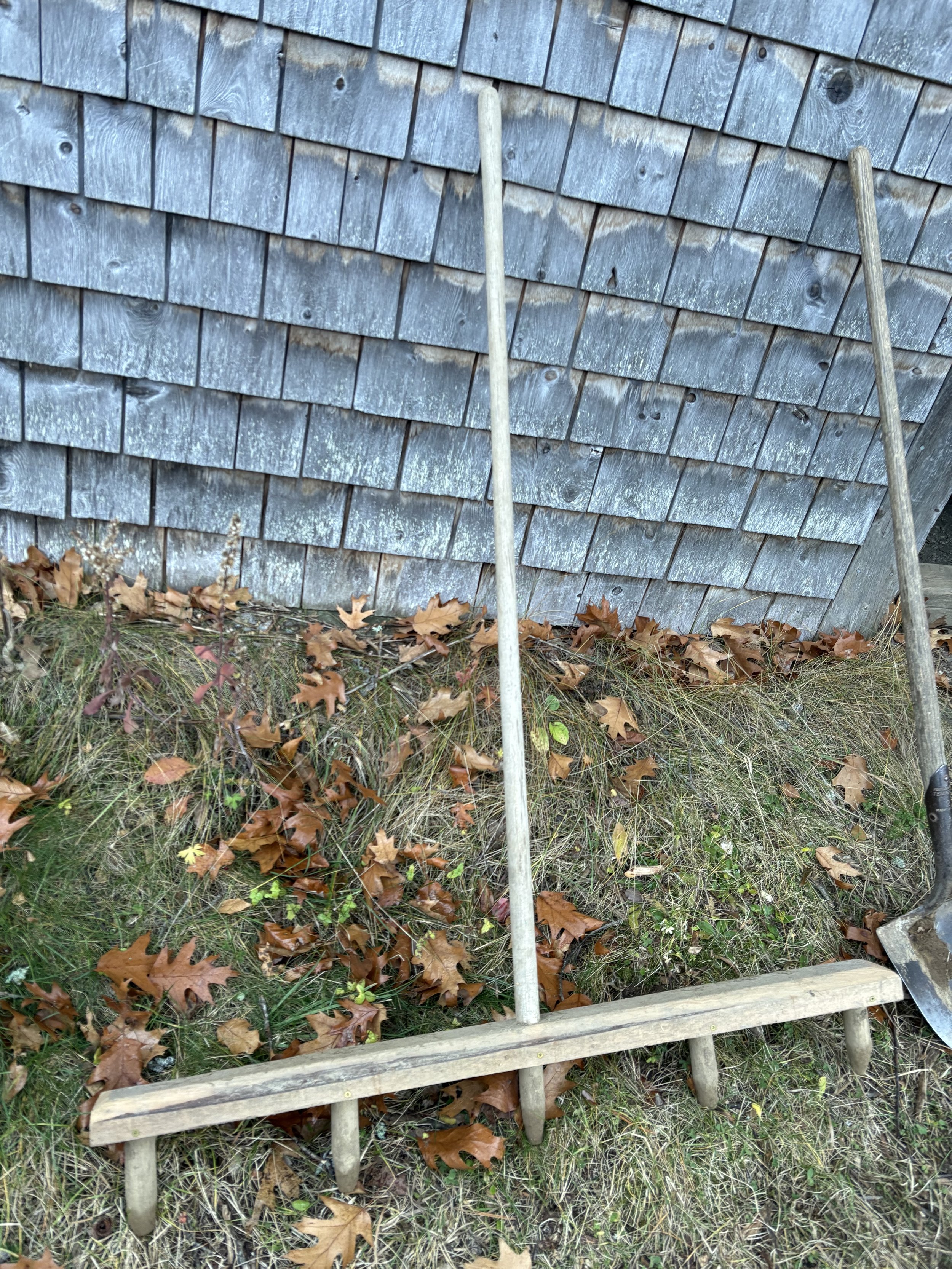
Garlic dibble

And we planted the garlic. We save out our best heads for planting. (We avoid using garlic from other sources to minimize the chance of importing disease.) We divide the heads up into cloves and then set them out 10” apart and 2-3” deep. We use a home-made, long-handled tool modeled on the traditional bulb planter (aka dibble). It allows us to create the holes for planting at the desired depth and distance apart. I made it long ago. We use it once a year, but it was worth the effort and works like a charm. 

As darkness fell we finally picked about half the Wicksons. We’ll pick the other half tomorrow. They ripen late and sweeten in the frosty weather. We’ll turn them into a single-variety cider. Check back in two years for the report.   

November 2, 2026

We dig love and potatoes

It’s potato-digging time in the Nursery. Around Halloween, when the root cellar has cooled down, we harvest the spuds. Then, a day or two later, we plant the garlic where the potatoes were just dug. We rotate several crops through our nursery each year. That keeps the ground fresh. The couple hundred small trees we graft each spring move from here to there as do the potatoes, the garlic and the squash. It results in a four-year “rotation.” We harvested the squash several weeks ago. The new grafted trees will go in there in May. You get the picture.

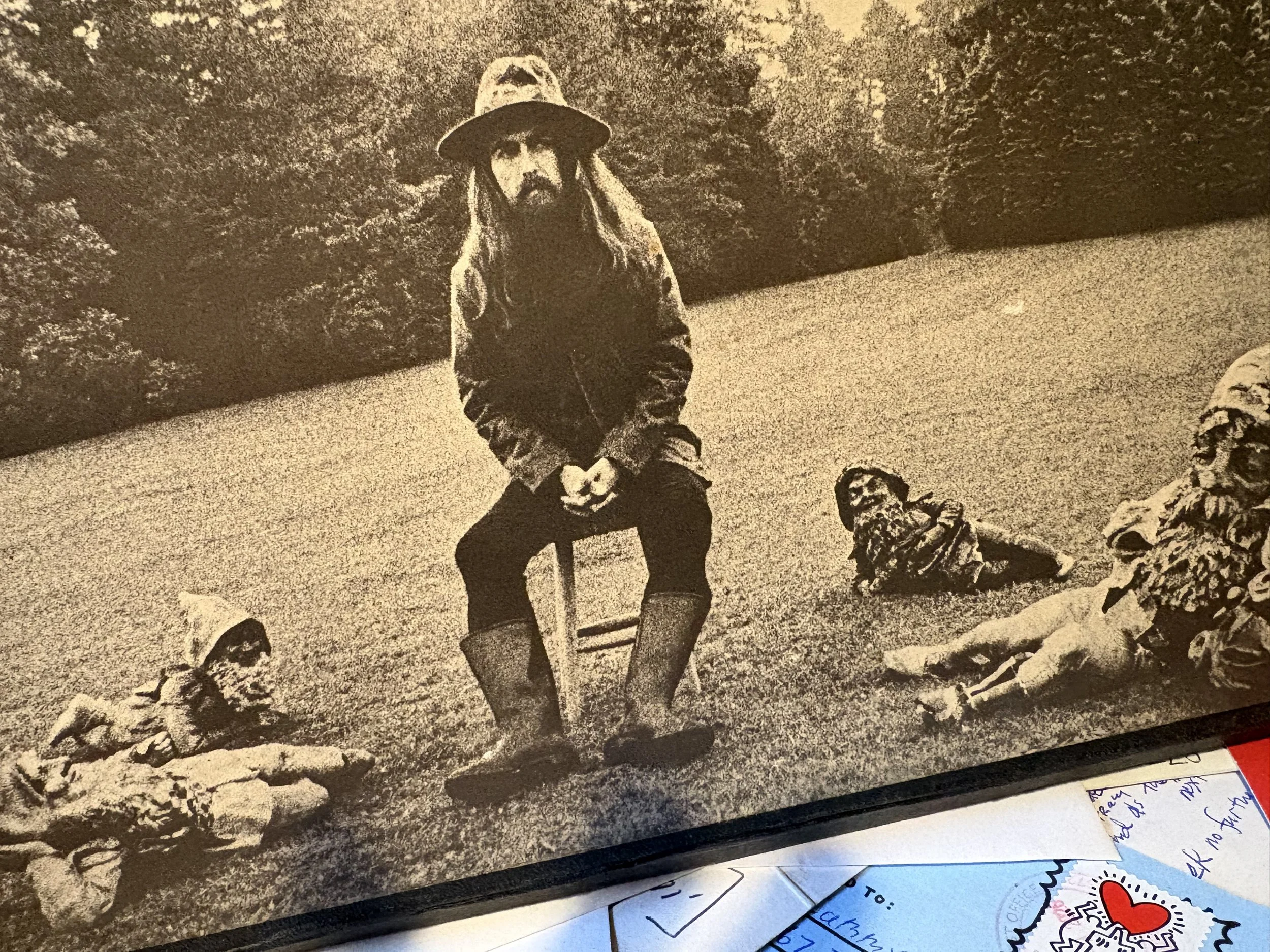
Why grow potatoes? They’re not difficult to grow without all that stuff that gets sprayed on the commercial crop. And they store really well in the root cellar. We eat ours right through til June when we plant the leftovers. We love our potatoes. (Or as George Harrison sang, “I dig love!”) They are delicious, and there are many different varieties to choose from. Not as many as there are apples, but still quite a few. 

October 31, 2026

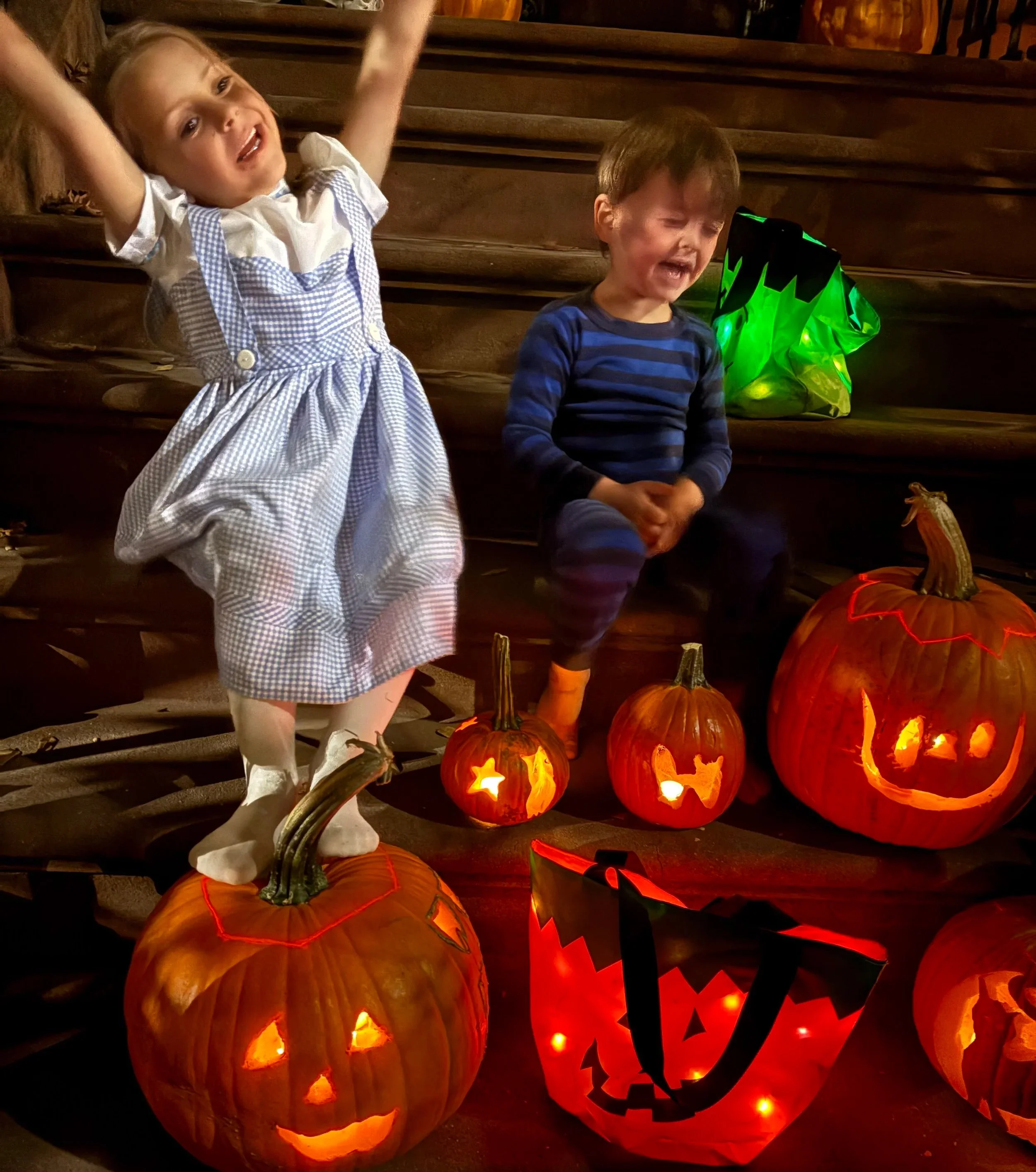
Halloween joy on the stoop

Cammy and I took a short break from the orchard and visited family in New York City. We were in Brooklyn for Halloween. The closed streets were mobbed with trick or treaters. It was a massive crowd of humanity. Lots of multi-generational groups all decked out in hand-made costumes - AMAZING.  

What does it have to do with the orchard? Like the orchard, it was a scene of joyful chaos with not a hint of politics or religion or money or discord of any kind. If only life could be like this every day. I even got to squeeze in a jazz show of the Sun Ra Arkestra billed as the Sun Ra Halloween Freakout—more joyful chaos…just like the orchard. 

October 28, 2026

Beal’s Orange Bitter, October 28, 2026

Apple picking season is drawing to a close. Even in a warm fall we try to be done by Halloween. And this year has been considerably colder than any in recent memory. I ventured off to the coast to pick a seedling discovered by my friend Sean Turley who calls it Beal’s Orange Bitter. He shared a single-variety cider made of BOB a few weeks ago, and it was delicious. The sprawling old tree straddles a stone wall and offered up three bushels of apples today. I’ll press them and see if I can make as good a cider.

We picked our next-door-neighbor’s Golden Russet (of Western New York), a tree I grafted many years ago, and our own Albion Russets, Roxbury Russets, Black Oxfords and Starks. It’s time!

In the evening I gave a talk in an old meeting hall in the southern Maine town of Wells. There was a big turn out for a Wednesday night. Maybe the table full of pies was a draw! It’s gratifying to see the enthusiastic interest in our apple history throughout the state.     

October 27, 2026

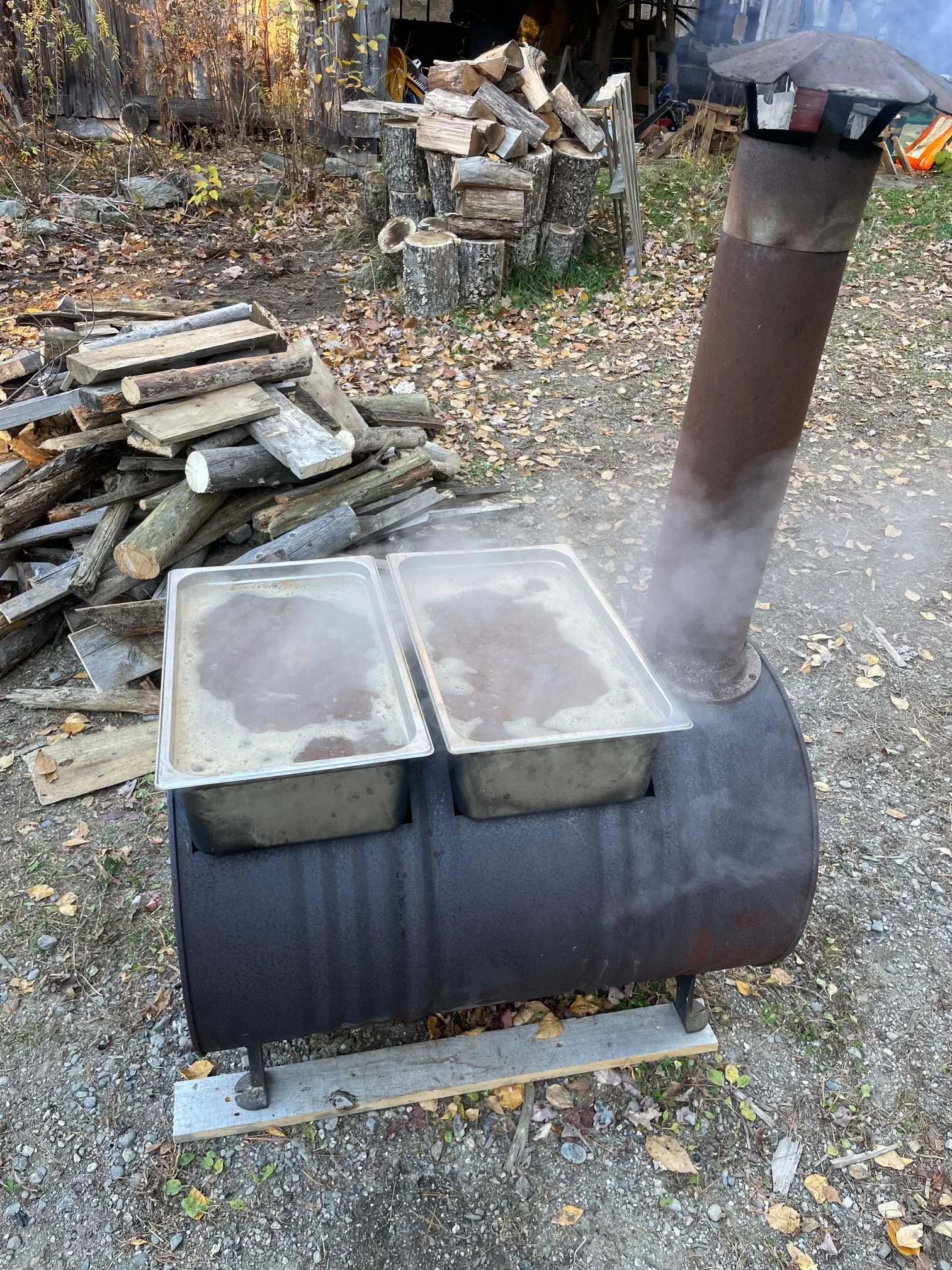
Skylar fired up our elegant, mini-maple syrup evaporator, fabricated from an old metal barrel and fueled by a rip-roaring wood fire. She spent the day boiling down cider into apple molasses. I acted as support staff, cutting up old boards, scrap-wood, random spruce and hemlock poles and log-ends that had seen better days and were ready to be transformed into ashes which we’ll spread around the apple trees. The stove is designed to gobble up a lot of wood and actually prefers dry soft-wood. It was a good way to clean up a lot of wood debris. 

By mid-morning, fragrant apple-steam filled the barnyard air, and the fresh cider was bubbling and boiling. The cider is made entirely of true “sweet” apples so the final product will have no acidity. Our plan is to concentrate the cider into a shelf-stable, storable, sugar-substitute. It was past dark when the fire had died down enough to quit for the day. Nearly 20 gallons had been boiled down with another 20 to go. The finished product will be pure, locally-sourced, home-made, ultra-organic, additive-free, love-infused, sustainable sweetener. No oil wells were drilled to make this product! No forests were cut down!   

Molasses machine, October 27, 2026

Double, double toil and trouble;
Fire burn and caldron bubble.
Fillet of a fenny snake,
In the caldron boil and bake;
Eye of newt and toe of frog,
Wool of bat and tongue of dog,
Adder's fork and blind-worm's sting,
Lizard's leg and howlet's wing,
For a charm of powerful trouble,
Like a hell-broth boil and bubble.
The Bard  

October 26, 2026

Tubelier apples, October, 2026

The cold mornings continue though today clouded up and, with it, came some heat. At 6 PM it was still warm although the prediction is another night in the mid-20’s.  What a fall.

It was a busy day on the farm. Cammy harvested all the cabbage. She harvests the entire plants, roots and all. After washing the soil from the roots, she puts 3-4 plants into a 5-gallon bucket with damp sawdust packed around the roots. The buckets then go into the root cellar where they’ll keep til June.  

Meanwhile, Skylar and I organized a few hundred bags of apples into our “A to Z” boxes also stored in the root cellar. The apples are organized by name alphabetically (A-B, C-D, E-G etc) so I can access them as I do ID’s. When I need to check the basin features on a Baldwin, we go to the A-B box etc. There it is (Ihope). We also picked a nasty-tasting (but lovely and beautiful) seedling growing a couple miles from here I call, “Bitter Pew.”

October 26, 2026

Talk in Wells, ME Wednesday, October 28

For those of you who live somewhere near the southern Maine town of Wells, I’ll be giving a talk at the Great Works Regional Land Trust on Wednesday, October 28 at 6:30 PM. The event will be held at the Meeting House, 938 Post Road (US Rt 1) in Wells. It would be a pleasure to see you there. 

October 25, 2026

Great Maine Apple Display, October 25 2026

Another frigid morning. Is it already winter? Today was MOFGA’s annual Great Maine Apple Day. Several hundred apple enthusiasts gathered for an afternoon of tasting apples, attending workshops and demonstrations,  checking out poster-displays, pressing cider, getting their mystery apples identified and about anything else you can think of that’s apple-related. It was a perfect way to spend a glorious, clear blue October day. 

I spent most of the afternoon at a table attempting to identify apples. I was joined by a talented crew of fruit explorers featuring Todd Little-Siebold, Sean Turley, Laura Sieger, Skylar Bodeo-Lomicky and several College of the Atlantic students. We were busy all afternoon. At the end of the day, I left with over a hundred bags of apples still to be ID’ed - sign of a busy winter ahead. 

October 24, 2026

Liz and Orea, stars of the bottling crew

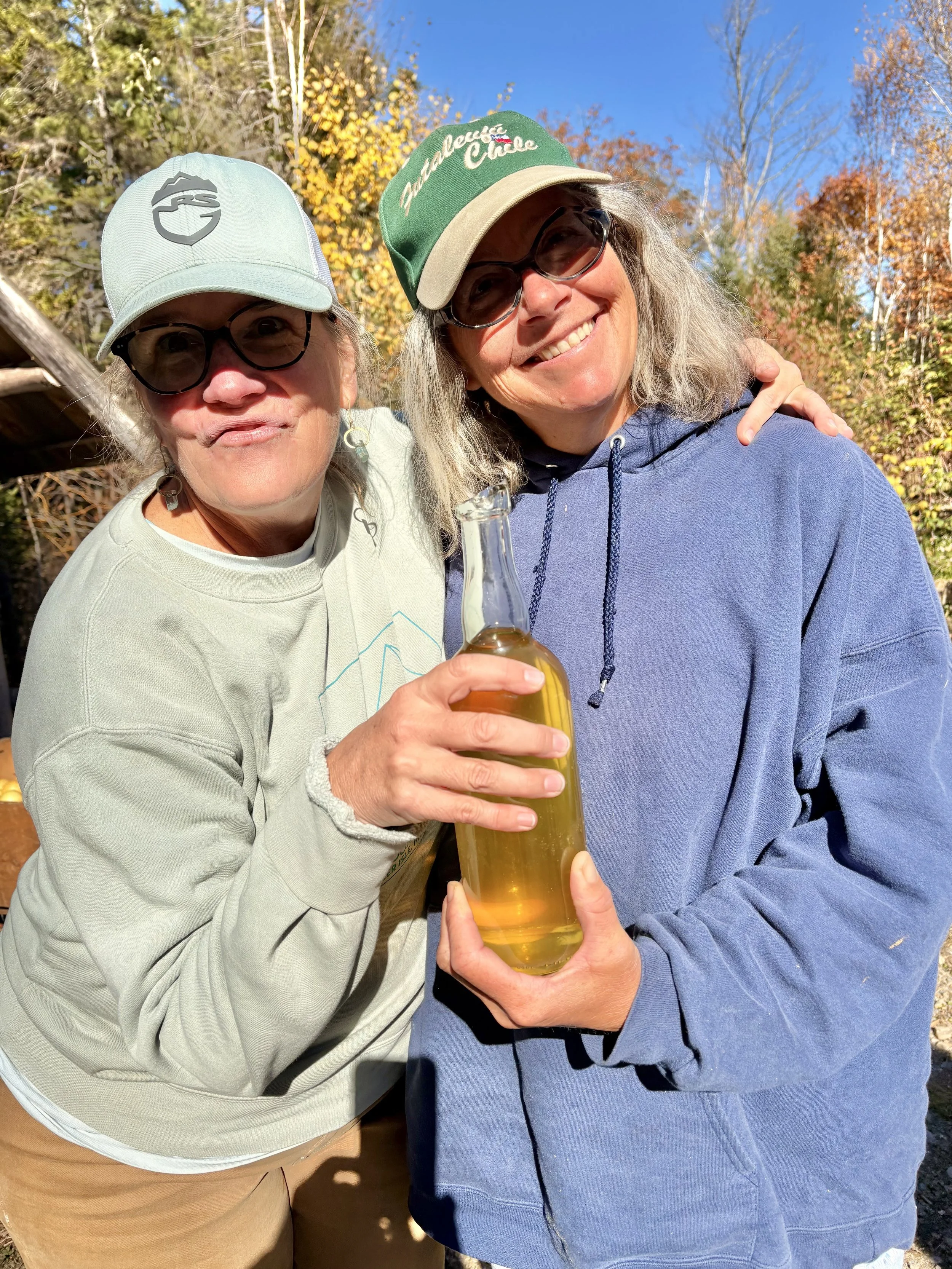
It was another cold morning on the farm. Down near +18F at dawn. That’s cold. A gang of us were into cider all day. First off we needed to bottle last year’s cider so we could use the barrel again this year. We syphoned the cider into bottles, adding a bit of sugar to each bottle. The sugar causes the cider to become sparkling over the course of the next year. This 2025 pressing will be ready to drink in 2027. Delayed gratification!

At the same time, we were busy grinding and pressing apples in the cider house. Once the barrel was nearly empty, we refilled it with this year’s juice. We left a few gallons of last year’s fermented cider in the barrel like sour dough starter. Today’s pressing included Fuel Service, Redfield, Niedzwetzkyana, Tolman Sweet, Dabinett, Kingston Black, and small amounts of a couple dozen other cultivars  we’ve picked over the past month. Once the barrel was full, we pressed an additional nine bushels of Tolman Sweet that we’ll turn into apple molasses. We were cleaning up as darkness descended along with the cold, dry air that’s been a regular visitor this fall. We then gathered around the dining table where all good days should end.

October 23, 2026

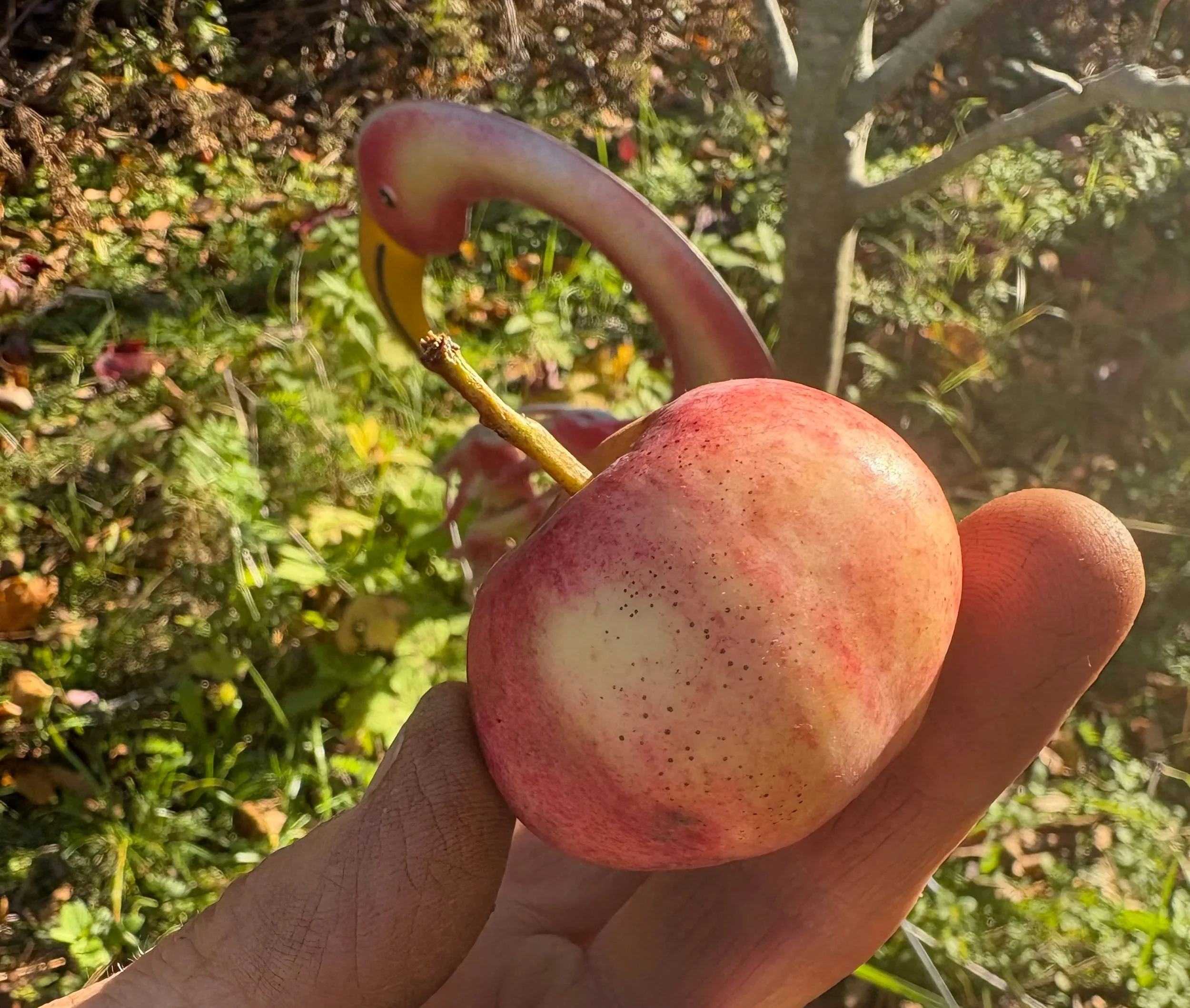
“Pink Flamingo” October 23, 2026

It continues to be abnormally cold in central Maine. It was cold all day today, and cold temperatures are predicted for tonight. Some apples were damaged last Saturday night—even on the tree—and more may be damaged tonight.  If you have apples still on your trees, it’s time to get them off and into the cellar. Do it now.

Today I taught an apple class for students at Colby College. I should have been picking apples.

October 22, 2026

Sennebec Russet tree, Union, ME

I made a trip to The Apple Farm on the Back Road in Fairfield where they’ve had an excellent crop this year. They still have lots of apples. Tucked away on a north-facing hillside, there are a few rows where we grafted back-ups of at-risk, historic cultivars several years ago. I wanted to check them out.

I was able to pick four of them: Kennebec Russet, Green Monster and Sasanoa and Sennebec Russet. All four are provisional names. Kennebec Russet is still alive and growing near the new Sidney off-ramp of rte 95 in Waterville. (It’s name is the most likely of the four to be correct.) Green Monster may be a seedling though it’s growing in a row in a old farm orchard in Waldo. Sasanoa is a Rhode Island Greening sport from a long-abandoned, overgrown orchard south of Bath. That source tree is almost certainly dead.  

Sennebec is the oldest of the four and the most historically valuable. Dan Newman found the ancient tree (also now dead) on the Sennebec Road in Union (thus the provisional name). The DNA profile showed it to be a child of the golden russet type we call GR2. That confirmed that GR2 itself has to be really old. Sennebec might be the local cultivar known as Union Russet.

The specimens I collected of all four apples were in beautiful shape. They are just a few of the jewels we’ve discovered over the years. Come see them and taste them at the Great Maine Apple Day this coming Sunday (October 25) at MOFGA in Unity. It’s from Noon to 4 PM. See you there!

October 21, 2026

Yellow Bellflower, Jefferson Maine

Today was the day to pick most of the keepers. We were joined by our friend Brett who drove up from Boston to spend a splendid fall day in the orchard. It was great fun to have him along. We finished up as darkness descended.

Brett’s favorite this year was Yellow Bellflower. We got our scionwood from two ancient trees in Jefferson, about a half hour south of the farm. Yellow Bellflower was one of the first out-of-state cultivars to be planted in Maine. When you see an ancient tree in Maine in the fall with somewhat conic, yellow fruit, there’s a good chance it’s Yellow Bellflower. They taste good now and keep most of the winter. 

Most of the apples we picked today will improve in storage. Here’s a list. All are correctly ID’ed except where noted. We still have more picking to do, including Black Oxford, Roxbury Russet, Stark, Wickson, and a few others. But we’re nearly all picked out. 

Adam’s Pearmain (dropping)
Aroostook Sunset
Baldwin
Blake
Blue Pearmain
Cherryfield (unidentified, matches midwestern Salome) 
Esopus Spitzenburg (dropping)
Green Monster (unidentified Maine—possibly from seed)
Guptil Lavender (Belgrade unidentified ancient grafted)
Hurlbut (dropped)
King David
Lincolnville Russet (unidentified large old Maine russet)
Mann 
Northwestern Greening
Reinette Simarenko
Scout (Frostbite x Cherryfield) SCF seedling
Smokehouse
Wagener (mostly dropped)
Yellow Bellflower

October 19, 2026

Apple picking time

The chilly mornings continue. No heat in sight. Good weather to cool down the rootcellar.

The late-season picking is like a game of chicken. Your two cars are driving towards the edge of the cliff. Who jumps out first is the chicken. Is it James Dean or Sal Mineo? Don’t get your sleeve caught on the door handle. In the world of apples, how long do you dare to leave them on the tree? You wait, you wait, you wait and then, darn! They freeze and are all ruined. Better luck next year. Or do you wait until the last minute and then spring into action and pick them in the dark with headlamps and gloves, just before the old chevy flies over the cliff and the whole world freezes, but the apples are safe and sound in the root cellar? I prefer scenario B. So it looks as though we pick everything this week. 

October 18, 2026

Tolman Sweet with signature suture line

Well below freezing in the orchard this morning. Will this damage the apples on the ground or on the trees? The general consensus is that apples still on the tree are less vulnerable than on the ground. Once they detach from the branch, they are on their own. That being said, sometimes they are safer nestled in the grass or in the Goldenrod. 

I collected a few bushels of Tolman Sweet this morning from a neighbor’s tree. About half were already on the ground, and the other half I shook down. I’m going to press them all into cider and so didn’t bother to segregate them. When I press them this week, I should get a sense of how they fared. 

There are still more apples to pick on the farm. I generally wait closer to Halloween, but cold nighttime temperatures are predicted so it seems prudent to pick everything this week. The late cultivars will go into the cooler and then into the root cellar in a week or two.

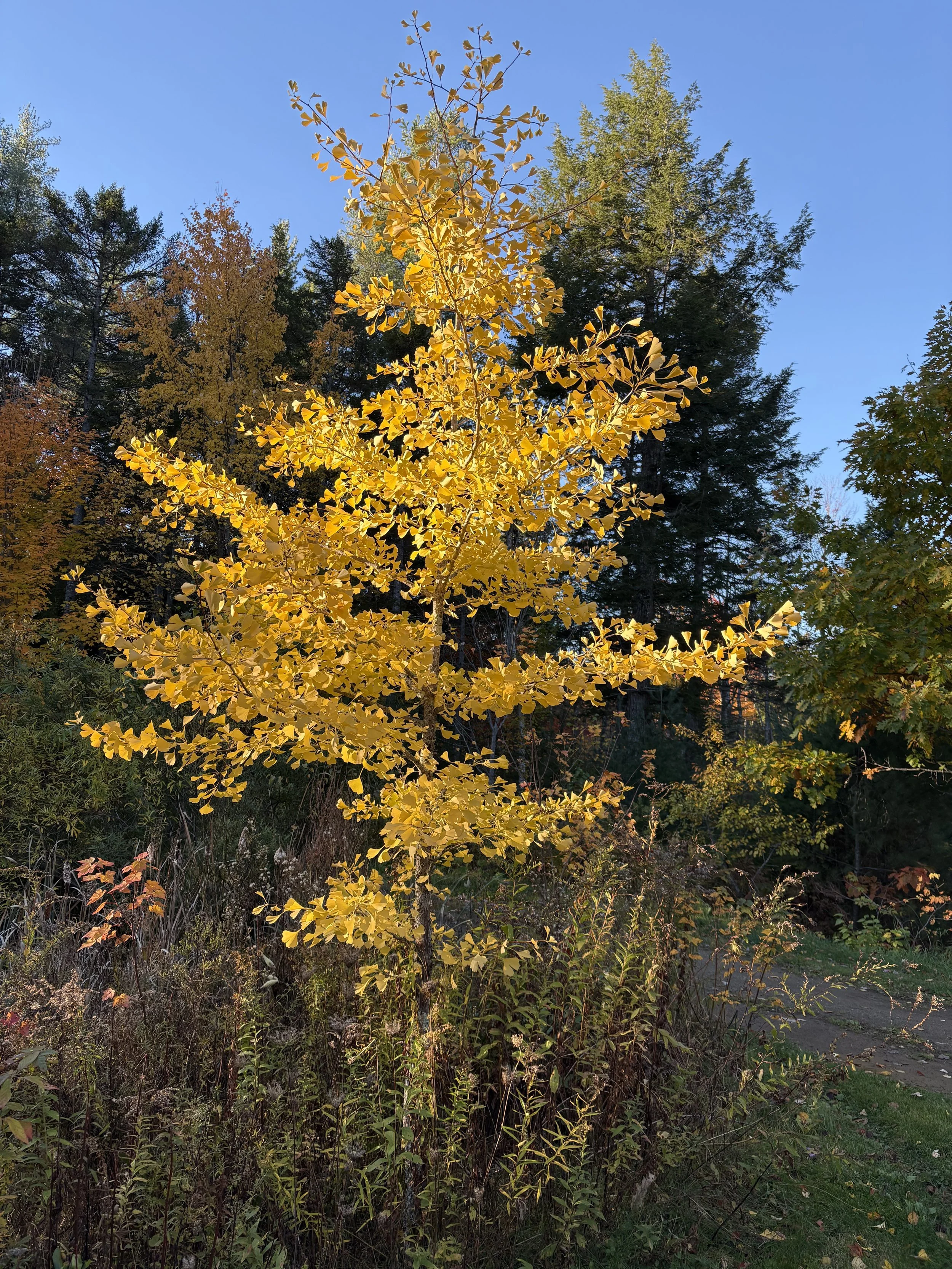
Update on the Ginkgo. Yesterday was “ice out” so to speak. In the morning the fluttering began, by evening the tree was bare, and on the ground, a carpet of golden yellow leaves.

October 17, 2026

Today I went on an all-day pomological excursion. First stop was to Winthrop to drop off some old wooden barrels at Absolem cider. We haven’t used them in years, and it was time to move them along. Maybe they’re reusable or maybe they’ll make great decorations or beverage tables. Absolem is one of the farm to table places that have sprung up in Maine in recent years. We’ve been several times and always had fun. Highly recommended if you’re anywhere near Winthrop.

Next stop, Morris Towle’s old orchard just down the road from Absolem. Morris Towle was a mailman and apple collector in the mid-twentieth century. Sadly we never met, but I learned about him from multiple sources. He was instrumental in saving a number of historic Maine apples. I’ve been to his orchard a few times over the years and have a copy of his orchard map. Today the current owner, Dereck Glaser, showed me several trees that had fruited for the first times since he’s owned the place. One is particular is of great interest. It had only one fruit left which is now safely in my cooler. Time to get out the books.

I left Dereck and drove slowly the back way to Brunswick looking for old trees. I found a beautiful orchard in Bowdoin. Although most of the apples were on the ground (It’s been windy), the fruit was in good shape, and I was able to identify all the trees: two massive Baldwins, one King of Tompkins County, several Macs, one Wolf River and two Ben Davis. Nothing too out of the ordinary but really beautiful.

Givens apple? October 17, 2026

A few miles later, still in Bowdoin or maybe Topsham, I found what I was looking for. A huge, ancient, fence-line tree with fruit. I stopped and was able to retrieve a few of the last fruit. (Half the canopy was in the cow pasture so I declined hopping the fence.) Could this be the long-lost Givens apple we’ve been searching for?

The big event of the day was leading an afternoon apple tasting in Harpswell for about thirty adventurous tasters, sponsored by Harpswell Heritage Apples. It was held in an old, open, very drafty barn, and everyone was bundled up. I selected 15 cultivars ranging from roadside seedlings to famous historic favorites to modern introductions with every flavor profile I could muster from sweet to tart and everything in between. I had fun, and I think the chilly apple tasters did as well. It was a good day all around.    

October 16, 2026

Rain returned to the farm. It’s a good pattern, especially if it keeps up. The ponds are filling albeit slowly. Rain brings me indoors, and indoors means apple identifications. I have bags and boxes and more bags and more boxes of apples awaiting names. They’re coming in like the tide and piling up like driftwood on the shore.

For decades doing apple ID’s in the fall and winter has been almost entirely a solo act. Everyone else in the world is at work or off doing something at least marginally more productive. Not me. I’m attempting to put a name on an apple. As far as the apple is concerned, it has no name and never did have one. I open a bag and gently pour the apples out onto the table, set them up like bowling pins or maybe cocktail glasses and stare at them. If I’m lucky, I know the apple. Voila. Northern Spy. Next bag please.

This year I’m trying a two-person version of the ID process. Skylar is helping. Although she’s excited about spending hours staring at apple after apple after apple, she has a lot to learn. Even using a searchable key—which we have—you have to know where to jump in with each new apple. It’s a challenge. It takes time and a certain kind of experience, the kind that opens the doors of possibilities. So Skylar and I tag team. I have a hunch and pass the apples to her to research variety X or Y. Today it worked quite well.

Paradise!

The internet, by the way, is useless. AI seems to butt into all inquiries and messages without being asked, and it is hellbent on identifying apples as “Paradise.” Whenever someone asks me about their “Paradise” apples, I know they’ve been dealing with the devil, the devil being the internet who does not know how to ID apples…yet. It looks at your apple which can be red, yellow, russet, large, small or just about anything else and declares: Paradise. (Spending your life with apples and orchards is paradise so I guess AI isn’t entirely wrong.)  

October 15, 2026

Ginkgo biloba, October 15, 2026

Skylar and I picked apples much of the day, including Frostbite (MN 447), Redfield, Tolman Sweet, Hubbardston Nonesuch, MN 1734 (aka Minnesota Russet) and Melody Maker. These are the first of the keepers that should store well in the root cellar into late winter or even spring. Next week it will be time to pick the long-term keeping apples, the true heavy hitters in the storage department.

The foliage on our twenty-five year old Ginkgo (Ginkgo biloba) tree has turned its fall yellow. I found the tree at the Brooklyn Botanic Gardens growing in the composted innards of a huge, old, hollow crabapple tree. It was one of a couple of tiny, young seedlings that probably had been tucked away by an industrious squirrel who intended to come back later for a Ginkgo meal but got distracted. I liberated it from its dark hideaway, gently wrapped the roots in wet newsprint and brought it home. Now it’s about 20 feet tall. Sometime soon, all the leaves will flutter to the ground in a single day (or maybe two). This morning the entire tree was glowing an electric, psychedelic, golden-yellow as the sun rose and began to shine through the white pines.