September 24, 2026

Apple display, September, 2026

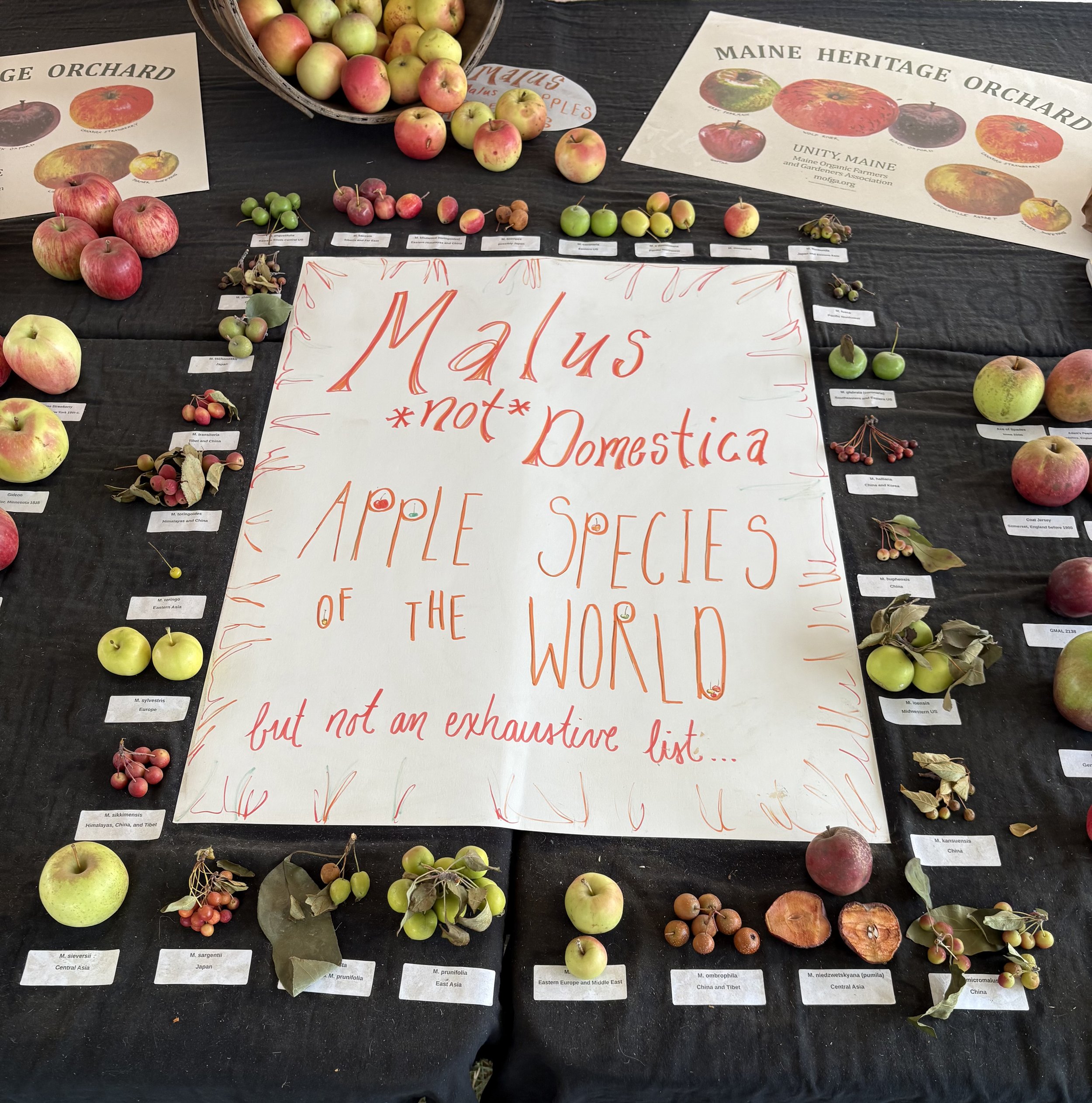
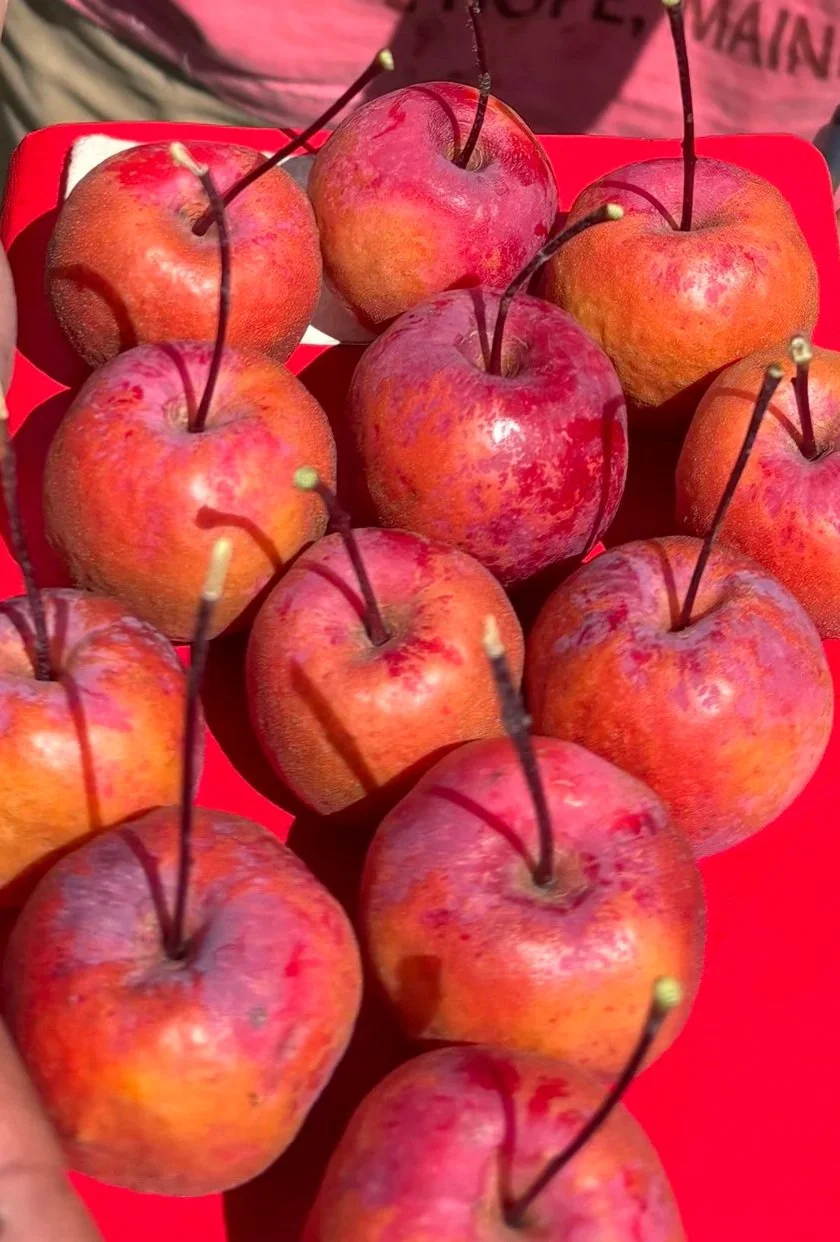
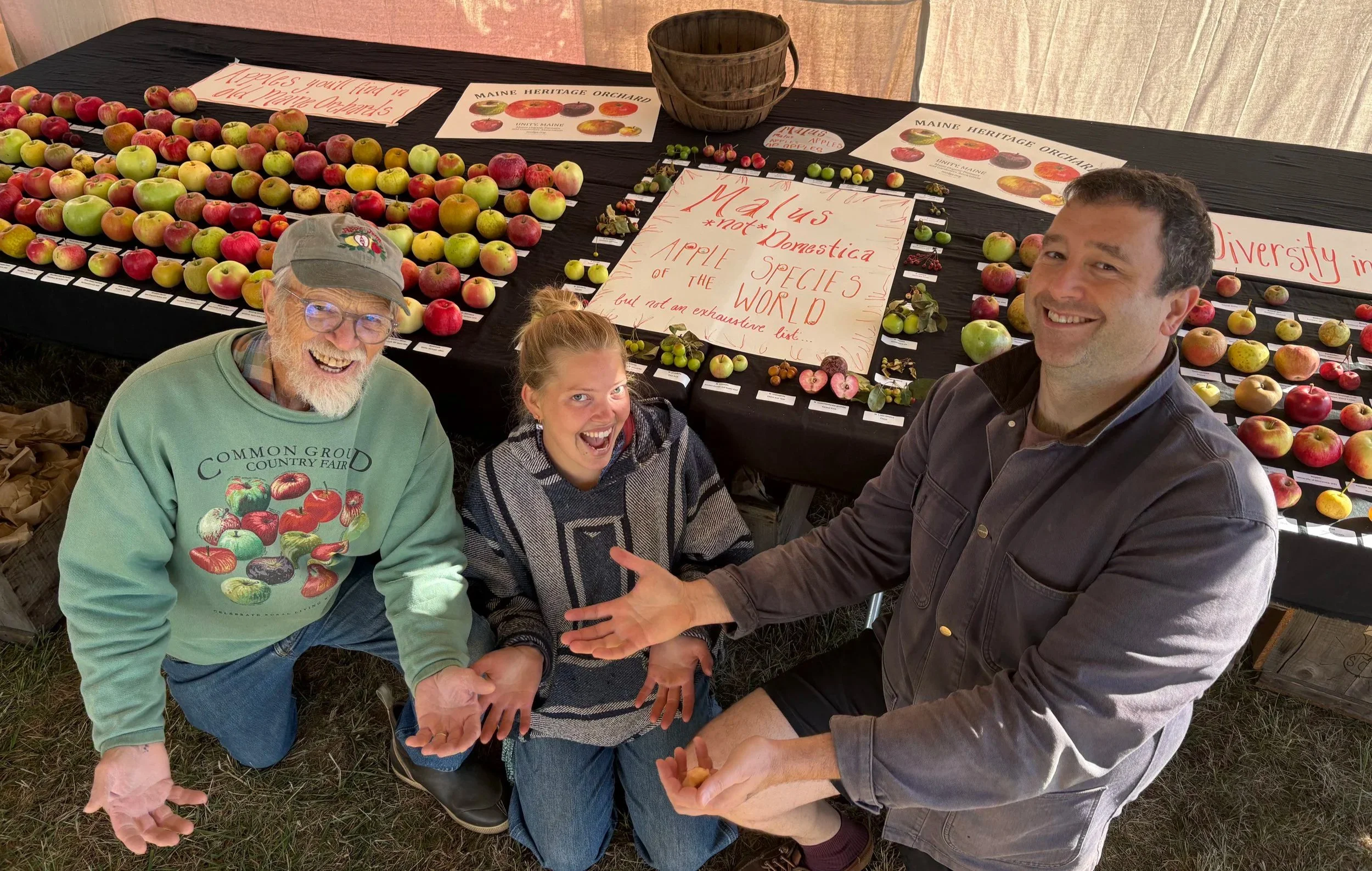
This morning was cold again though only a degree or two south of 32F. It was time set up the apple display at the Common Ground Fair apple tent. Tomorrow morning before the crowds arrive we’ll lay down the apples. The display will be in three parts: apples you’d be apt to find in old Maine orchards; Malus (apple) species of apples from around the world: and a huge assortment of apples showing the amazing diversity of the fruit. In all about 350 different specimens. It's been a long week getting the apples collected and organized, but we’ll be ready for the Fair!

September 23, 2026

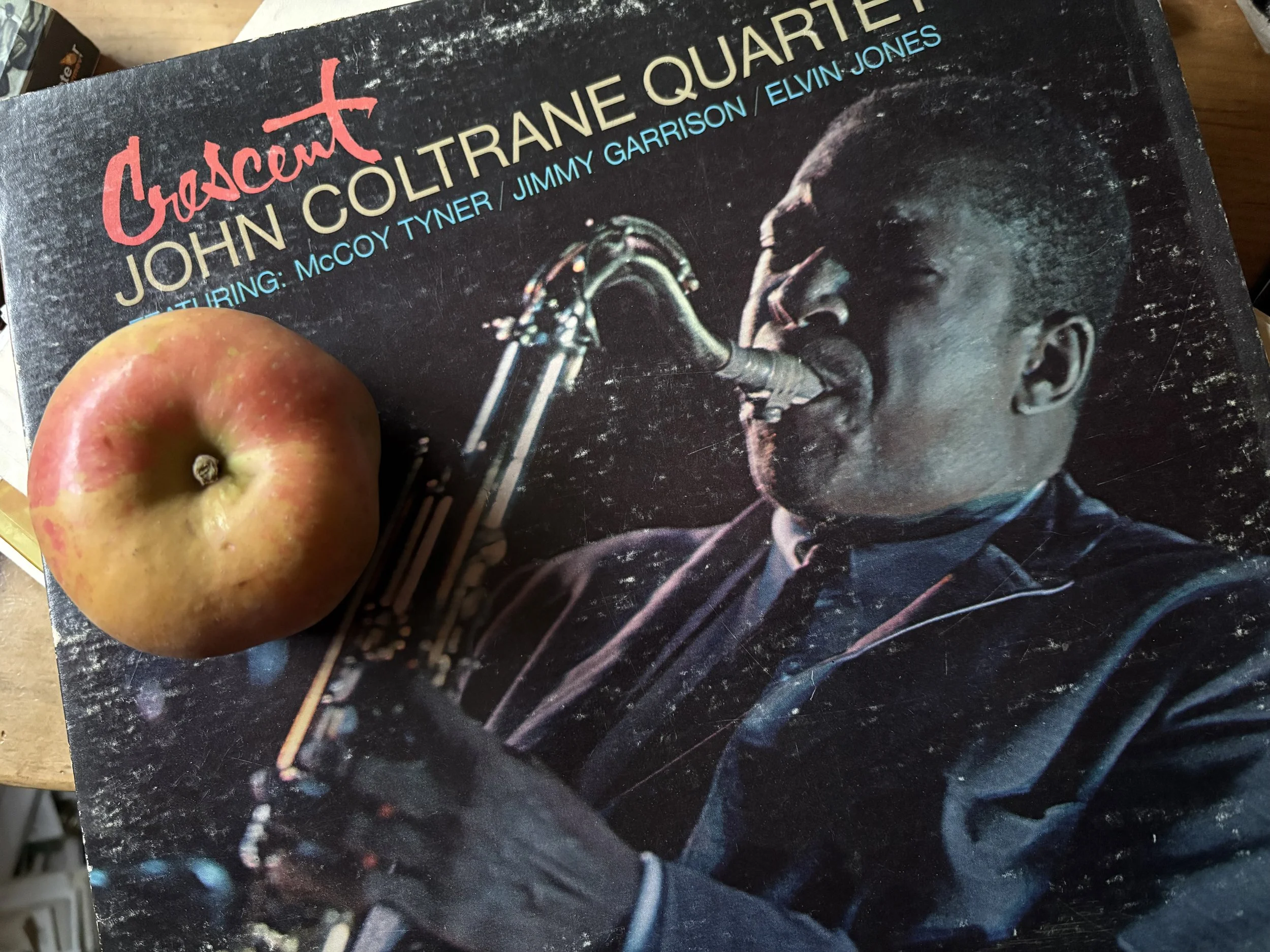
Today is the 100th birthday of John Coltrane. Coltrane is one of the most acclaimed of all jazz instrumentalists. His life and music have been honored all this year, and the celebrations will continue for months to come.

Happy 100th Birthday John! September 23, 2026

In a recorded interview on March 22, 1960 Coltrane was asked about his sometimes challenging, seemingly chaotic solos. The interviewer described his playing as “untenor-like, unbeautiful, unjust-about-everything-you-can-think-of.” (That was rough.) When the interviewer asked him if he felt angry, Coltrane replied in his soft but empathic voice, “No, I don’t [feel angry]…The reason I play so many things at one time, you see, [is that] I haven’t sorted them out. I have a bag of things I’m trying to work through and get the one essential. … There are some set things I know…that will take me out of the ordinary path, but I haven’t worked them through and I’m not familiar with them enough to take the one single line through, so I play all of them and acclimate my ears so I can hear and use them.”

I’ve thought about Coltrane’s words many times over the years. They remain an ever-present inspiration to me as I attempt to grow apples and plants in new and seemingly chaotic ways that I hope "will take me out of the ordinary path." Often I too “play” them all at once. (Multi-factorial synergy! ) One day maybe I’ll find that one essential. Or not.

This morning we tickled 32F for the first time since spring. No frost visible on the lawn, but this is a harbinger of things to come.

September 22, 2026

Another brisk morning and a glorious clear blue September day. More collecting for the Common Ground Fair display at Lane Road Orchard in New Sharon and Sandy River Orchard in Mercer. The two orchards are only a few miles apart, one in Franklin County and the other in Somerset County. Both have a wide selection of unusual varieties. They’re quiet, idyllic spots with interesting apples—both definitely worth the visit.

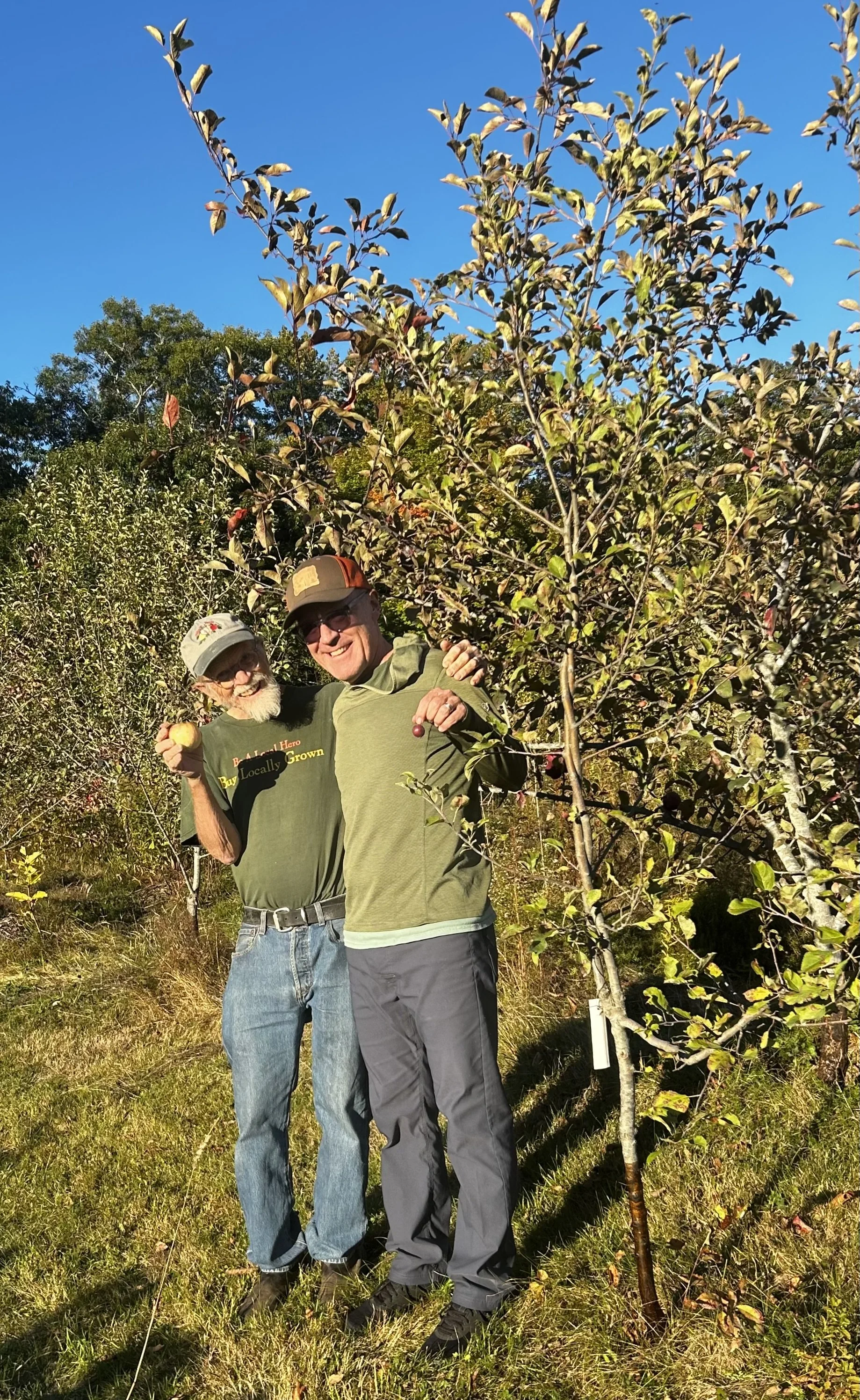
John and his nephew Cameron, September 22, 2026

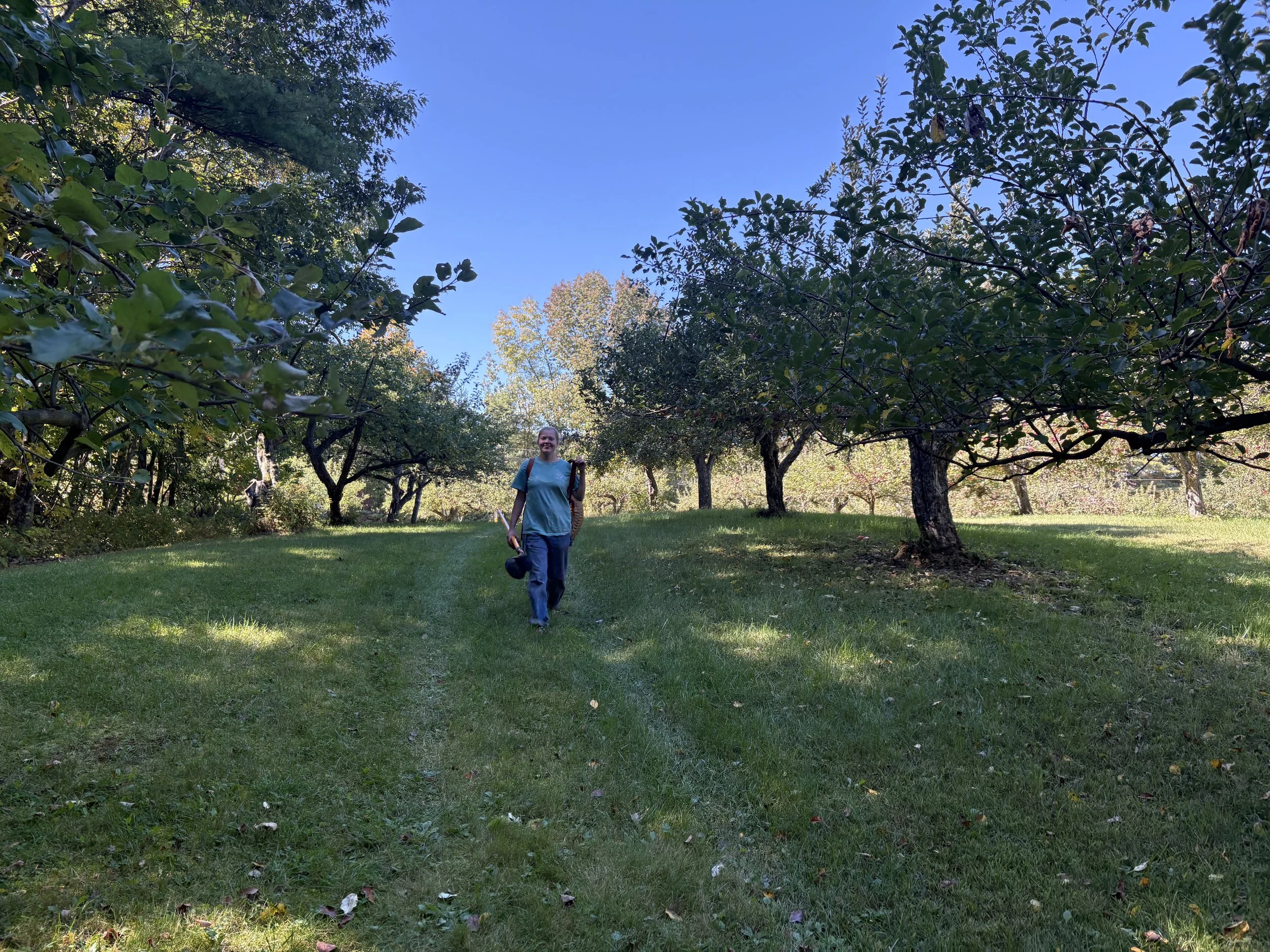
In the afternoon I convinced my nephew Cameron who was visiting from NC to help collect apples at our Finley Lane Orchard. It was his first time up here in a number of years. He’s not an apple guy but was a very good sport. (He carried the pole picker which made him feel important.) He tasted bitter sweets and bitter sharps and even some pretty nasty-flavored apples that we generally only reserve for the true diehards. His favorite? Radar Love, another red-fleshed Frostbite seedling that originated here and was named after our beloved dog, Radar. I haven’t DNA profiled Radar Love yet, but it has promise as a good dessert cultivar.

It was a productive day and great to have Cameron along, although we spent as much time laughing as we did picking. No count yet, but we probably collected another 100+ varieties for the Common Ground Fair display.

September 21, 2026

Collecting apples for the Fair, September, 2026

Today it was a trip to the The Apple Farm in Fairfield to collect specimens for the Common Ground Fair apple display. The annual display is one of the most popular exhibits at The Fair. When the collecting is done it will include 300-400 cultivars, including species apples from around the world,  local roadside discoveries, old heirloom favorites and everything in between.   

The Apple Farm orchards slope to the east and the west and have multi-million dollar views in both directions. It was fun to be back there where we were greeted by the owners Marilyn and Steve Myerhans and our neighbor and former CSA crew member Lauren Cormier who now runs their packing line, as well as by the store crew and the Jamaican picking crew. We have spent many hours at the Apple Farm over the years topworking trees, picking apples for our CSA and hanging out with Steve and Marilyn that It felt like old home week.  

September 20, 2026

Geneva apples, September, 2026

The weather turned cold this morning, and all over Maine fires were lit, windows were closed and sweaters were dug out of the closet or the trunk or wherever it is we left them in April.

Skylar began the gargantuan task of sorting the many dozens of apples we collected in Geneva, NY at the USDA apple repository. We’ll be studying, photographing, describing, and displaying them for many weeks to come. Oh yes, we will also be eating them.

September 19, 2026

Contestants in the North Belgrade pie taste-off, September 19, 2026

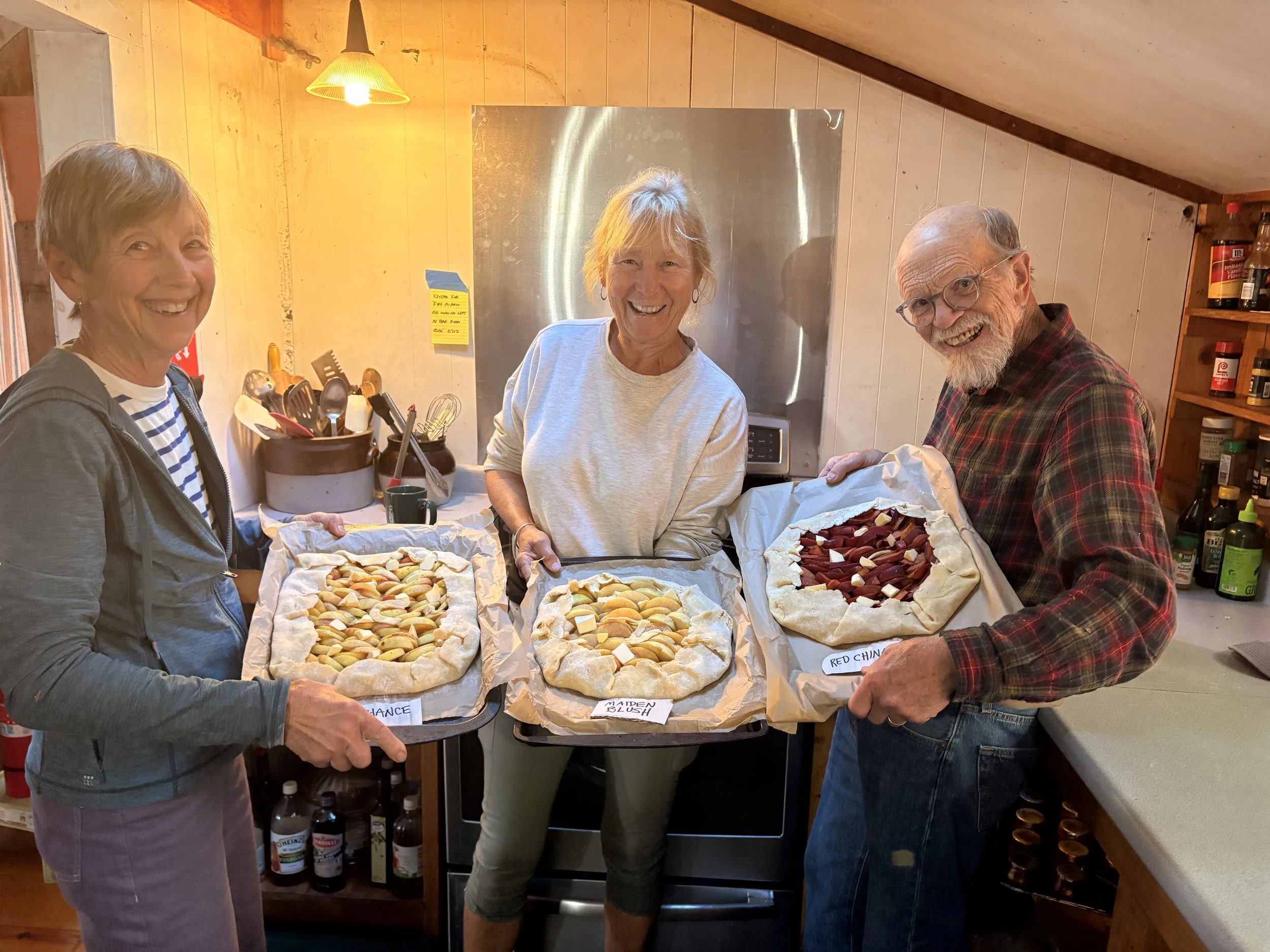
Tonight was the annual apple pie taste-off at Camp Merryweather in North Belgrade. We’ve been doing it for nearly thirty years. This year we shook things up a bit by baking galettes instead of two-crust pies because Cammy is convinced that you can taste the apples better without all that extra crust. Nonetheless, the contest was subject to the same strict rules as always: each “pie” is a single variety and the crust, spices (1/4 tsp cinnamon) and sugar (1/4 cup) are the same for each. Everyone (22 of us) got a small piece of all three galettes on paper plate divided into three sections. We tasted, discussed loudly and voted. It’s a wild and fun event. This year we featured last year’s winner, Red China, and two newcomers to the contest, Maiden’s Blush and Chance. Maiden’s Blush is an old beloved New England heirloom, and Chance is one of the seedlings discovered here on the farm, a cross between Duchess and Egremont Russet. It’s a firm and tasty dessert apple and, as it turns out, a star in a galette. It was the hands-down favorite. And if you remember from an earlier post, it was named after our oldest grandchild. Hooray for Chance.

September 18, 2026

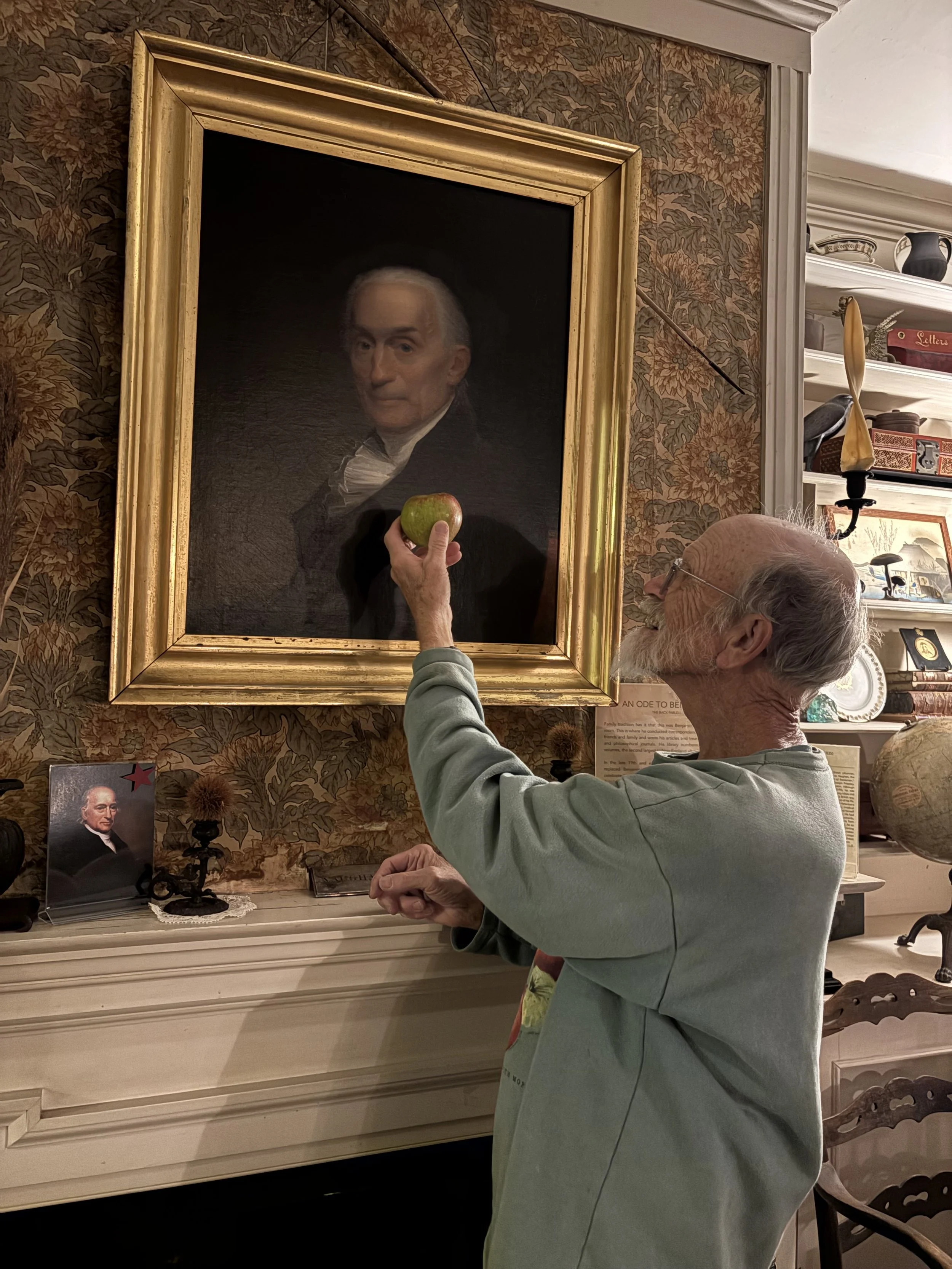
This evening I gave a talk in the parlor of the rambling old farmhouse at the Vaughan Homestead in Hallowell. This was the home of Benjamin Vaughan (1751-1835), one of the early important plant geeks of ME. The homestead was established in 1794, and the story goes that Benjamin Vaughan himself planted a tree of a brand new apple variety called Black Oxford. That tree is still producing apples in the front yard more than 225 years later!

Benjamin and Bunk, September 18, 2026

The topic of the talk was, “What can an old apple tree tell us about Maine’s past? Why saving an old apple means saving a piece of Maine’s History? And Why should we care? I did a deep dive into the MOFGA apple T-shirt with its 16 apples—one originating in each county of Maine. It was an evening of story telling. Afterwards, I did a photo op with Vaughan himself. I got to offer him a Black Oxford from his tree.

September 17, 2026

The Geneva Orchard, September 2026

Todd’s apple class from College of the Atlantic came to farm. We sat at the long wooden table under the grape arbor for the better part of the day and reviewed the Geneva trip. Skylar talked about tasting apples and apple flavors, and I talked about the phenotypic names of apple characteristics. It was delightful way to spend time on a late-summer day in Maine.   

September 16, 2026

Niedzwetzkyana rhymes with Obama, September 16, 2026

Today Cammy and I visited a tree in Peabody, MA thought to be Danvers Winter Sweet. A local historian had sent me the alert. The location was perfect: Peabody used to be part of Danvers long ago when Danvers Winter Sweet was a local (and regional) favorite. Finding the tree was a challenge. The area has become a jumble of highways and off-ramps and shopping center parking lots and even our cellphones were confused. (wow) Sadly, the tree turned out to be a seedling. But it was a fun adventure.

Meanwhile, back on the farm Skylar picked the Niedzwetzkyana, Golden Ball and Livii Sibiloun apples from Kazakhstan, Maine and Estonia, respectively. Who needs to go anywhere? The entire world is right here on the farm.

September 15, 2026

(By Skylar Bodeo-Lomicky) I’m in a food preservation frenzy right now. Teas, pickles, wines, syrups, sauces, seeds. Never in my life have I had the space and means to store as much of my harvest as I do this year, and I am jumping on this opportunity. On the long list of reasons why I love food is how it functions as a creative outlet in my life. I’m nearly always inclined to try out a new experiment rather than make the same dish or drink over and over again. That said, a goal of mine in preservation is to have items that I’ll want to eat all winter long that celebrate the plants themselves and emphasize exactly who they are. 

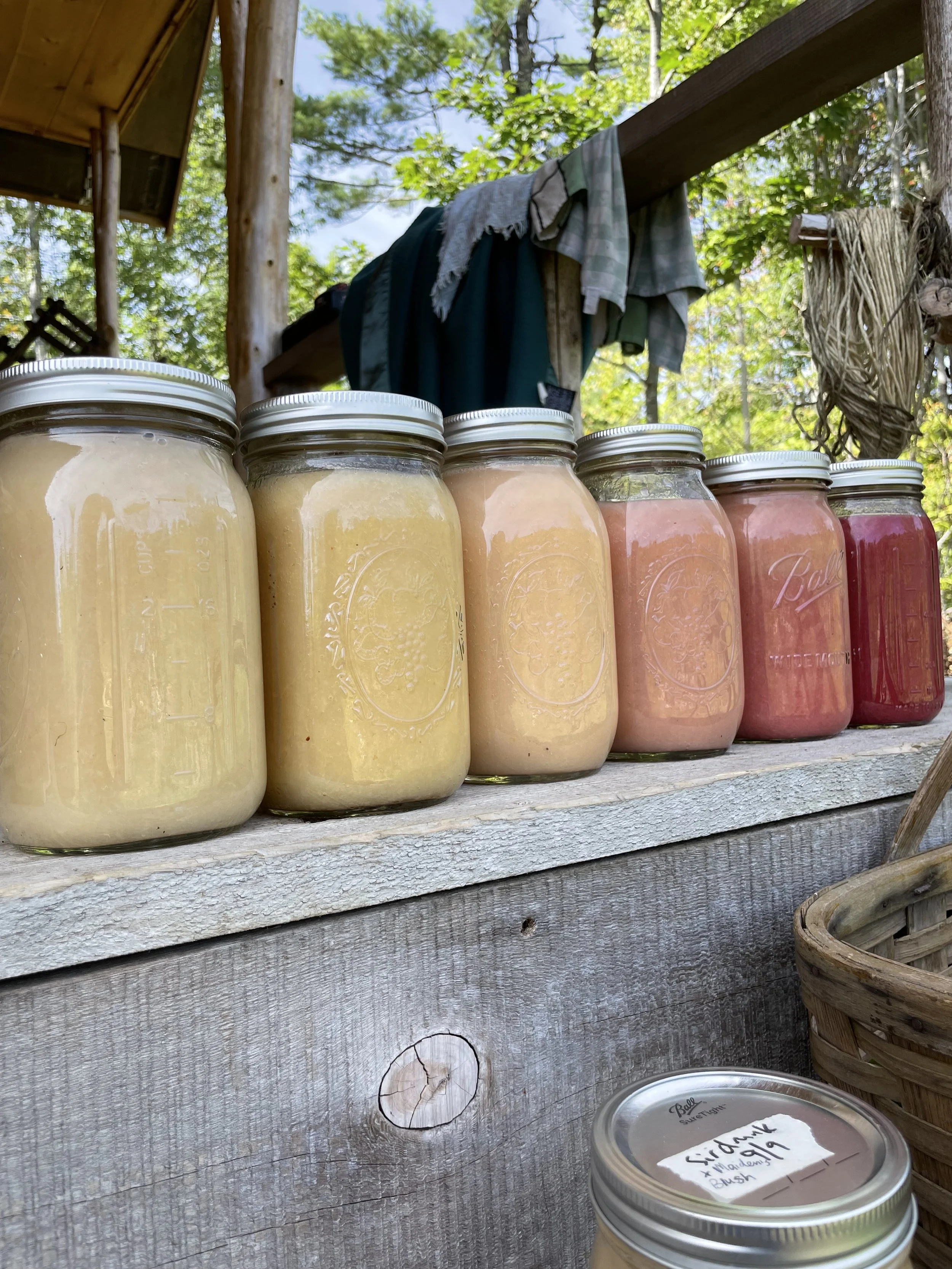
Six kinds of applesauce from five kinds of apples. Left to right: Maiden’s Blush, Sidrunkollane Tallioun, Gauguin, Charlamoff, Sidrunkollane Tallioun + Red China, and Red China. September 15, 2026. 

A single variety applesauce is as pure and simple as it gets. Select a variety. Chop up your apples, core and all. Cut out the caterpillars and insect holes. Cook the apple pieces, adding water to prevent it from burning. Mash and push it through some sort of strainer (I use a chinois). Voila, applesauce. 

The funny thing is that applesauce is not at all simple. Apples in their whole form vary in cell density and size, amount of malic acid, fructose and tannins, in ripeness and therefore the amount of starch, in pigmentation, and in aromas. Each of these factors influences the final sauce. In my experience the starchier the apple the creamier the sauce, but at a cost to its aroma. More acid tends to mean faster cooking. Tannins break down so astringent apples don’t necessarily mean astringent sauce. But many mysteries remain— if only it was a little more simple. 

September 14, 2026

(By Skylar Bodeo-Lomicky) I have been away from the farm for four days. It feels like a long time. I am happy to be back in the orchard. Sure enough, it’s changed since last I was here. Just-ripe apples here, overripe tomatoes there, asters coming into bloom, and the cooler getting fuller by the day. 

I took the time to walk around the orchard; observe, check in on everyone, tell them that I missed them. Despite the occasional devil on my shoulder telling me that I should be doing something ‘more productive’ with my time, I do believe this task is important. It’s a reset, an inhale and exhale, an opportunity to see what deserves my time, and plan the day or week’s work. 

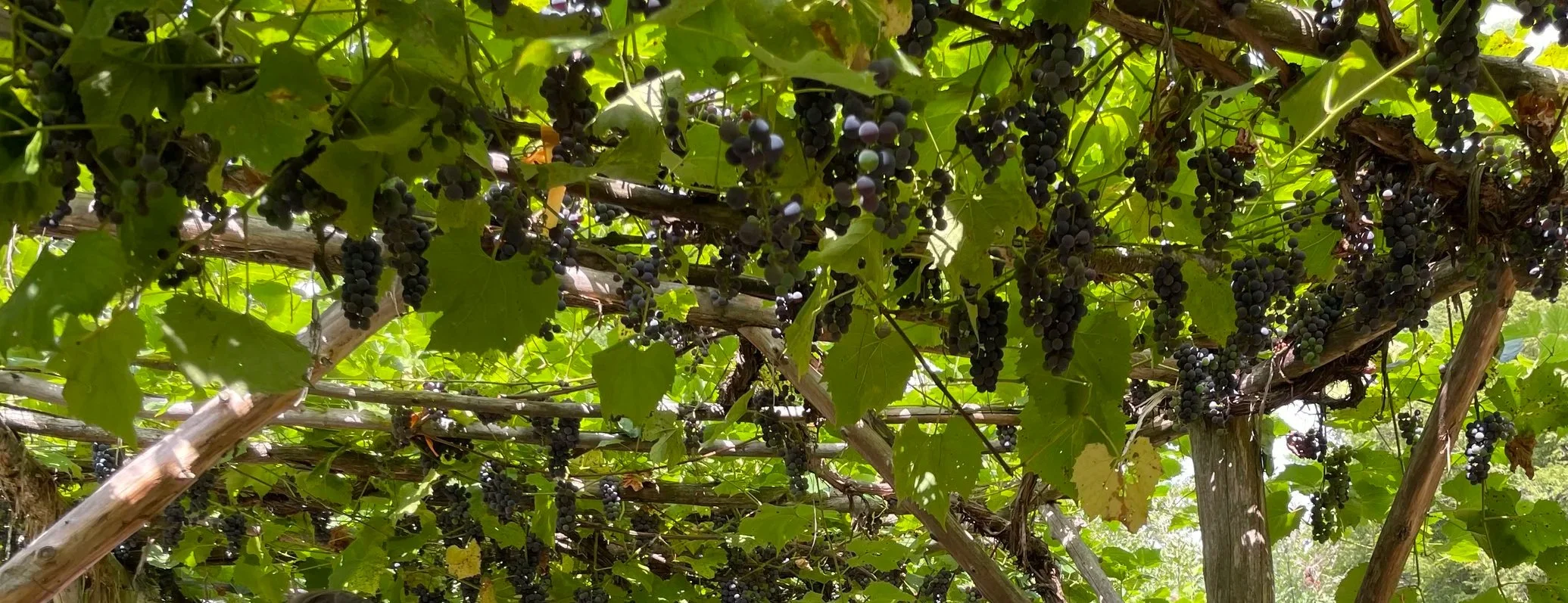
Grape Arbor before the harvest

Sometime in the last few days Cammy had harvested all the Toka plums and the grapes from the arbor. She arranged an order for me to pack and deliver. So in the afternoon I spent a few hours folding flats to fill with fruit, sorting and weighing fruit, and driving it to Unity. I wonder just who will end up munching on these fruits and hope that they enjoy it immensely. 

September 10 - 13, 2026

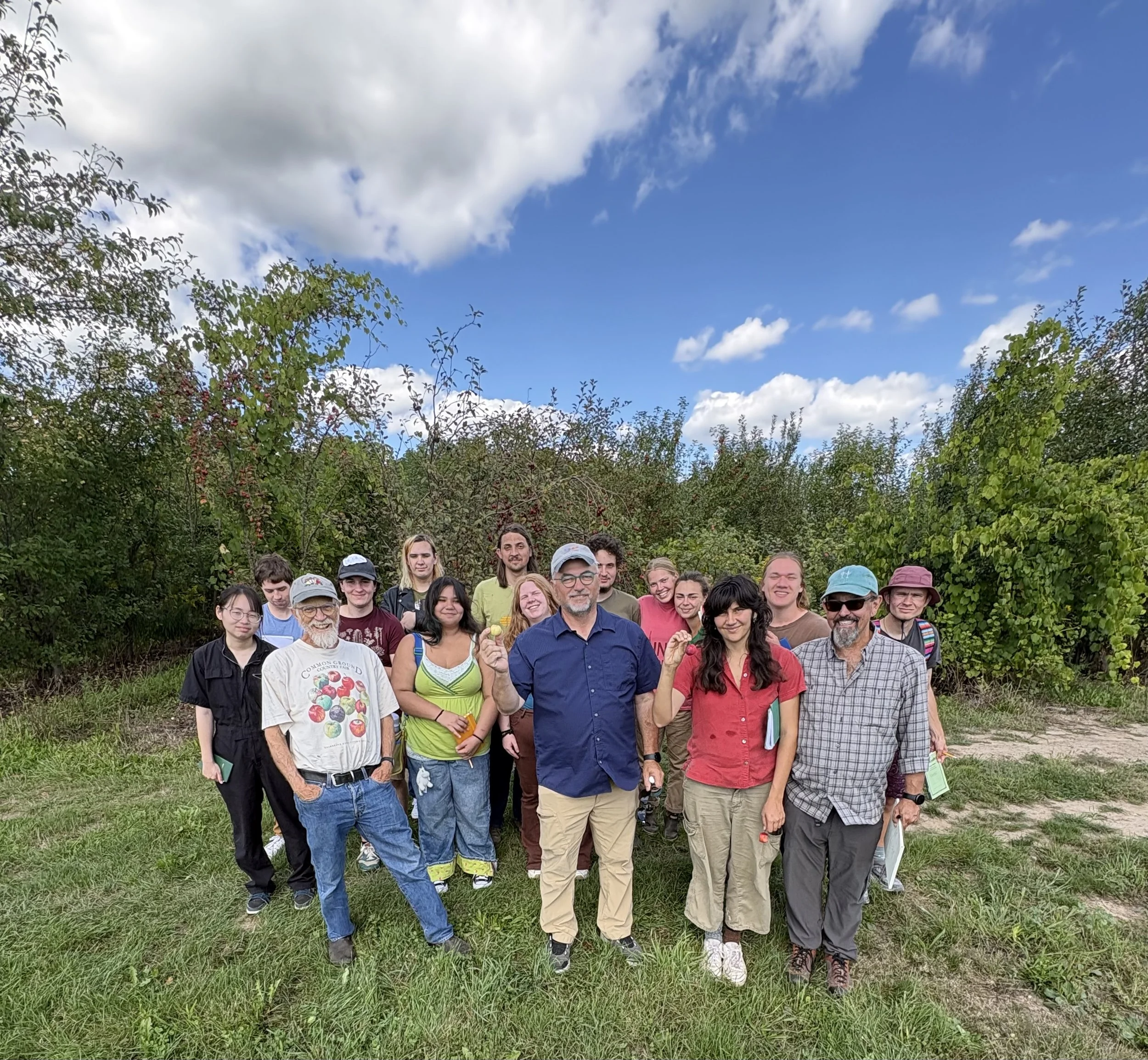
The Apple Class, Geneva, NY, September 11, 2026

Skylar and I joined Todd Little-Siebold and his students from College of the Atlantic and drove to Geneva, NY where we spent three days visiting the amazing USDA apple repository collection as well as a number of orchards and cider-makers in the Ithaca-Geneva area. It was long drive and a fantastic trip. 

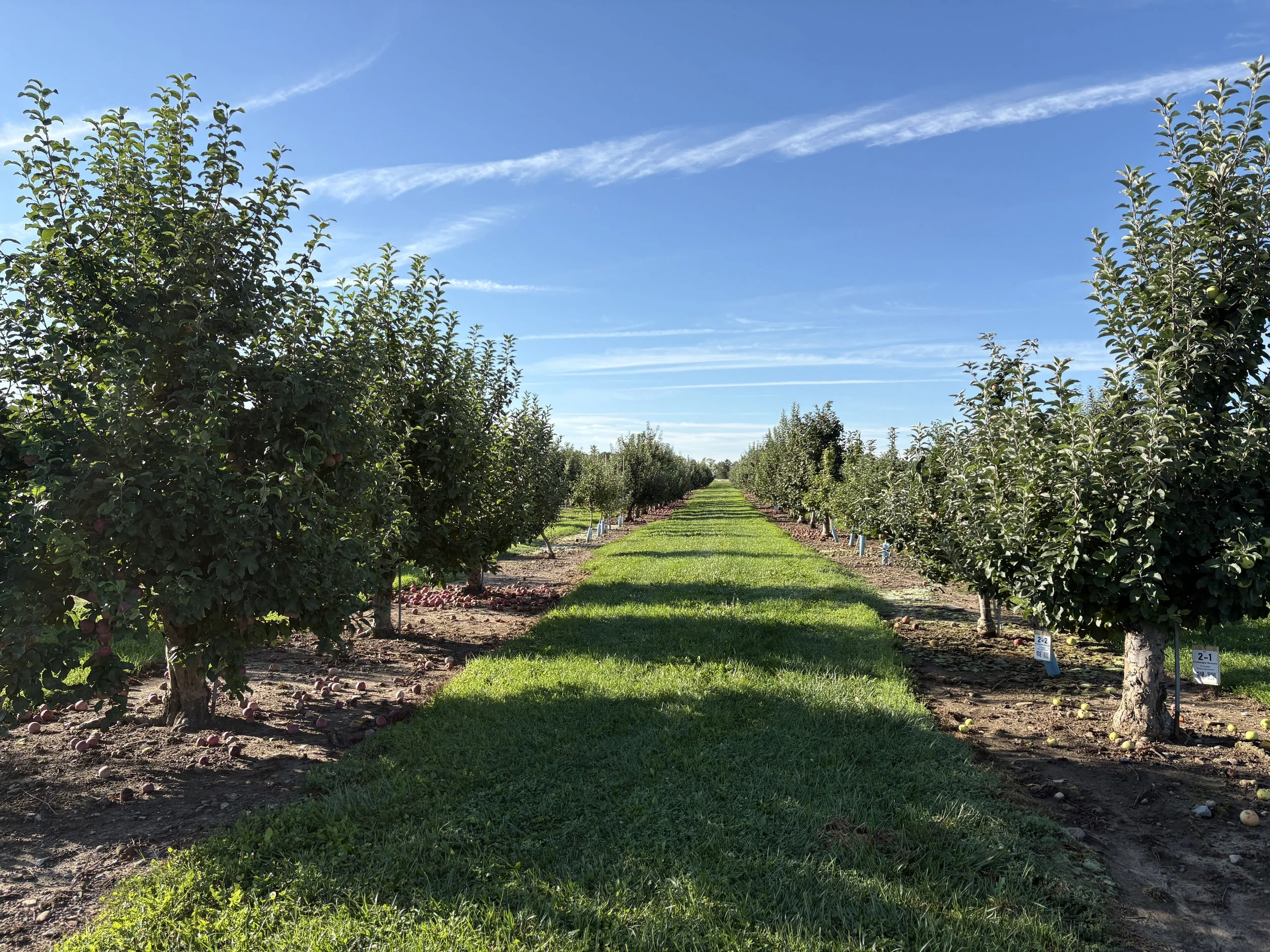
We spent eight hours over two days in the USDA apple collection, an immense orchard of thousands of apple varieties from all over the world. The diversity of fruit size, colors, shapes and flavors is staggering. This is one of the two or three most important “Malus” collections in the world. 

Our orchard visits included Black Diamond orchard, Perry City Orchard and Nursery, Red Byrd Cider and South Hill Cider. We got royally treated with tours and tastings wherever we went. Everyone was generous with their time, and our only regret was that we couldn’t stay longer and visit a lot more folks. In future Orchard Reports I’ll feature some of the orchards we visited.

A non-orchard highlight was a trip to the Ithaca Farmers’ Market which features produce and products exclusively grown or made within 30 miles of Ithaca. It’s held year-round - outside under a long timber-framed roof in temperate weather and indoors in winter. There should one of these in every county in the US.

September 9, 2026

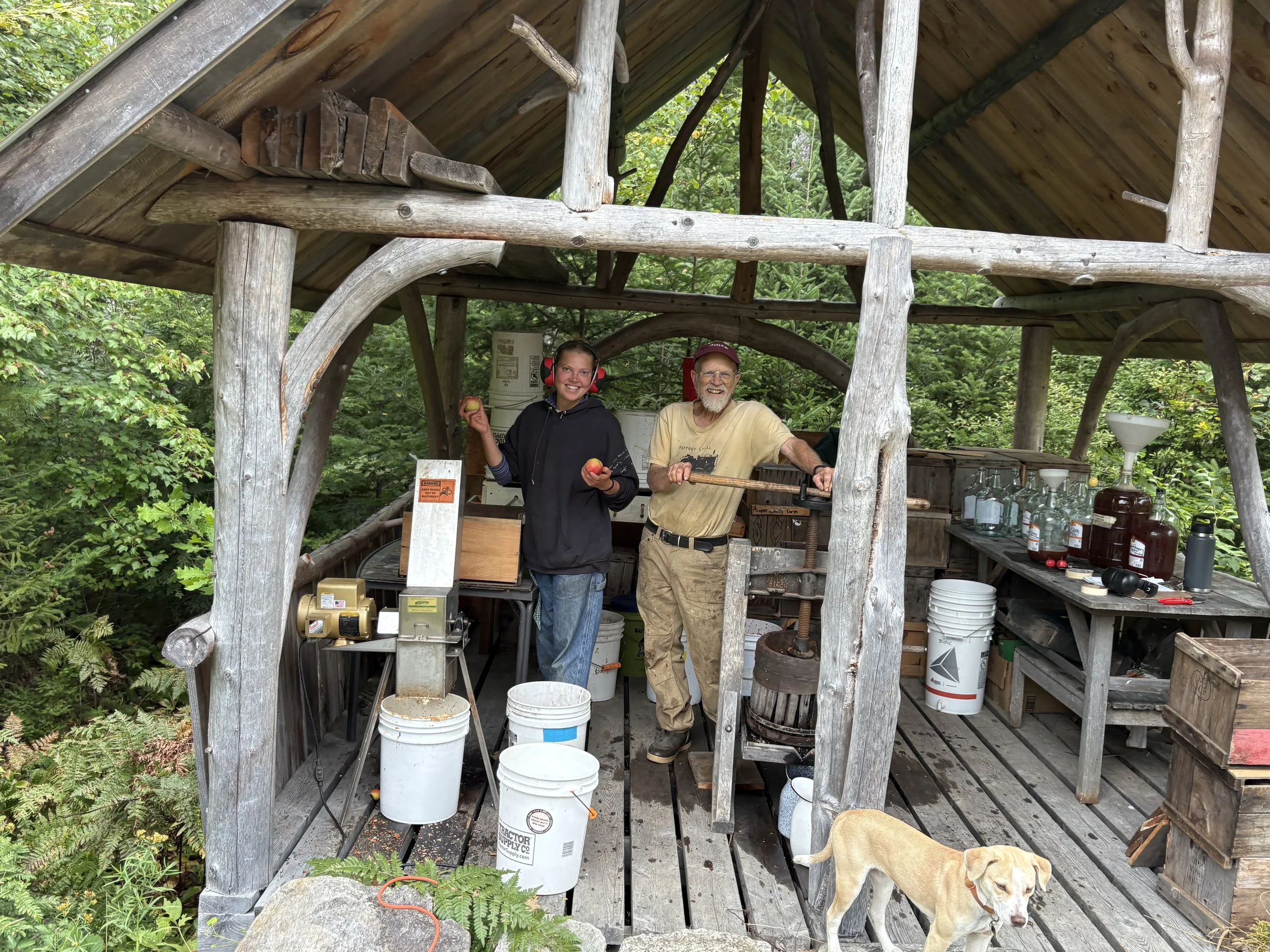
Pressing cider, September 9, 2026

Today we pressed the first cider of the season. The apples were early-season “drops” and “seconds” that we won’t sell or put into sauce. We pressed small amounts of Trailman, Red China, Transcendent Crab, Somerset of Maine and several others. We used the small hand press to press a bushel or less at a time. The goal was to learn more about each single variety before it is blended. In six weeks or so we’ll use the large bladder press to fill carboys and a barrel with blends of our favorites. 

September 8, 2026

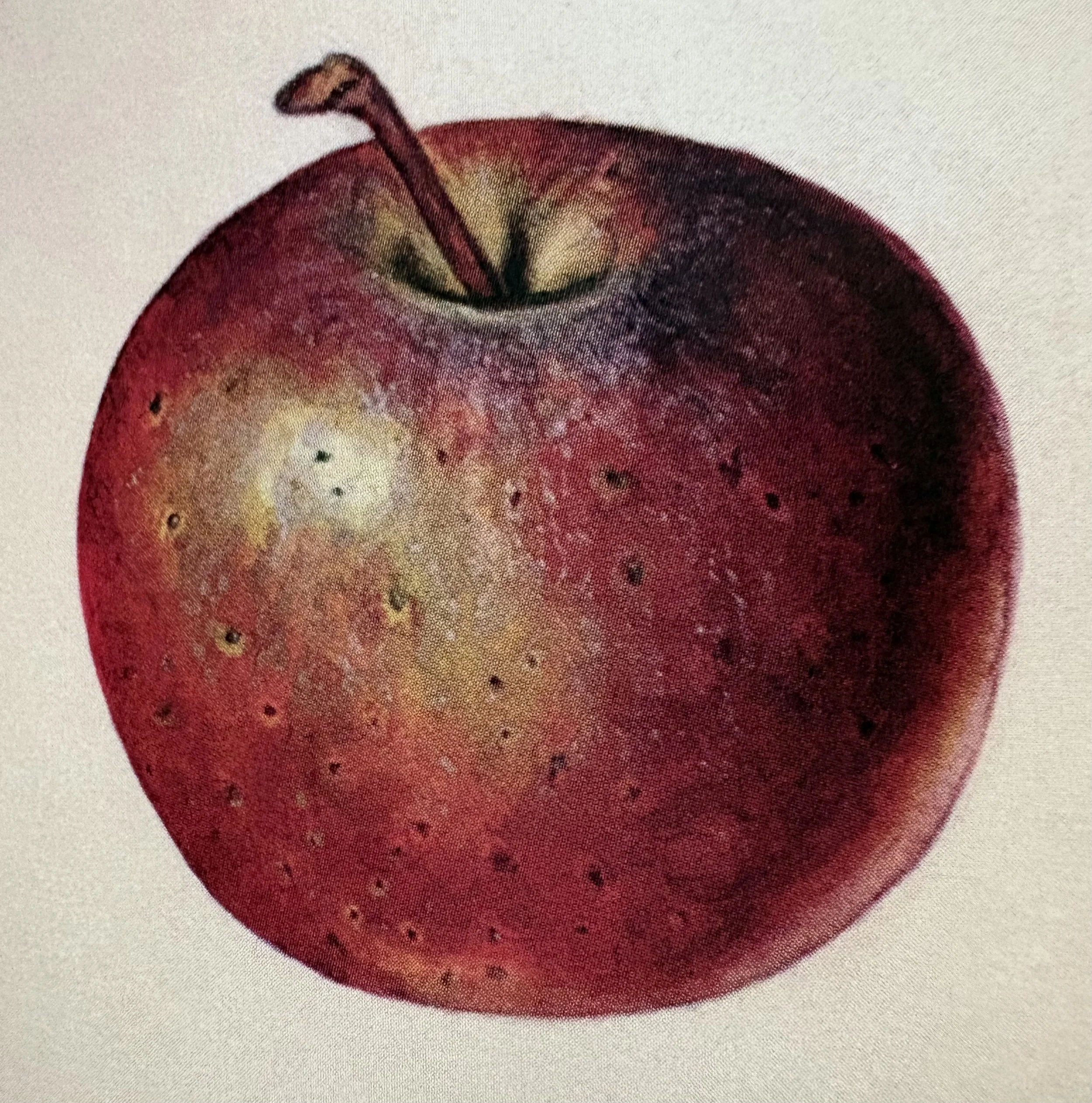
The true Hewe’s Virginia Crab, Arlington County, VA, 1927

Here’s a surprise: the iconic historic American cider apple that we’ve been calling Hewe’s Virginia Crab (aka ‘Hughes Crab’) for years turns out to be an imposter. Along with everyone else, we’ve been wrong. Although it is a Virginia Crab, it is not Hewe’s Virginia Crab. Somewhere in the distant past, the two were mixed up, and the Hewe’s Virginia Crab label was hung on the wrong tree. 

For those of you who think you have Hewe’s, you don’t. But don’t cut yours down. The Hewe’s imposter is a decent cider apple. The fruit is small, and the tree is incredibly vigorous and productive.

We have two trees in our Finley Lane orchard. I had been somewhat suspicious of the identification over the years but had never done a deep dive into the cultivar. The mix-up has now brought to light in an extensively researched article in the Journal of the American Pomological Society by David Zakalik and his professor, Greg Peck: Mistaken Identity: Correcting the Conflation of Malus ‘Virginia Crab’ with Malus ‘Hughes Crab’.

So what happened to the true Hewe’s Virginia Crab? It’s a mystery. For anyone looking to tackle a major fruit exploring challenge, this would be a truly incredible find! 

September 7, 2026

Another day of picking plums. Our old Kahinta tree had the largest crop of any of the plums, close to 130 pounds. It broke one branch earlier in the summer due to the weight of the fruit, and I suppose it could have “weighed in” at 150. Not only have the plum trees been impressively bountiful this year, the fruit quality has been outstanding. Hardly a cull in the lot.

We’ve been selling plums to a few of our favorite farm stands as well as to John’s Ice Cream in Liberty. Late in the day I headed back to John’s with another forty pounds. It was the third delivery to them in the past month. As I carried a ten-pound crate in past the line of customers, I felt like a celebrity. Lots of smiles and comments. “I saw your plums on their facebook page!” Although I’m a vanilla and chocolate kind of guy, I must say their plum ice cream has been particularly good this summer. Must be the plums.

September 6, 2026

We got about 50 lbs of Gracious plums from the old tree I grafted and planted the same year as the Waneta and Kahinta. I obtained the scionwood for all three hardy, hybrid-type plums in about 1982. It was long before any DNA profiling, and there was not a lot of widespread interest in the hybrids.

Kahinta and Waneta and most other hybrid plums were crossed, selected and introduced by Niels Hanson during the first half of the twentieth century. Gracious was one of the few exceptions. It was selected at the Northern Great Plains Field Station in Mandan, ND, in 1957. It is a cross of two hybrids, both of which include the Japanese plum, “Burbank” as one parent.

I began to suspect that our Gracious might be incorrect some years later when I became familiar with the fruit. The fruit was delicious, but the literature said that Gracious was freestone. Our “Gracious” was not freestone. Freestone hybrid plums are rare. Had I received the wrong wood? Did I mix up the scions when grafting? I had obtained scionwood from a few dozen different plum cultivars that year, but none of the others turned out to be freestone either. This evening I poked around on the internet and found a few sites that include information about Gracious. One is the Montana Fruit Company. Maybe it’s time to purchase a tree of their Gracious, wait a few years, and see if theirs is… freestone.

We had a funny weather pattern today, one not picked up on at all by the official weather folks. They showed zero chance of rain all day, but we had showers—some heavy—throughout the day. Was it really raining? I’m pretty sure it was!

September 5, 2026

Yesterday was a very big day at Super Chilly - I harvested the first Helen apples ever in the world! I’d been watching them all summer, wanting to be certain not to miss them when they began to drop. As I was coming in from the orchard, two were on the ground and three more were still in the tree. They picked easily so I grabbed them all. Helen is an open-pollinated seedling of the English cider apple, Sweet Alford. The pollen parent is not known. Sweet Alford originated in Devon in the early 20th century.

I started “op” seeds from several English cider apples in about 2014. In 2017 I planted two of them side by side not far from the house. The other tree is a seedling of Major. The obvious name for that apple was Minor. Minor morphed into Miner, the name of a good friend and aspiring apple geek in Sudbury, MA, the ancestral home of Garden Royal, one of the best dessert apples ever. Miner is married to Helen and so the Sweet Alford seedling planted next to it acquired the name, Helen. Helen and Miner live on Hunt Road, so “voila” - Helen of Hunt. (If you can follow all this, you get today’s gold star.)

Helen of Hunt is medium-sized, mostly conic-shaped and opaque-yellow skinned with faint reddish stripes. There’s a bit a russeting in the cavity surrounding the stem. (For the record, the apple’s namesake, Helen, does not look like this.) Like Sweet Alford, the apple has no acidity. It’s bitter, slightly astringent, banana flavored, not juicy, firm but not crisp. The flesh is impressively tannic, turning brown almost instantly. (The real Helen is also sweet with a bit of sass.) I think the apple should make great cider or molasses.

Chestnut crab and Milwaukee are ready to pick. Chestnut is a wonderful dessert fruit, and Milwaukee is a large cooking apple. The true identify of Milwaukee may be in question. That’s a mystery I’ll save for another day.

September 2, 2026

Today we picked September Ruby and the Cambridge Gage. September Ruby is a super-hardy, small-medium sized, red apple with an oval-conic, ”Red Delicious" shape. (Don’t hold it against it.) It’s a good dessert fruit, one of Skylar’s favorites. It has a melon flavor, a crunchy texture and keeps about a month in the cooler. I received the scionwood about 25 years ago from Dwight Bradley who was living in Alaska at the time. It originated in Manitoba. Dwight also sent me scionwood for Yellow Jay.

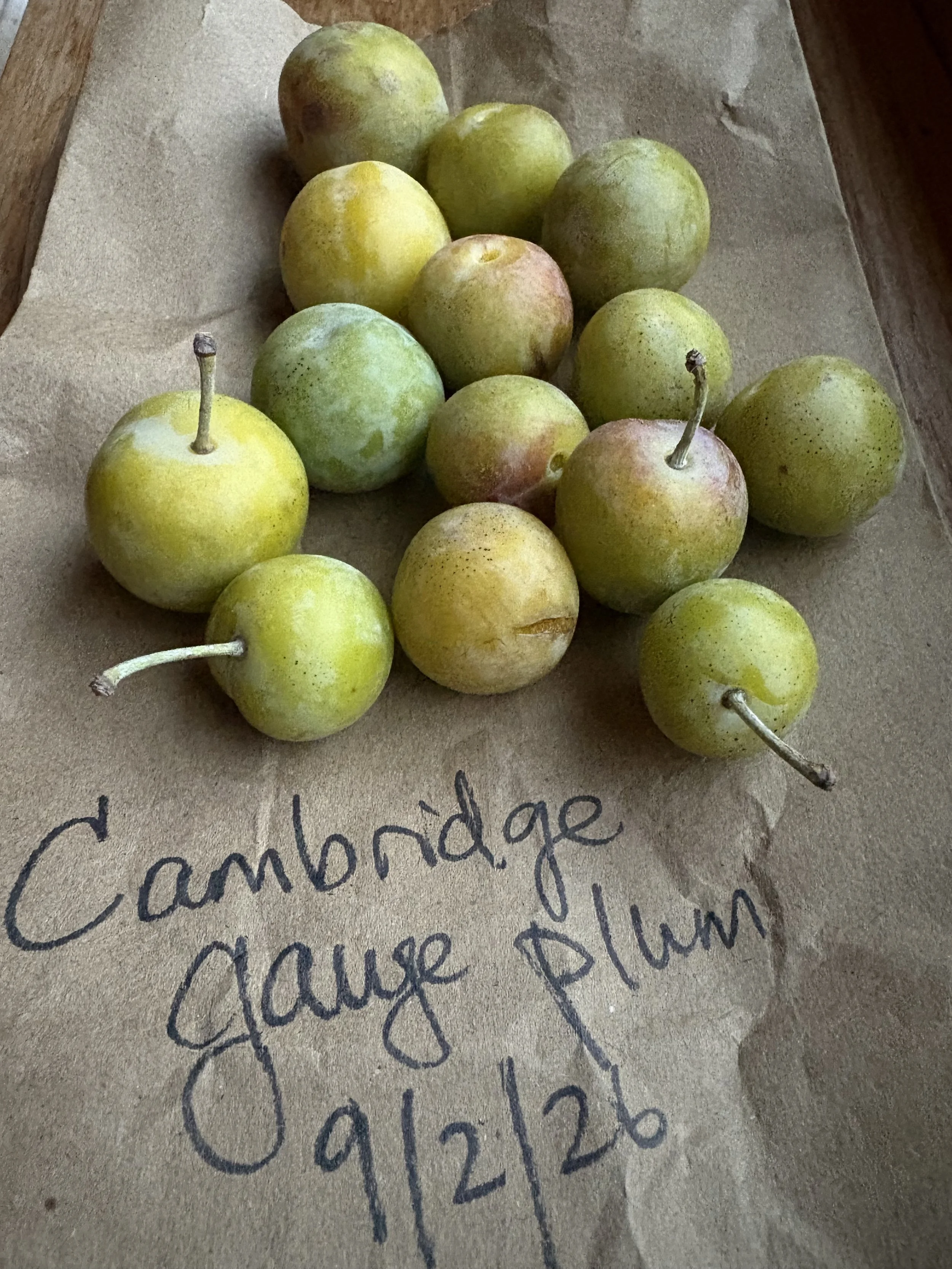
We also picked our first decent crop (still only a bag-full) of Cambridge Gage (aka Cambridge Green Gage), a small, roundish, greenish, European-type plum. (Prunus domestica). It is totally unlike the large, red, juicy, hybrid-types. There are many “Gage” cultivars, the most famous being the original “Green Gage” aka Reine Claude. There is no record of their true origin although we’re fairly sure that it was somewhere in eastern Europe before 1600. All the Gages are coveted for there superior fresh eating.

In the afternoon I took a bushel of very nice Somerset of Maine, a box of Centennial Crabs and the last of our first quality Trailman to one of the local farmstands where I hope they’ll make people happy who happen to stop in to see what’s new.

September 1, 2026

The harvesting of apples and plums continues. We picked the Transcendent crabs, the last of the Trailman and the Somerset of Maine. Then the Hanska plums, a thin-skinned, hardy, hybrid type introduced by Niels Hansen. I’m closely watching the Waneta, Gracious, Toka and Kahinta. They’ll all be next.

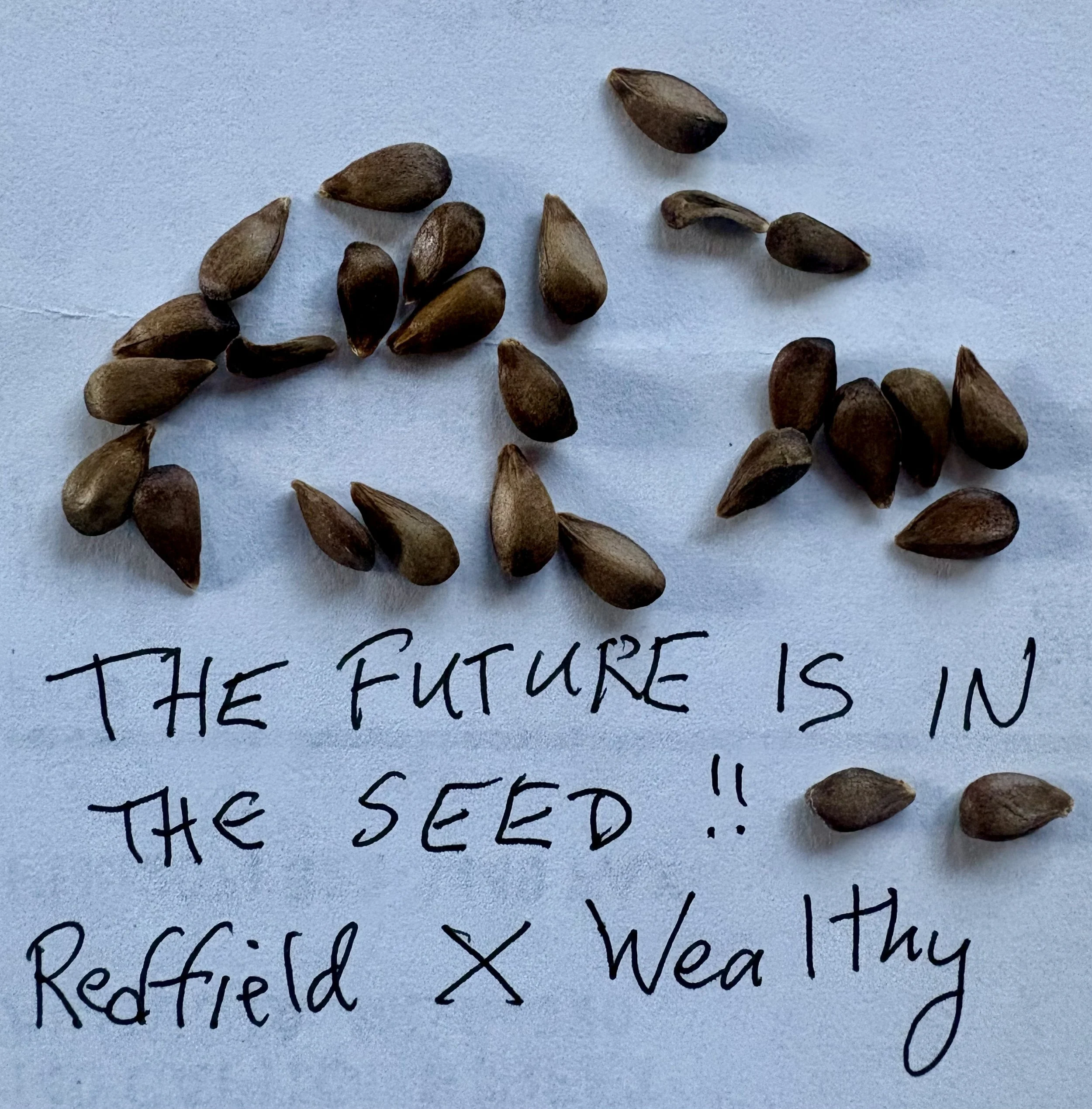
In the evening I extracted 27 dark brown seeds from three Wealthy apples that I had hand-pollinated with Redfield pollen last spring. Wealthy is an superior, late-summer/early-fall, all-purpose cultivar. For generations it was assumed to be a seedling of “Cherry Crab.” DNA profiling has shown it to be a cross between Duchess of Oldenburg and Jonathan. The original story purported that Peter Gideon of Minnesota obtained seed of cherry crab from a grower in from Bangor, ME. That never made sense to me. Duchess crossed with Jonathan does.

Both Weathy and Redfield are fantastic pie apples, and we all know the world needs way more apple pies. Twenty-seven new red-fleshed pie apple cultivars might just do the trick for early fall. But fret not, I’ve also crossed Redfield with Black Oxford. That should do it for your winter pies!

September 4, 2026

Waneta plums, September 4, 2026

Today we picked the Waneta plums. We got about a hundred pounds from our one old tree, grafted in about 1980. I had been checking them daily and decided that this was the day. A few had skins were starting to turn translucent red, a sign that they’d better be eaten now. Most were still firm and will be perfect after a few days in the cooler.

Waneta fruit is round and slightly larger than a ping pong ball. The skin is a dark pinkish-red, and the juicy, sweet flesh is orange. The taste is delicious. The skins are edible although I like to bite into the skin, turn it inside out and slurp out the flesh.

Waneta is in a class of plums known as “Hybrid Plums.” They were mostly bred by Niels Hansen during the early 20th century. Hansen was born in Denmark and came to the US when he was still very young. He spent his life fruit exploring in Asia and breeding hardy plums, apples and other crops in South Dakota. He was the one who brought the red-fleshed apple, Niedzetzkyana, to the US. I would have loved have met him, but alas, Hansen died four days before I was born.